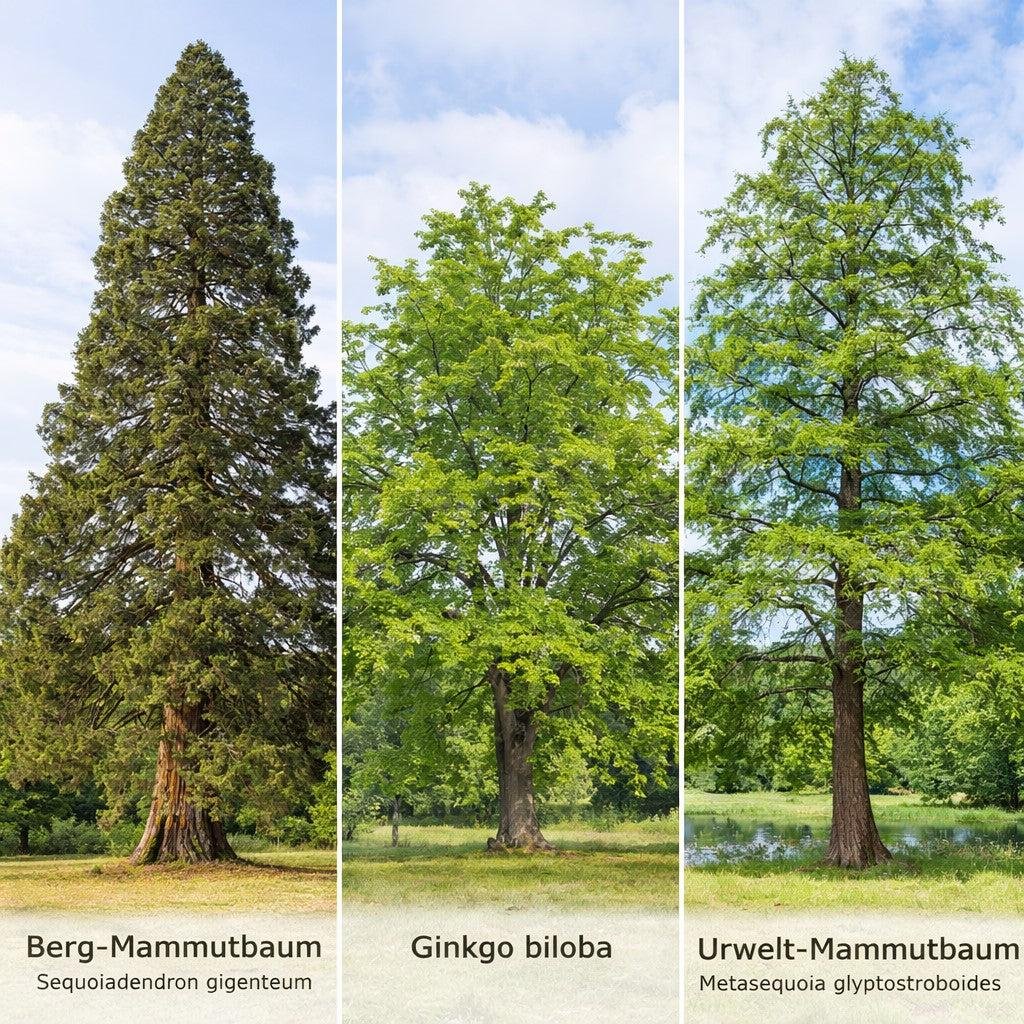
Mixed coniferous-deciduous forests
A mixed forest combines coniferous trees – pine, spruce, fir, larch, cedar, yew – with deciduous trees: oak, linden, maple, elm, ash, beech, birch, alder and fruit trees.
A properly formed mixed forest is usually more resilient than a monoculture, but only when the species are matched to the climate, moisture, soil, and light conditions. Simply mixing a large number of trees does not create a stable ecosystem.
Main advantages
1. Resistance to diseases and pests
In a single-species forest, a pest or disease can quickly spread between similar trees. In a mixed forest, susceptible trees are separated by other species.
For example:
The bark beetle is especially dangerous for large areas of spruce;
Ash dieback affects ash trees, but not oak, linden or pine;
Dutch elm disease kills elms, but the rest of the forest structure remains;
Fungal diseases of pine spread more slowly through deciduous areas.
Mixing species does not stop the disease completely, but it reduces the likelihood of the entire forest dying at once.
2. More complete use of space
Different trees occupy different levels.
| Level | Possible breeds |
|---|---|
| Upper tier | Oak, pine, larch, cedar, fir |
| Middle tier | Linden, maple, hornbeam, elm, young spruce |
| Lower tree layer | Yew, rowan, wild apple, hazel |
| Shrub layer | Hawthorn, viburnum, red, birch |
| Ground layer | Grasses, ferns, mosses, mushrooms |
This way, the forest better captures sunlight, retains moisture and protects the soil.
3. Diverse root system
The roots of different species work at different depths:
spruce has predominantly superficial roots;
Pine and oak can form a deeper system;
linden creates a powerful branched network;
alder actively develops the moist upper horizon;
Fir is usually anchored deeper than spruce.
This allows trees to obtain water and minerals from different soil layers. Competition doesn't completely disappear, but it is distributed vertically.
4. Soil improvement
Coniferous litter often decomposes slowly and can contribute to the formation of a more acidic topsoil. Leaves from linden, elm, maple, ash, alder, and some fruit trees decompose faster and return more available minerals to the soil.
Particularly useful:
Linden - creates soft humus;
Alder - fixes nitrogen in symbiosis with bacteria;
Ash - quickly restores calcium and other elements;
Maple - accelerates nutrient cycling;
Birch - helps restore damaged soil.
The combination of needles and leaves forms a more varied litter than in a pure coniferous forest.
5. Better water regulation
Coniferous trees retain part of their crowns during winter and continue to retain precipitation. Deciduous trees shed their leaves in winter, allowing more rain, snow, and light to reach the soil.
Mixed forest:
reduces surface runoff;
retains snow;
reduces erosion;
maintains air humidity;
gradually releases water into the soil;
protects streams and springs.
Deep-rooted trees can lift water from lower horizons, and surface roots intercept short-term precipitation.
6. Resistance to wind and storms
Trees of varying heights and shapes create an uneven canopy, which disperses wind better than a uniform wall of identical trees.
The following combinations are especially useful:
spruce with beech, fir, maple and linden;
pine with oak and birch;
larch with cedar pine and rowan;
cedar with oak and drought-resistant deciduous trees.
But individual tall conifers, suddenly exposed after the felling of their neighbors, may become more vulnerable to windfall.
7. Reducing fire hazard
Pure pine and some other coniferous stands can accumulate large quantities of dry needles, resinous branches and easily flammable undergrowth.
Leaf stripes are capable of:
retain more moisture;
provide less flammable bedding;
reduce the rate of spread of ground fire;
divide the coniferous forest into separate sectors.
However, mixed forests are not automatically fireproof. Dry oak leaves, shrubs, dead wood, and dense undergrowth are also susceptible to fire.
8. Greater resilience to climate change
Different breeds react differently to:
heat;
drought;
frost;
wet snow;
late frosts;
overwatering;
new diseases.
When one species temporarily weakens, others can continue to form the canopy. For example, in a dry area, the decline in spruce viability is partially compensated for by oak, pine, small-leaved linden, or field maple.
9. More biodiversity
Conifers and deciduous trees provide different types of food and shelter:
coniferous seeds;
acorn;
walnuts;
berries and fruits;
nectar;
early pollen;
winter shelter;
hollows;
dead wood;
various barks for mosses and lichens.
Such a forest usually has more ecological niches for birds, insects, fungi, small mammals and soil organisms.
10. Various household products
A mixed forest can simultaneously produce:
construction timber;
hard furniture wood;
wood;
resin;
medicinal raw materials;
honey;
walnuts;
berries;
mushrooms;
animal feed;
decorative branches and seeds.
This reduces the farm's dependence on one breed and one type of product.
Disadvantages and risks
1. The difficulty of choosing the right breeds
Not all coniferous and deciduous trees are compatible in terms of conditions.
For example:
chestnut prefers slightly acidic soils, while many linden trees and field maples grow well on calcareous soils;
Spruce requires a cooler and more humid environment than downy oak or cedar of Lebanon;
The European cedar pine feels better in the mountains, and the walnut feels better in warm, protected areas;
Alder is suitable for wet areas, but not for dry hilltops.
An incorrect mixture does not lead to cooperation, but to the suppression of some trees.
2. Competition for the world
Some species are capable of suppressing their neighbors with their dense crown.
The most powerful shading species are:
beech;
ale;
fir;
linden;
sycamore;
holly maple;
hornbeam.
Light-loving species:
oak;
pine;
larch;
birch;
merry;
bereka;
wild pear;
many cedars.
If a sun-loving tree is placed inside a dense shade canopy, it will lose its crown, slow down its growth, or die.
3. Competition for water
In dry areas, mixing large numbers of trees can increase overall water use.
It is especially important to control the density:
ate;
bull;
maple;
linden trees;
fast-growing pioneer trees;
dense shrubby undergrowth.
Deep and shallow roots partially share resources, but during prolonged drought, all plants begin to compete for available moisture.
4. More complex forestry
Monoculture is simpler:
plant using the same equipment;
cut off;
thin out;
evaluate;
chop;
sort;
sell.
In a mixed forest, trees grow at different rates and reach economic maturity at different times. Individual or group care is required.
5. Uneven wood quality
If fast-growing species shade or deform valuable trees, the following may occur:
crooked trunks;
one-sided crown;
excessive number of branches;
slow diametrical growth;
damage caused by felling of neighboring trees.
To obtain high-quality oak, walnut, cherry or cedar, you need to manage the space around their crowns in advance.
6. Increased complexity of mechanized harvesting
A forest of mixed ages and multiple layers makes it difficult to use large machines. Felling a single tree can damage:
young growth;
shrubs;
neighbors' roots;
valuable rare trees;
soil;
fungal communities.
This type of forest is better suited for selective rather than continuous management.
7. Possibility of vertical fire spread
While deciduous trees can slow fires, dense, multi-layered forests sometimes create a "fuel ladder":
dry grass;
low shrubs;
young conifers;
lower branches;
crowns of mature trees.
Therefore, near buildings, roads and fire corridors, lower dry branches and excess coniferous undergrowth must be controlled.
8. Difficulty of natural regeneration
Shade-tolerant species often reproduce under the canopy more successfully than light-loving ones.
Without intervention, the forest may gradually become:
from oak to beech;
from larch to spruce or fir;
from rare fruit trees to maple and linden;
from pine to shade-tolerant deciduous forest.
This is a natural process of succession, but it may conflict with the project's goals. To preserve oak, pine, larch, birch, and fruit trees, it is necessary to create skylights.
9. Risk of using alien species
It is easy to add fast-growing or unusual trees to a mixed planting, which will later begin to spread.
Caution is required with breeds such as:
slave;
ash-leaved maple;
some paulownias;
turn;
Siberian elm in some regions;
some ornamental conifers.
A non-native tree may be useful in a park or arboretum, but is undesirable in a natural restoration forest.
10. Possibility of exchanging some pests
Diversity usually reduces epidemic risk, but some species share common pests or intermediate hosts.
For example, some fungal diseases use two different plants to complete their life cycle. Therefore, professional design must consider not only root and crown compatibility but also plant pathology.
Coniferous and deciduous trees complement each other
| Property | Conifers | Deciduous | The result of mixing |
|---|---|---|---|
| Winter crown | Often saved | Usually absent | Winter protection and skylights at the same time |
| Bedding | Mostly slow and sour | Often decomposes faster | More diverse humus |
| Root structure | From shallow spruce to deep pine | Very diverse | Exploring multiple horizons |
| Fire hazard | Often higher due to resins and dry pine needles | In the green state it is usually lower | Possibility of creating leaf barriers |
| World | Many conifers provide year-round shade. | In winter they let light through | Seasonal lighting control |
| Production | Wood, resin, seeds | Fruits, nuts, honey, hardwood | Diverse economy |
| Fauna | Winter shelters and seeds | Flowers, fruits, hollows | A more complete feeding network |
| Climate resistance | Some are resistant to cold and poor soils | Many are better at restoring humus. | Reducing overall risk |
The most successful combinations
Pine-oak forest
Composition:
Scots pine;
sessile oak or pedunculate oak;
birch;
small-leaved linden;
field maple;
rowan;
juniper;
hazel and hawthorn.
Advantages:
moderate drought tolerance;
deep and superficial roots;
nuts and acorns for animals;
good natural regeneration;
relatively light forest.
Risk:On poor, dry soil, oak and dense undergrowth can exacerbate water stress.
Spruce-beech-fir forest
Composition:
ale;
fir;
beech;
sycamore;
rough elm;
rowan.
Best place:cool, damp mountain slopes.
Advantages:multi-tiered, snow retention, shade-tolerant regeneration.
Risk:In warm lowlands, spruce and beech can suffer greatly from drought.
Larch-cedar mountain forest
Composition:
European larch;
European stone pine;
rowan;
birch;
juniper;
green alder in suitable places.
Advantages:Frost resistance, nuts, protection of mountain slopes, winter light due to the deciduous nature of larch.
Risk:Not suitable for warm lowlands and dense shade.
Cedar-oak warm sector
For real Lebanese or Atlas cedar:
cedar individual trees;
sessile oak or downy oak;
field maple;
field elm;
small-leaved linden in fresher places;
bereka;
domestic rowan;
red and juniper.
This type of planting is possible on a sunny, well-drained slope. The cedar needs to be left with enough space for a broad, mature crown.
Floodplain mixed forest
Composition:
English oak;
smooth elm;
ash tree;
alder;
white willow;
in places fir on higher cool terraces;
viburnum and bird cherry.
Conifers should not be placed directly in regularly flooded low areas unless the chosen species is intolerant of such conditions.
What percentage of conifers is optimal?
There is no single standard. Proportions should follow the habitat.
| Plot type | Possible proportion of conifers |
|---|---|
| Lowland moist deciduous forest | 0–15% |
| Common mixed forest of Central Europe | 20–40% |
| Dry pine-oak area | 30–60% |
| Cool mountain forest | 40–70% |
| Larch-cedar highland forest | 60–85% |
| Floodplain with flooding | Usually 0-10% |
| Park or arboretum | In terms of composition, but it is better not to concentrate one type |
For the Zürich Oberland on normal fresh soil, a logical starting point might be25–35% coniferous and 65–75% deciduous, with changes in proportions by microzone.
Example of DREVO forest structure
Upper durable tier
oak — 20–30%;
pine or larch - 10–20%;
fir - 5-10% in cool areas;
cedar or cedar pine - 1-5%;
linden, elm and individual maples - 10-15%.
Middle tier
hornbeam;
linden;
field maple;
rowan;
thousand;
wild fruit trees.
Food and rare layers
chestnut;
walnut;
hazelnut;
bereka;
domestic rowan;
wild apple tree;
wild pear;
merry.
Shrubland edges
hazel;
hawthorn;
red;
viburnum;
rose hip;
beresklet;
juniper.
The main conclusion
Mixed coniferous-deciduous forests are usually more stable, productive and biologically richer than pure stands.Conifers provide winter structure, wood, resin, seeds, and wind protection. Deciduous trees improve humus, produce flowers, fruits, and nuts, create a seasonal light regime, and can reduce fire hazards.
The main drawbacks are not related to the mixture itself, but to design errors: too high a density, incompatibility with moisture and soil, shading of sun-loving trees, the use of invasive species, and the lack of gradual maintenance.
For a sustainable forest it is better to createmosaic of communities, and not to evenly mix all types: dry coniferous-oak areas, fertile linden-maple zones, cool fir-beech slopes, damp elm-ash hollows and individual food or collection glades.