Trees that can work on deep moisture
Species with deep roots and a thrifty crown that can support a green corridor after the initial stabilization of the site.
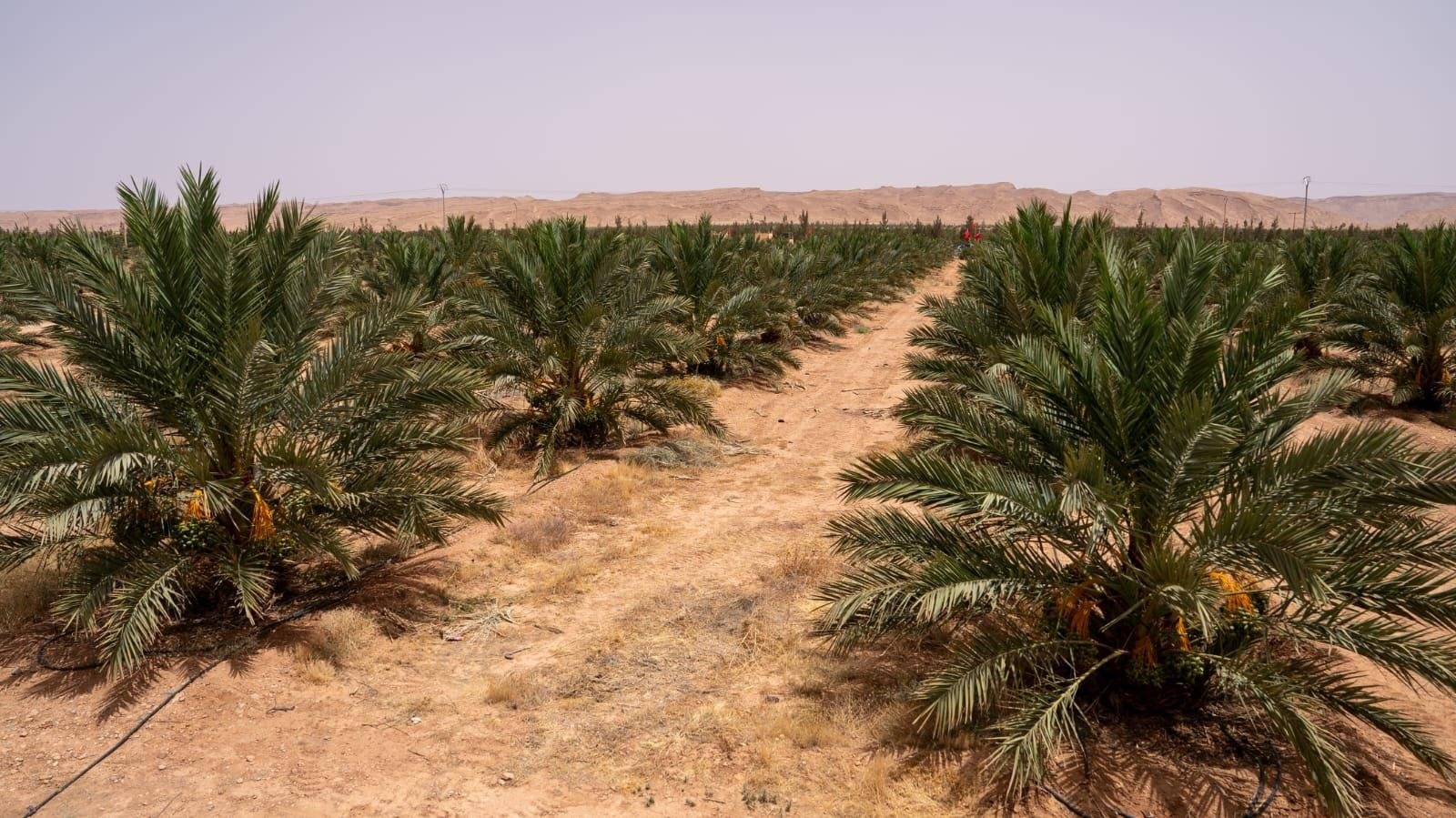
Deep moisture is the second source of stability
After installing fog-catching systems, wind protection, and soil closure, the system must acquire a second source of stability: deep roots. These plants don't completely replace water, but they can gradually tap into moist horizons, survive drought, maintain shade, and stabilize the microclimate.
Important: The tree does not begin "deep-growing" immediately after planting. During the first months and often the first years, it relies on initial watering, a protected planting hole, a loose root zone, and reduced wind stress. Only after rooting can it become more self-sufficient.
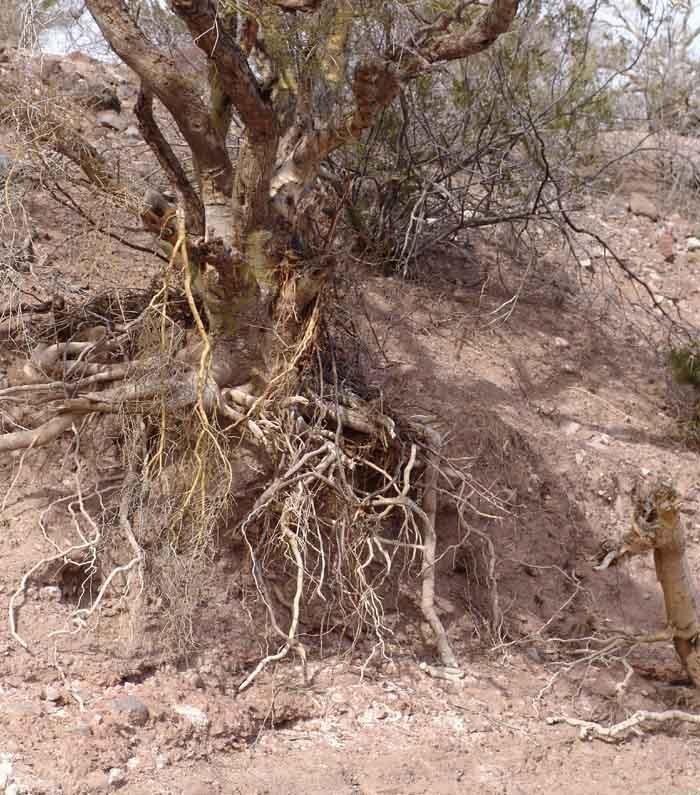
Deep roots connect the upper dry layer with the wetter horizons.
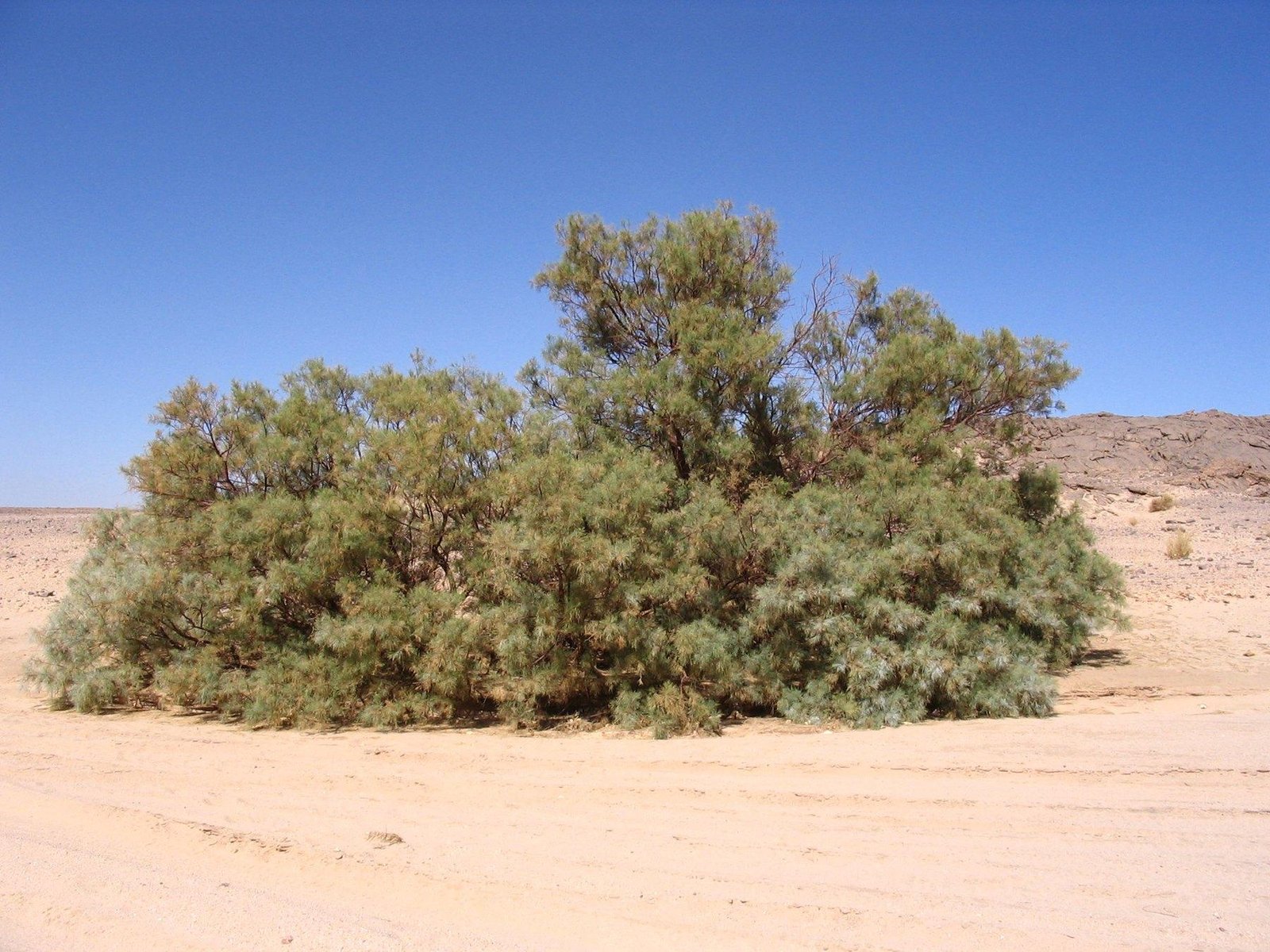
Tamarisk is useful in salty and windy frontline areas.
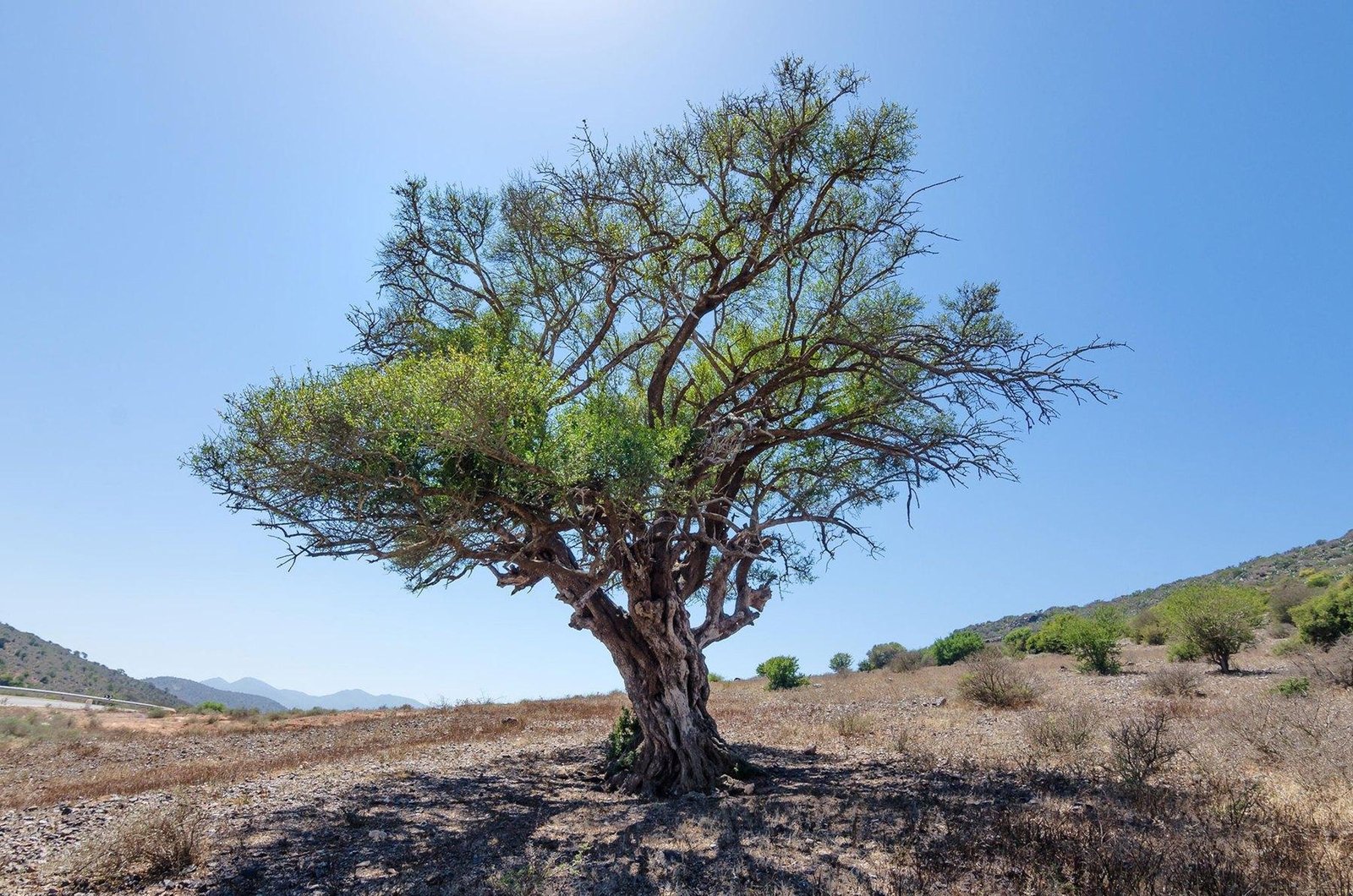
Super deep roots are useful as a principle, but such species require strict control.
Conditions under which this will work
Deep watering is only useful where the roots can actually reach the moist layer. If the water is too deep, the soil is compacted, the salinity is high, or the young tree is exposed to wind, the tree will not have time to develop a viable root system.
| Condition | What is required | Why is this important? |
|---|---|---|
| Moisture depth | It is desirable to have accessible moist horizons within the root growth range | otherwise the tree will not be able to become autonomous |
| Initial watering | regular support for the first 6-12 months and longer for sensitive species | the root must have time to go down |
| Planting hole | deep loose zone, stones, organic matter, protection from drying out | the root receives direction and air |
| Wind protection | nets, tamarisk, shrubs, microrelief | reduces evaporation and mechanical stress |
| Salt control | drainage, selection of species, leaching or local soil improvement | Salt can stop root development. |
Candidates for verification
Pilots don't need "beautiful" species, but rather species with proven resilience: deep roots, a thrifty crown, and tolerance to drought, salt, and wind. Each candidate must be tested locally, as moisture depth and salinity can vary dramatically even in adjacent plots.
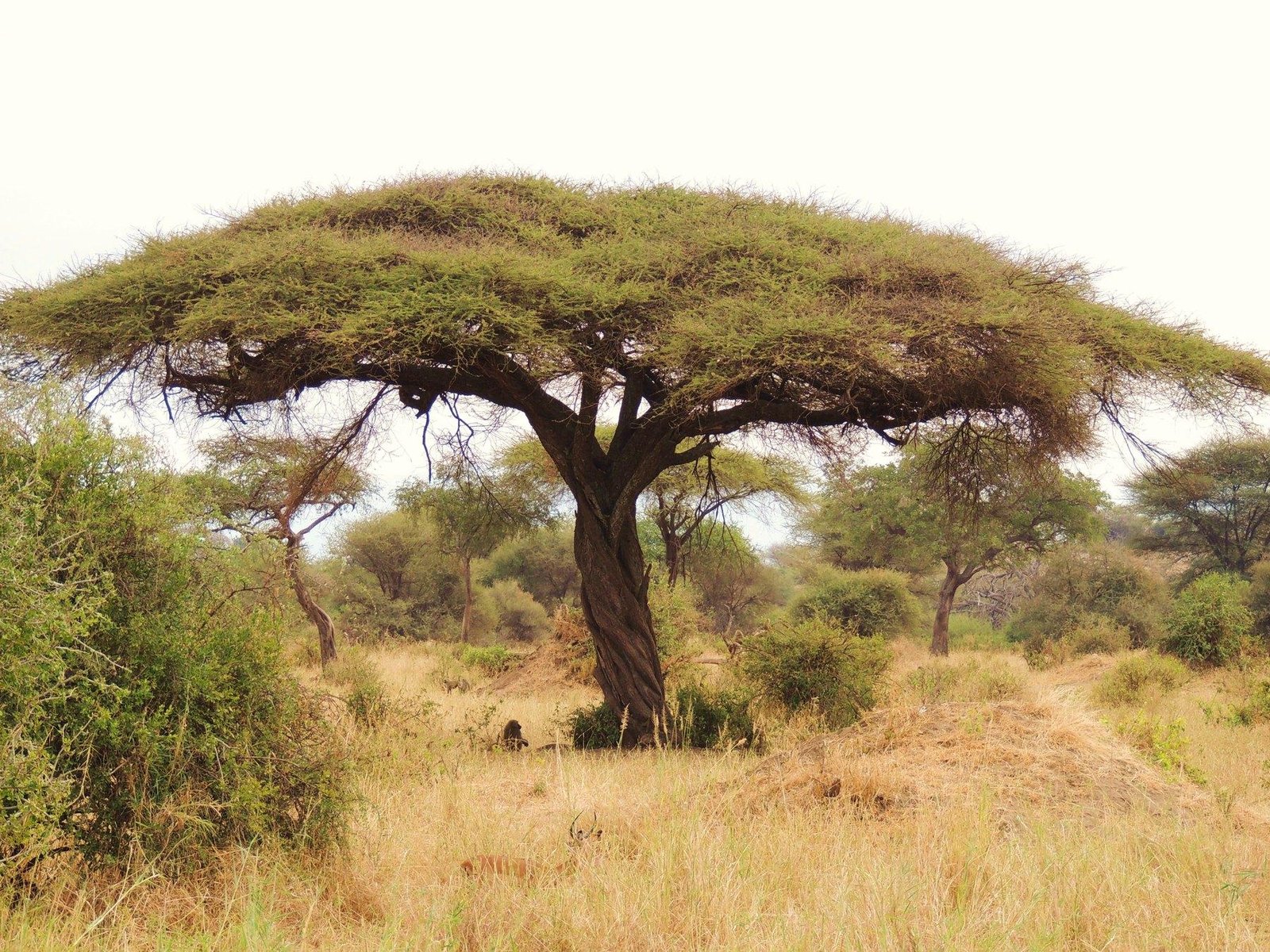
Acacia is suitable for indoor protected areas: deep roots, sparse crown and high drought resistance.
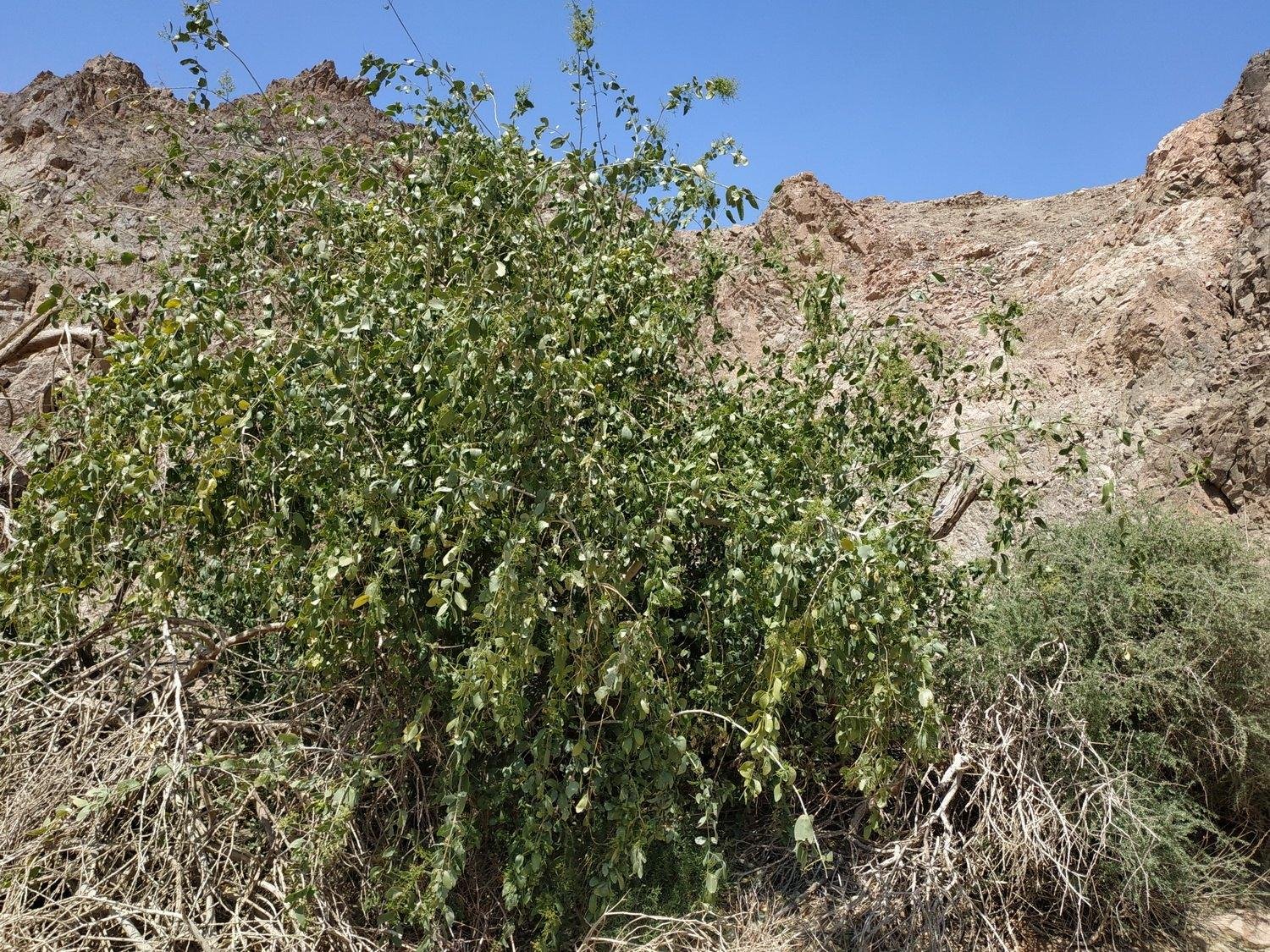
Salvadora persica is important for brackish and transitional areas where common species are weakened.
| Group | Example | Where to use | Limitation |
|---|---|---|---|
| Tamarisk | Tamarix aphylla, Tamarix gallica | salty and windy first line | useful as a defense, but it should be kept in a project role |
| Acacias | Vachellia tortilis, Senegalia senegal, Vachellia ehrenbergiana | internal protected area, nitrogen support, shade | young plants require watering and protection |
| Date palm | Phoenix dactylifera | oasis phase, where water is available at depth and there is protection | guaranteed water and care are needed |
| Ziziphus | Ziziphus spina-christi, Ziziphus mauritiana | fruit and shade layers after soil improvement | It is better to introduce it after the microclimate has stabilized. |
| Savior | Salvadora persica | brackish areas and transition zones | requires verification by local salinity and wind |
| Prosopis | Prosopis juliflora | controlled tests only | high risk of invasiveness, not for free scaling |
How do they actually work?
These trees don't "get water" automatically. Their advantage unfolds gradually: first, the plant establishes itself, then it roots deeper, and then becomes less dependent on surface watering. Therefore, the early phase of the project should encourage root growth, rather than forcing the tree to deal with all the stresses at once.
| Top Fog, dew, nets, crown, mulch and biocrust retain moisture in the top layer. | Through Deep roots seek out moist horizons and give the tree resistance to drought. | Bundle When the upper and lower waters work together, the corridor becomes less dependent on water supply. |
|---|
Input order
| Defense first Nets, stones, tamarisk, bio-crust and mulch reduce site stress. | Then deep roots Acacias and stable trees are introduced after the wind has died down and the soil has stabilized. | Then productivity Palms, jujubes and fruit species are placed only in areas with stable moisture. |
|---|
The honest conclusion: such trees exist, but they don't completely replace water. They only begin to work after a start-up period and become a long-term investment in the corridor's autonomy.