General scheme of the project: 1 km of corridor
One kilometre of DREVO should be considered as an engineering-ecological module: from the ocean to the desert, salt protection, sand stabilisation, soil formation, water management, production zone and external protection work in sequence.
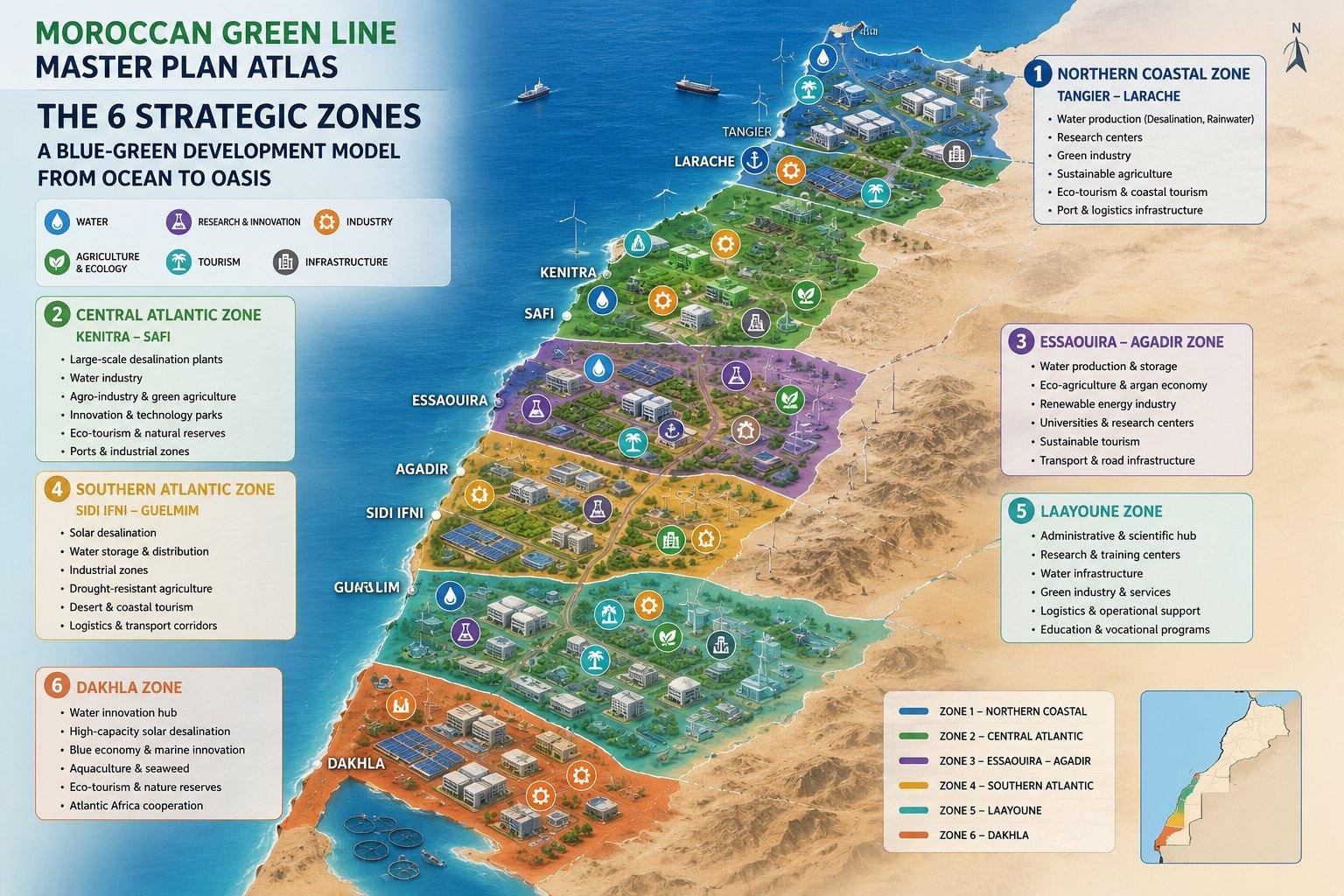
Principle 1 km
These are not plantings, but a structure for retaining water and life.
The 1-kilometer pattern is constructed in a direction from the ocean to the desert. Winds should be slowed, water should be retained in the terrain, the soil should accumulate organic matter, and plants are introduced only after the surface has been prepared.
Six zones of one kilometer
| Zone | Function | Practical solution |
|---|---|---|
| Zone 1. Coastal strip | protection from salt and ocean wind | stones, micro-holes, durable surface coating |
| Zone 2. Sand consolidation | stop shifting sand | half-holes, mesh, straw or branch barriers |
| Zone 3. Soil formation | create a living foundation | zai-pits, compost, mulch, bio-bark |
| Zone 4. Water Management | intercept and distribute moisture | trenches, swales, reservoirs, drip line |
| Zone 5. Production zone | provide trees, fodder and agro-forest layer | seedlings, shrubs, trees, drip irrigation |
| Zone 6: Desert Defense | reduce dry wind and sand transport | wind barriers, nets, dense protective belt |

The half-moons concentrate water and provide the first outline of the future green surface.
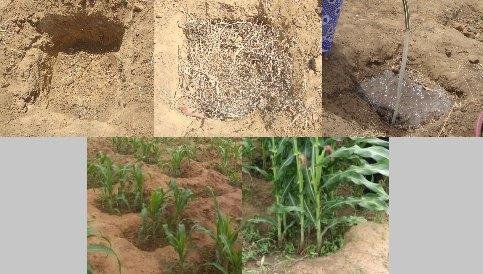
Zai-pits combine water, organic matter and planting space in one unit.
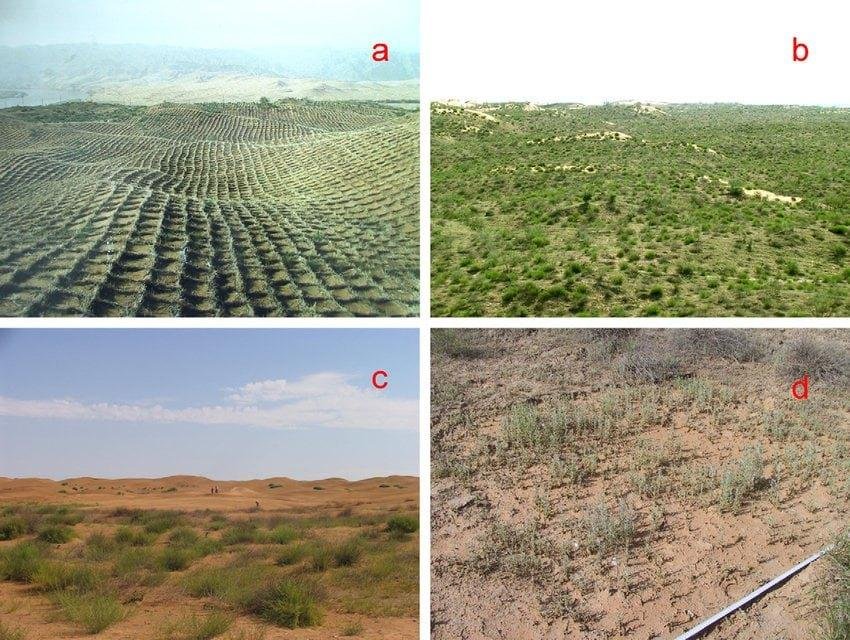
Mesh or cage fixation reduces sand transport near the surface.
Crosswind cut
In cross-section, the system works from top to bottom and from the wind inward. The outer barrier dampens the flow, the trench collects water, the compost pit retains organic matter, and the tree or shrub receives a milder microclimate.
| Element | Role in the context |
|---|---|
| Zone 6 barrier | slows down the wind and reduces sand drift |
| Trench / swale | collects and distributes water along the contour |
| Compost pit | retains moisture and initiates soil biology |
| Landing place | receives water, shade, organic matter and protection from direct wind |
Project node: 250 m module
One kilometer can be conveniently divided into four 250-meter modules. Each module has its own small unit: a greenhouse or nursery, a reservoir, a drip line, compost pits, trenches, plantings, and a protective barrier.
| Module component | Purpose |
|---|---|
| Greenhouse/nursery | growing and hardening seedlings before planting |
| Water tank | buffer for irrigation and emergency supplies |
| Drip line | precise water supply to landing units |
| Compost pits | soil and nutrition for starting plantings |
| Trenches | water interception and moisture distribution |
| Wind protection | reduction of sand, heat and evaporation |
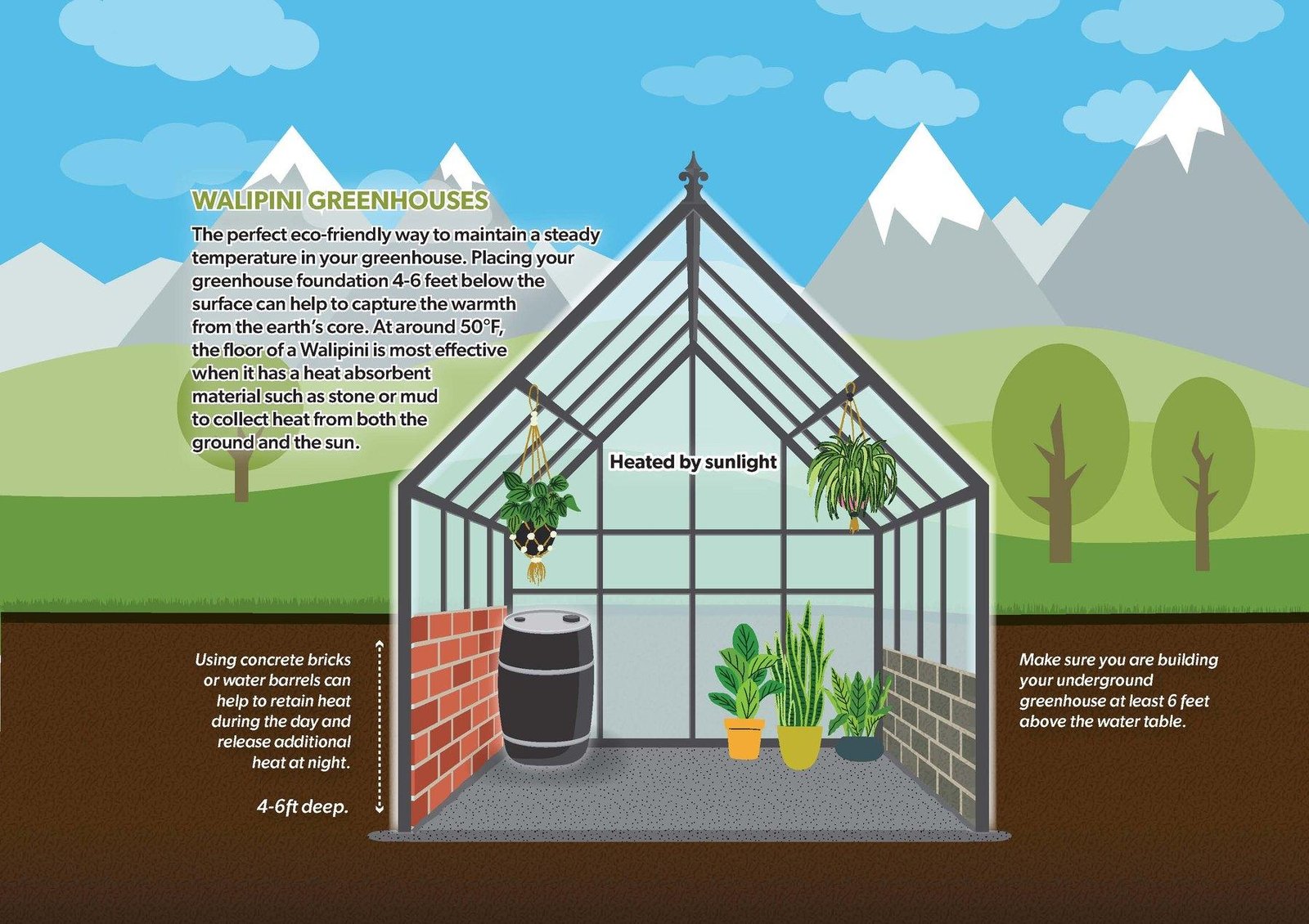
A semi-buried greenhouse protects planting material from wind, heat and drying out.
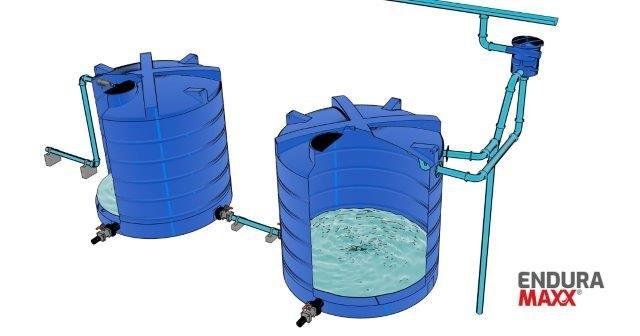
The water reservoir transforms watering from a random operation into a controlled mode.
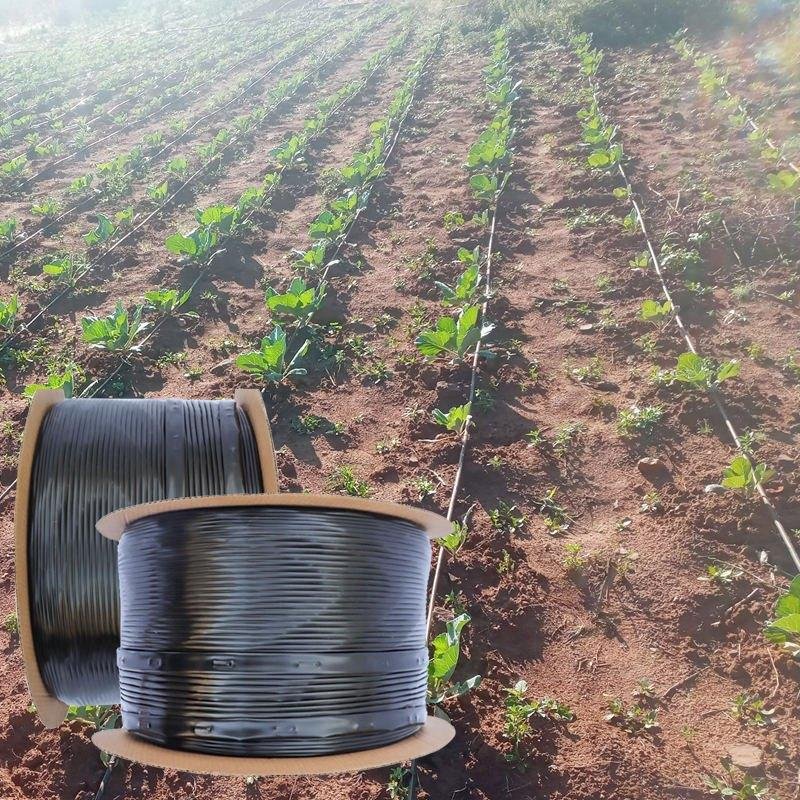
The drip line allows you to use water only where it is needed.
Water diagram
Water management should be simple and controllable: water source, reservoir, distribution, trenches, pits, and plants. If this order is disrupted, the plantings become unstable.
| Stage | What to control |
|---|---|
| Source | salinity, volume, regularity of supply |
| Tank | stock, cleanliness, access to service |
| Drop | pressure, blockages, uniformity of flow |
| Trenches | depth, direction, protection from destruction |
| Pits | organic matter, mulch, moisture |
| Plants | survival, stress, growth |
Actual dimensions for the working drawing
| Element | Size / step |
|---|---|
| Crescents | radius 1-2 m, step 3-5 m |
| Zai-yamy | diameter 30-60 cm, pitch 1-2 m |
| Trenches | depth 30-50 cm, width 40-60 cm |
| Trench lines | distance 5-10 m depending on the slope |
| Module | 250 m, repeated 4 times per 1 km |
| Pilot test | start with 100-200m before scaling |
What it looks like in reality
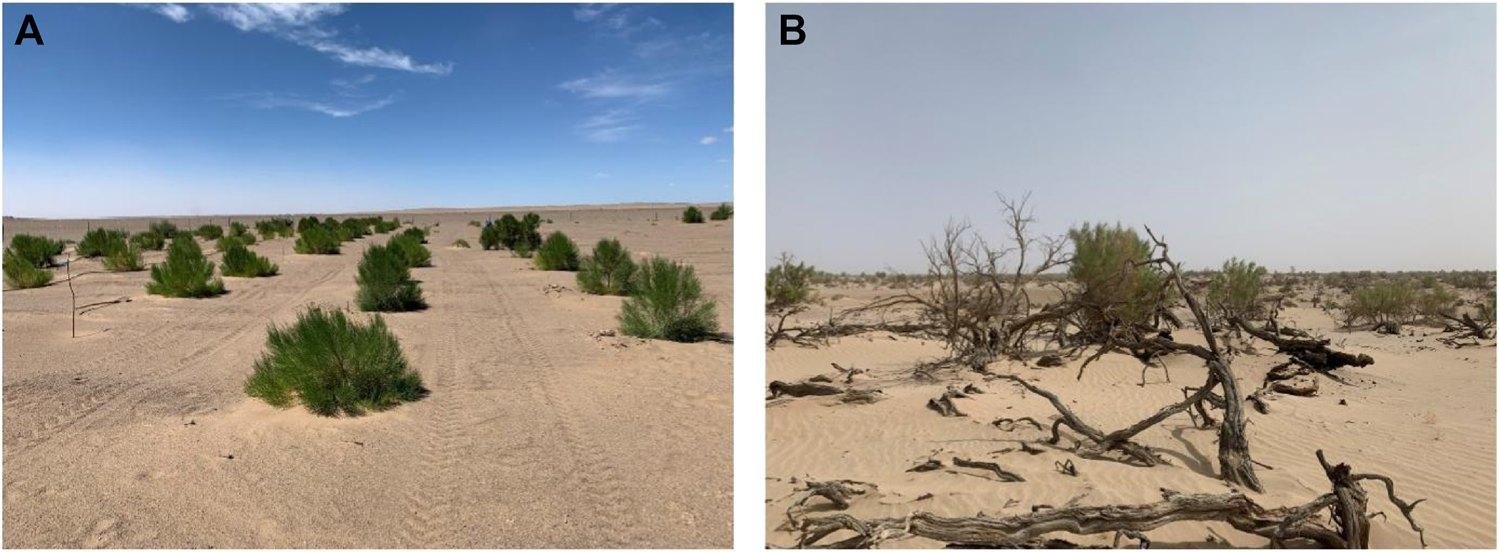
Dry zone plantings must work in conjunction with relief and surface protection.
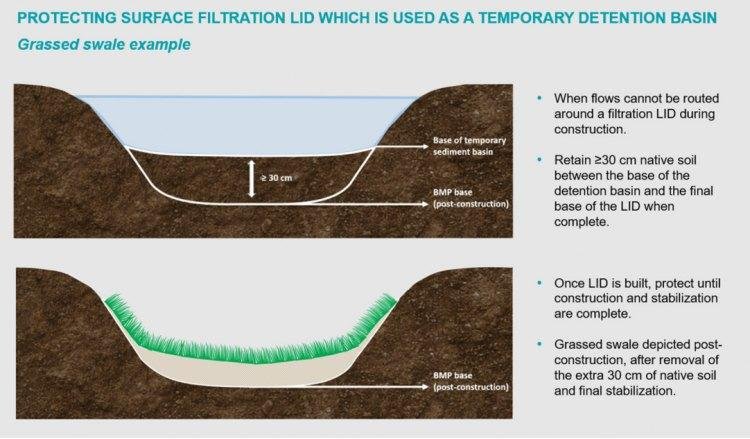
Swale trenches must be protected from destruction by wind and runoff.
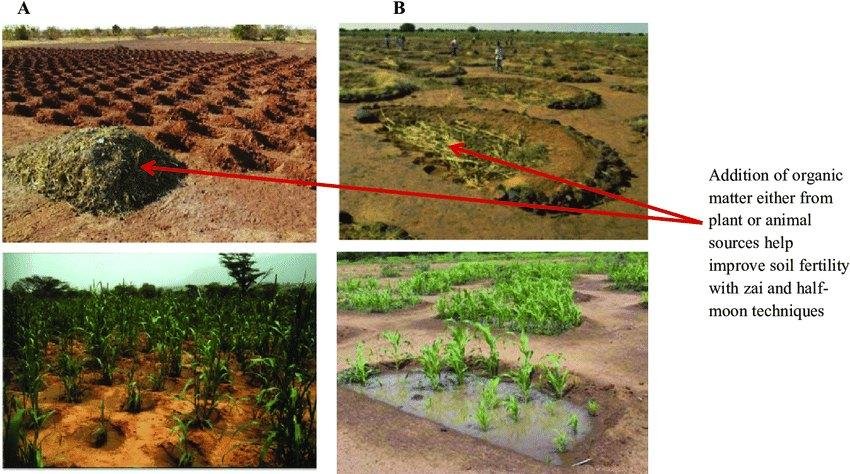
Half-holes and zai-pits create a repeatable grid of moisture, organic matter and plantings.
Key idea
The purpose of the 1km module isn't simply to plant plants. It's to slow the wind, retain water, create soil, and initiate life. In one year, the goal is system survival; in three years, stable green spots; in five years, a functioning corridor.