Unified table of herbs: forage and edible
A summary matrix of herbs for two functions: forage mass for system restoration and limited food crops for protected microzones.
Article by DREVO
Why is a unified table needed?
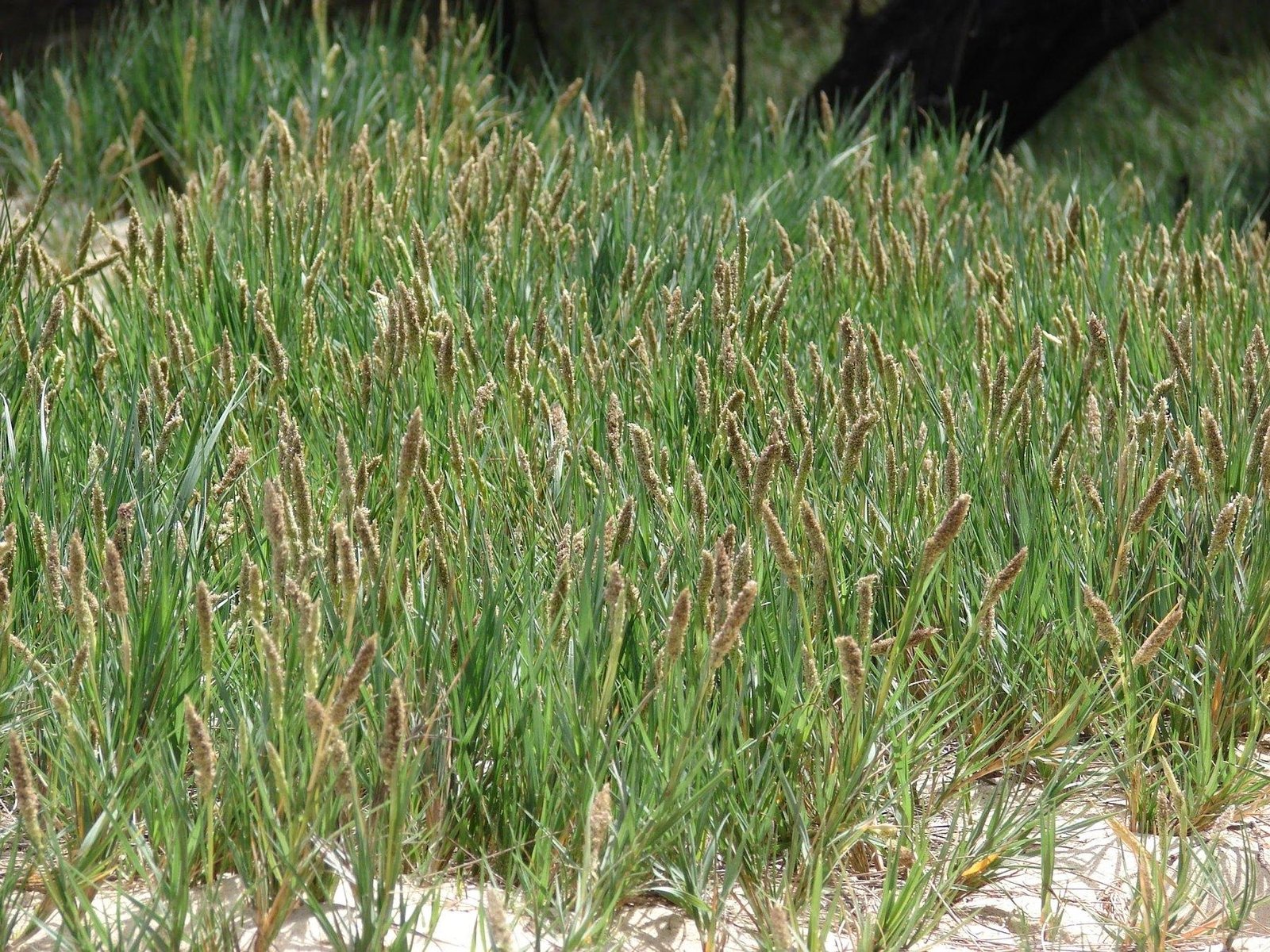
Grasses serve two distinct purposes. The first is to stabilize sand, seal the soil, and create a forage mass. The second is to provide a limited food layer in sheltered areas with shade, mulch, and controlled moisture.
Therefore, the table combines forage, industrial, and edible species, but does not mix them in terms of role. In the field, stable forage and groundcover grasses are the first to emerge, with edible greens appearing later.
Unified matrix of species
| View | Latin name | Water | Salt | Type | Purpose |
|---|---|---|---|---|---|
| Bermuda grass | Cynodon dactylon | very low | high | stern | pasture |
| Paspalum | Paspalum sheathed | low | very high | stern | salt zones |
| Panics | Panicum turgidum | very low | average | stern | desert |
| Laziurus | Lasiurus scindicus | very low | average | stern | dunes |
| Sporobolus | Sporobolus spicatus | very low | high | stern | sands |
| Eluropus | Aeluropus littoralis | very low | very high | stern | salt |
| Fescue | Reed fescue | average | average | stern | cover |
| Dactyl | Dactylis glomerata | average | low | stern | feed |
| Ryegrass | Perennial ryegrass | average | low | stern | dense cover |
| Alfalfa | Medicago sativa | average | low | stern | nitrogen |
| Clover | Clover spp. | average | low | stern | soil |
| Vetiver | Chrysopogon zizanioides | low | average | technical | roots, strengthening |
| Forage sorghum | Sorghum bicolor | low | average | stern | feed |
| Millet | Pennisetum glaucus | low | average | stern | feed |
| Purslane | Purslane | very low | average | edible | green |
| Amaranth | Amaranthus spp. | low | average | edible | green |
| Spinach | Spinacia oleracea | average | low | edible | leaves |
| Coriander | Coriander | average | low | edible | spices |
| Basil | Ocimum basilicum | average | low | edible | spices |
| Parsley | Crisp parsley | average | low | edible | green |
| Mint | Mentha spp. | average | low | edible | wet areas |
| Oregano | Common oregano | low | low | edible | spices |
| Thyme | Thymus spp. | very low | low | edible | soil |
| Salad | Green lettuce | average | low | edible | leaves |
| Arugula | Red caterpillar | average | low | edible | leaves |
| Dill | Anethum graveolens | average | low | edible | spices |
| Fennel | Common fennel | average | low | edible | spices |
| Chia | Spanish sage | average | low | edible | seeds |
| Swan | Chenopodium quinoa | low | average | edible | grain |
| Moringa leaves | Moringa oleifera | low | low | edible | nutritious leaf resource |
| Mesembryanthemum | Mesembryanthemum spp. | very low | high | edible | salt zones |
| Sesuvium | Sesuvium purslane | very low | very high | edible | salt |
| Carpobrotus | Edible Carpobrotus | very low | high | edible | ground cover |
How to use the list
| 1. Sand base Cynodon, Aeluropus and Sporobolus hold the surface and work with salt. | 2. Soil Medicago and Trifolium add feed mass and nitrogen. | 3. Food Portulaca, Amaranthus and aromatic herbs are placed in protected beds. |
|---|
Key idea
Grass isn't an addition, but the foundation of the entire system. The minimum starting kit: Cynodon + Aeluropus + Medicago + Portulaca. This is enough to hold the soil and begin forming a food layer.