Green corridor along the West Sahara Coastal Road
This is not decorative landscaping, but a linear road protection system: ocean fog, windbreak, living cover and soil engineering work together to reduce sand, retain moisture and create a microclimate.
Project goal
The corridor must protect the infrastructure
The purpose of the corridor along West Sahara Coastal Road is broader than planting greenery. It aims to reduce sand deposits on the road, create a milder microclimate, initiate the gradual restoration of the coastal ecosystem, and create a recognizable visual identity for the area.
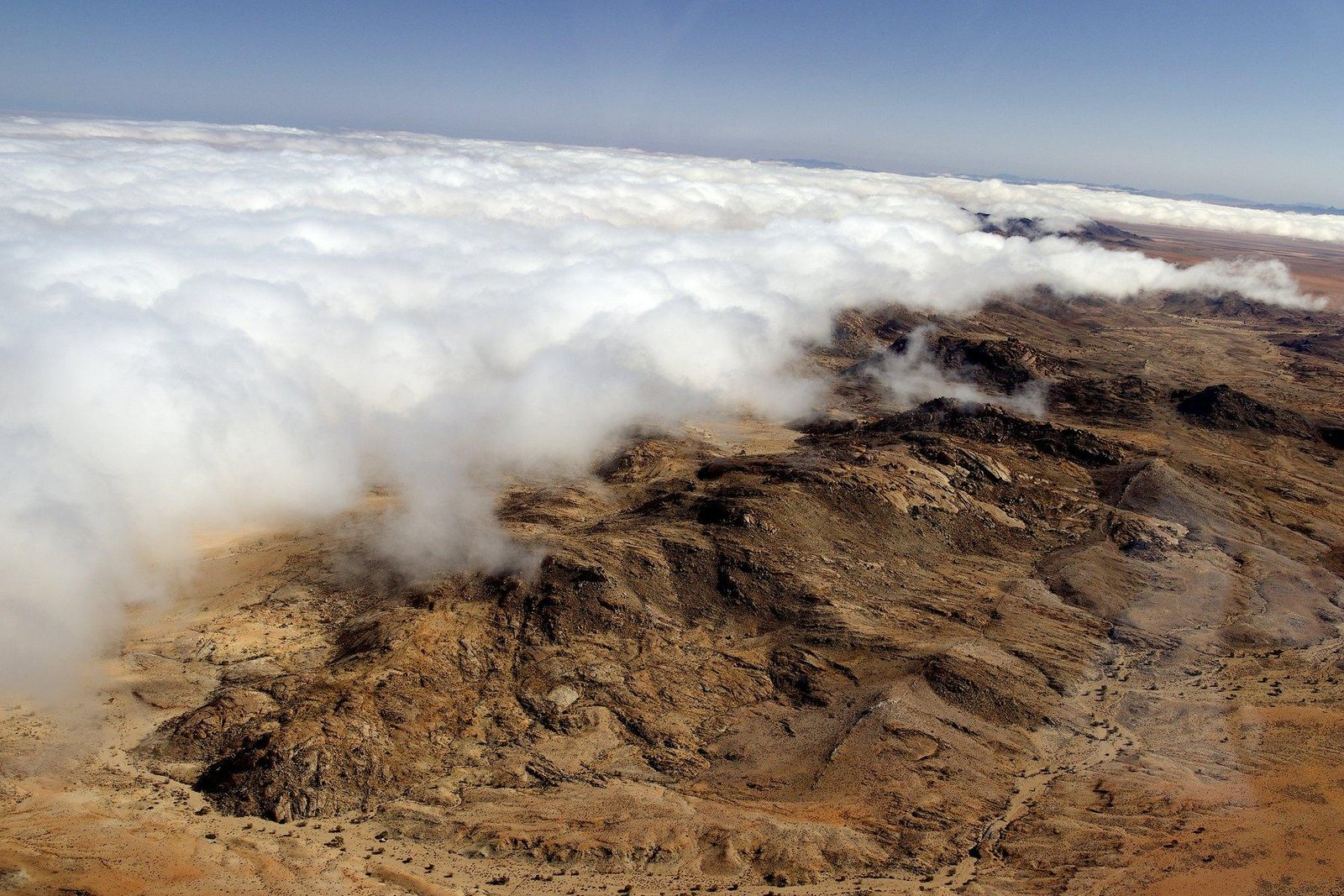
Ocean fog and moist winds are the main hidden resource of the coastal zone.
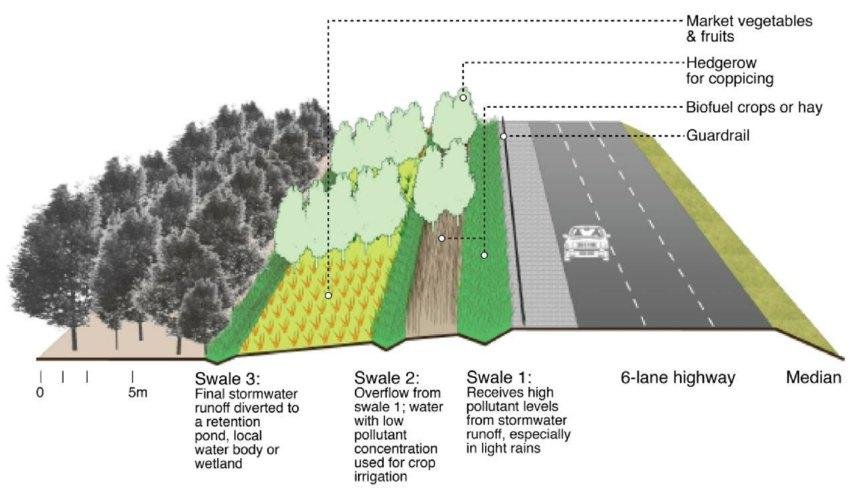
Road swale ditches help channel water and support roadside plantings.
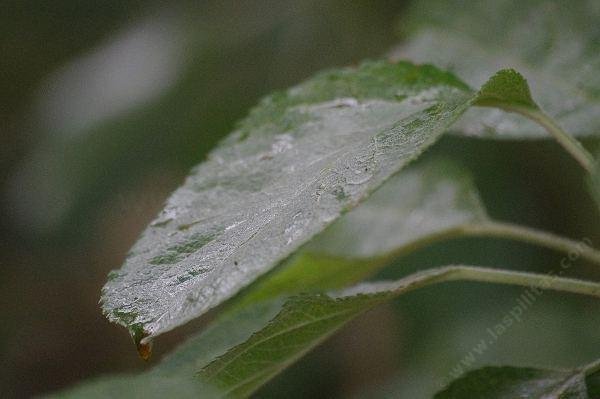
Condensation on the surface turns moist air into available droplets.
The main resource is ocean fog
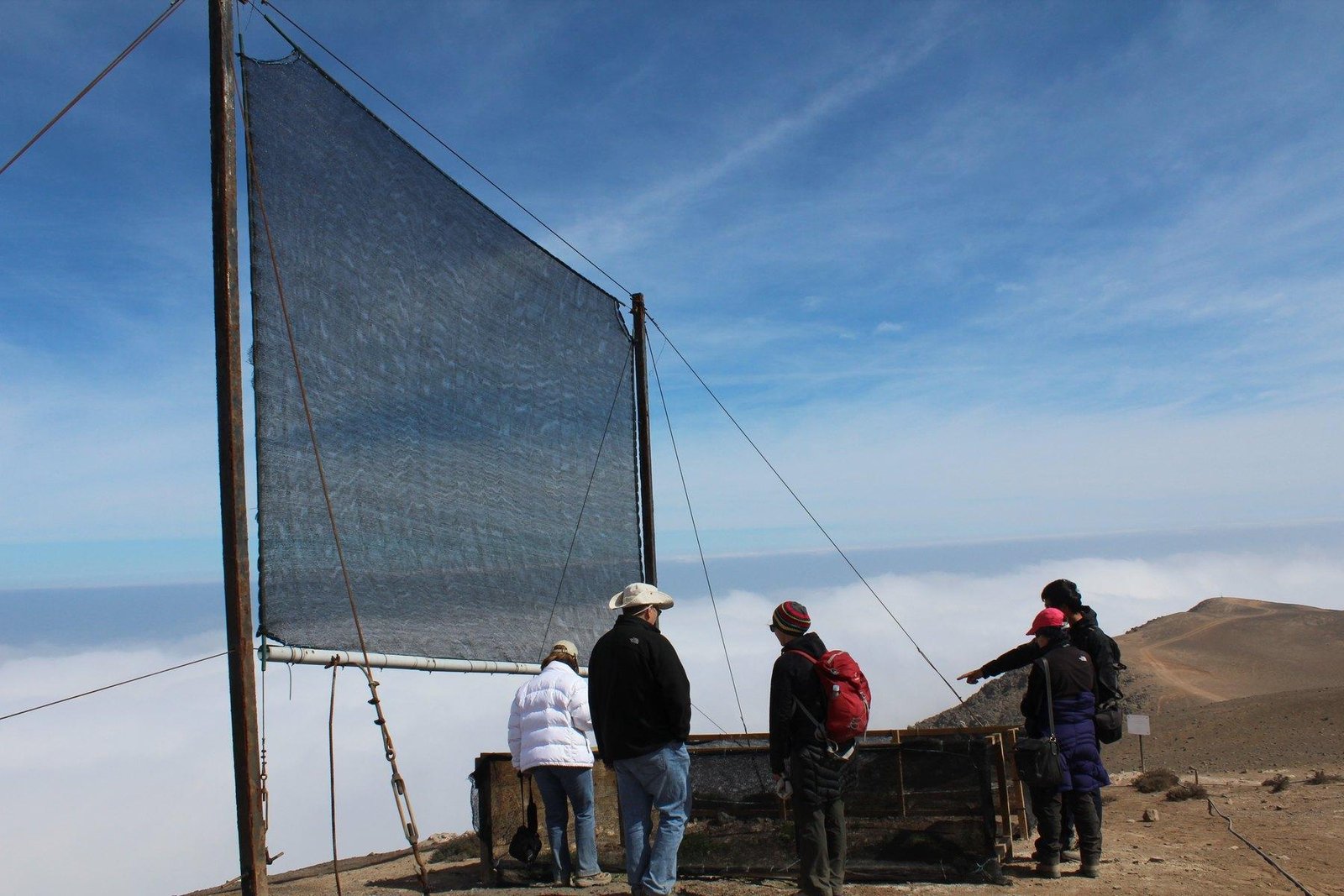
Along the ocean, fog, moist winds, and nighttime dew are present. These cannot be considered a complete replacement for a water supply at the start, but they can form the basis for passive water collection and reduce stress for the first line of plants.
| Source of moisture | Role in the system | Limitation |
|---|---|---|
| Fog | settles on nets, branches, leaves and stones | depends on the season and wind direction |
| Humid wind | supports condensation and reduces drying out | without a barrier, it can increase sand transport |
| Night dew | provides short-term moisture at the soil surface | requires mulch, rocks, or bio-cover for retention |
Line architecture
The system is built in layers: ocean → fog → barrier → plants → track. If one layer is removed, the others become less effective: a net without plants doesn't create a lasting effect, and plants without wind and soil protection lose moisture and are damaged by sand.
| Layer | What is posted | Function |
|---|---|---|
| Fog traps | nets 2-4 m high every 10-20 m | moisture collection and primary wind slowdown |
| Wind-biobarrier | tamarisk, acacia, salt-tolerant shrubs | sand blocking, moisture retention, first shade |
| Living cover | shrubs, resistant grasses, biocrust | soil fixation and microclimate creation |
| Soil engineering | stone lines, mini-depressions, embankments | water collection and reduction of losses from runoff and evaporation |
Soil engineering next to the road
Geometry is especially important for roadside corridors. Micro-depressions, stone lines, and low embankments should catch water without creating a hazard to the road infrastructure. Therefore, each element should be lower, more stable, and easier to maintain than those located further back.
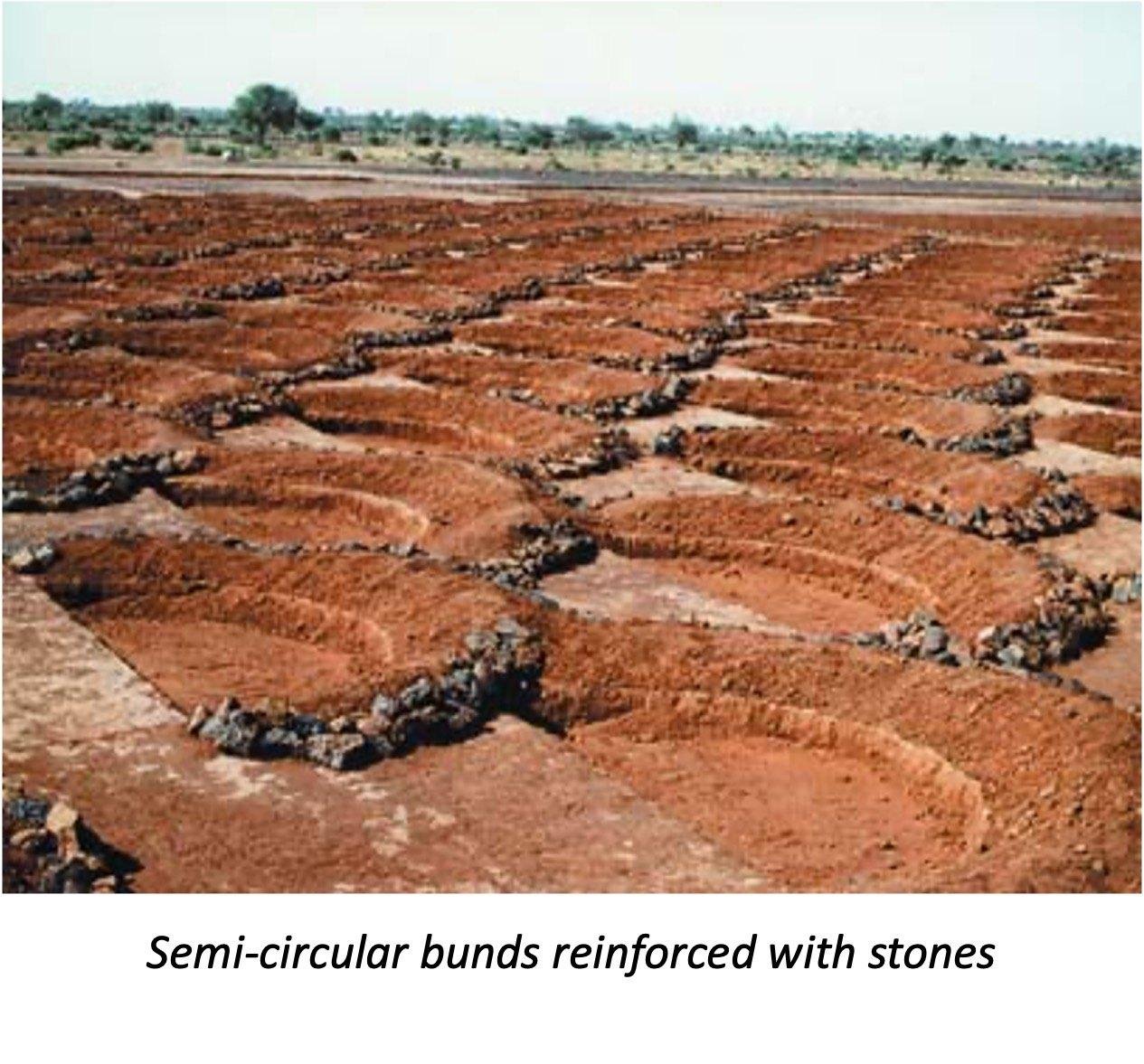
Low earthen bunds retain water and reduce surface runoff.
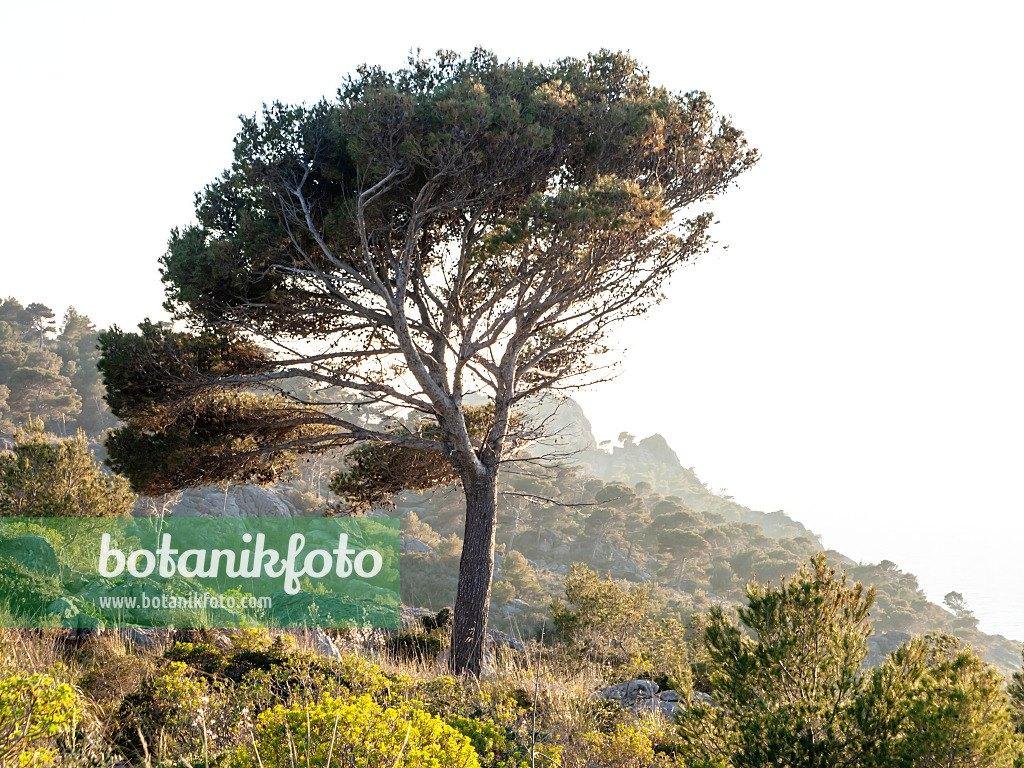
Drought-resistant trees only work after the soil and wind have stabilized.
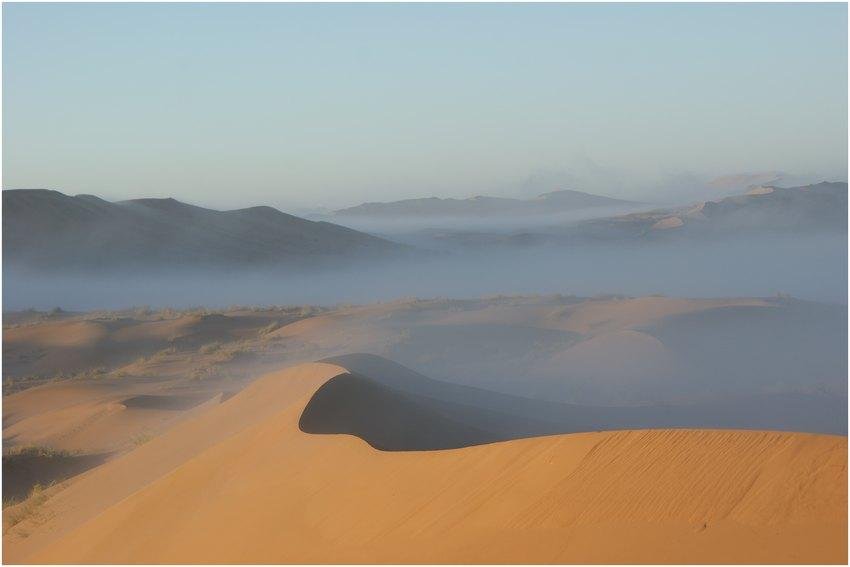
Coastal deserts can get moisture from fog, but need the right collecting surfaces.
Watering is only a start-up
The project shouldn't become a permanent water-dependent planting. Occasional drip irrigation or water supply is acceptable for the first 6-12 months, but once established, the system should gradually transition to passive moisture retention: mist, dew, mulch, rocks, soil, and appropriately selected species.
The key principle is that water is needed to launch the module, but stability must be ensured by geometry, barrier, soil, and plant selection.
Construction module
It's best to construct the corridor in segments. One segment, 50-100 meters long and 5-10 meters wide, can be tested and measured, and only then repeated further along the route. This approach reduces risk and allows for quick correction of errors in geometry, irrigation, and species selection.
| Parameter | Recommended range | Why is this necessary? |
|---|---|---|
| Segment length | 50-100 m | convenient to build, maintain and compare results |
| Width | 5-10 m | enough for mesh, barrier and living cover |
| Check | 1 season | sand, moisture, viability and maintenance assessment |
| Scaling | repetition of successful modules | controlled expansion without error on the entire route |
Expected effect in 1-3 years
| Effect | How does it manifest itself? |
|---|---|
| Less sand on the road | the wind loses speed, some of the sand is retained in the first line |
| Lower surface temperatures | shade, mulch and damp microzones appear |
| More moisture near the ground | fog and dew remain in the soil and surfaces longer |
| Ecosystem stabilization | the soil begins to hold grasses, shrubs and biocrust |
Fair Limits
Without proper geometry, the corridor won't retain water. Without soil work, plants will be dependent on irrigation. Without phasing, the error will be repeated along the entire length of the road. But with the right system, such a corridor is feasible: similar principles are used in coastal fog zones and arid land stabilization projects.
DREVO's powerful idea here is that the road ceases to be just a means of transportation. It becomes the support for a life corridor, where air turns to water, the desert surface begins to retain moisture, and the infrastructure receives natural protection.