P&L model: 30 km project
The financial model shows how a 30-kilometer green corridor goes through the first two costly years, generates its first revenue in the third year, and becomes a sustainable infrastructure with multiple revenue streams.
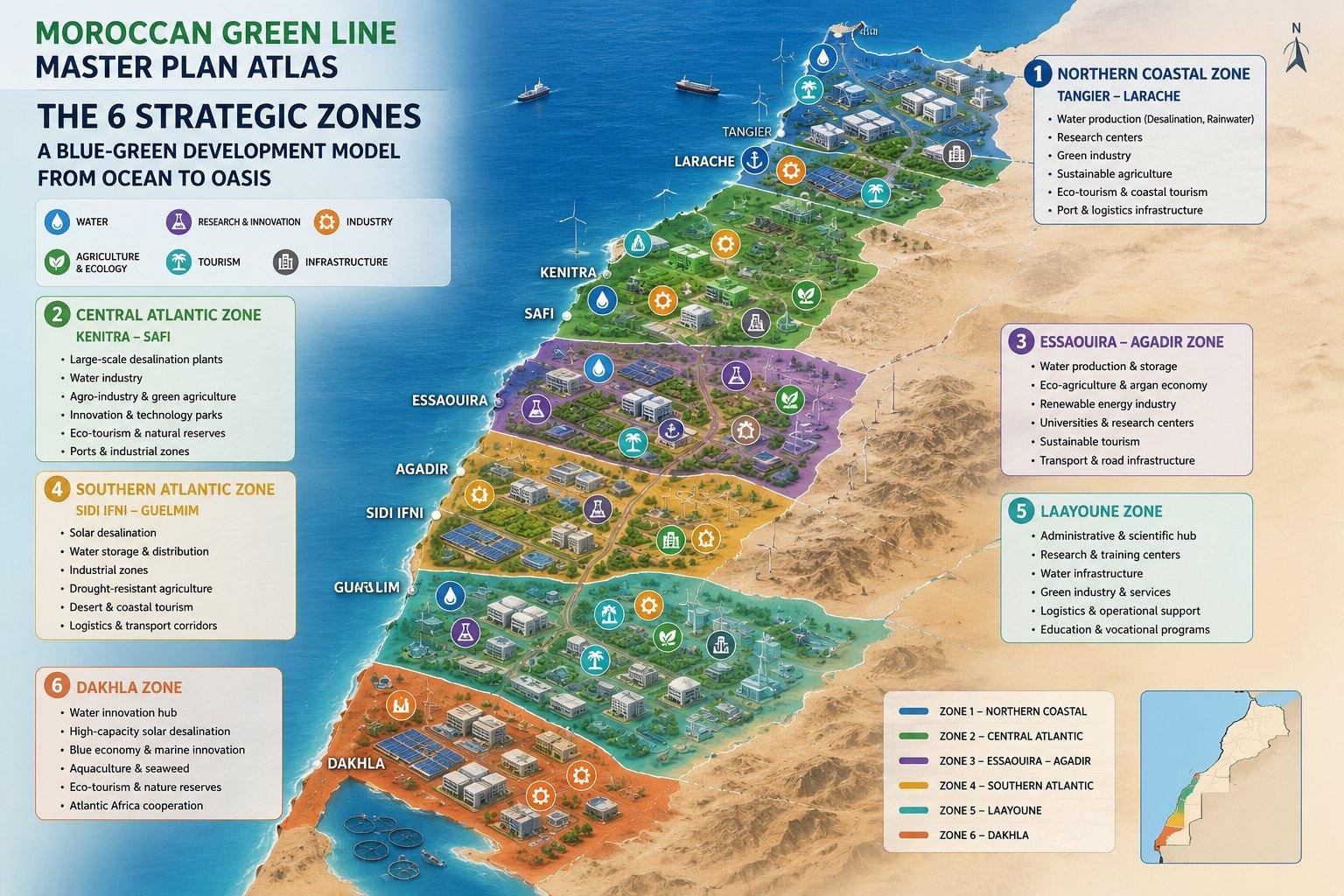
Initial assumptions
The model is considered as a controlled system for 300 hectares
Basic calculation: length 30 km, active width approximately 100 m, area approximately 300 hectares. The first and second years are considered the launch phase, the third year yields initial revenue, the fourth and fifth years are the growth phase, and by the sixth year the model reaches a stable level.
| Parameter | Meaning | Note |
|---|---|---|
| Project length | 30 km | scalable line of repeatable modules |
| Active width | about 100 m | working area of water, soil, plants and maintenance |
| Square | about 300 hectares | the economy is calculated based on the active zone |
| Reaching income | year 3 | Before this, the main focus was on starting the system |
| Stability | year 6+ | the project operates as a production and environmental infrastructure |
CAPEX: initial investment
Investments are directed not only at planting, but also at creating a system: sand stabilization, relief, water, greenhouses, algae farms, logistics, and equipment.
| CAPEX Article | Rating |
|---|---|
| Land / access | 0-200 000 € |
| Stabilization | 300 000 € |
| Relief | 500 000 € |
| Water: Desalination and Network | 700 000 € |
| Greenhouses | 200 000 € |
| Algae: farms | 400 000 € |
| Logistics and technology | 300 000 € |
| Total CAPEX | 2.4-3.0 million € |
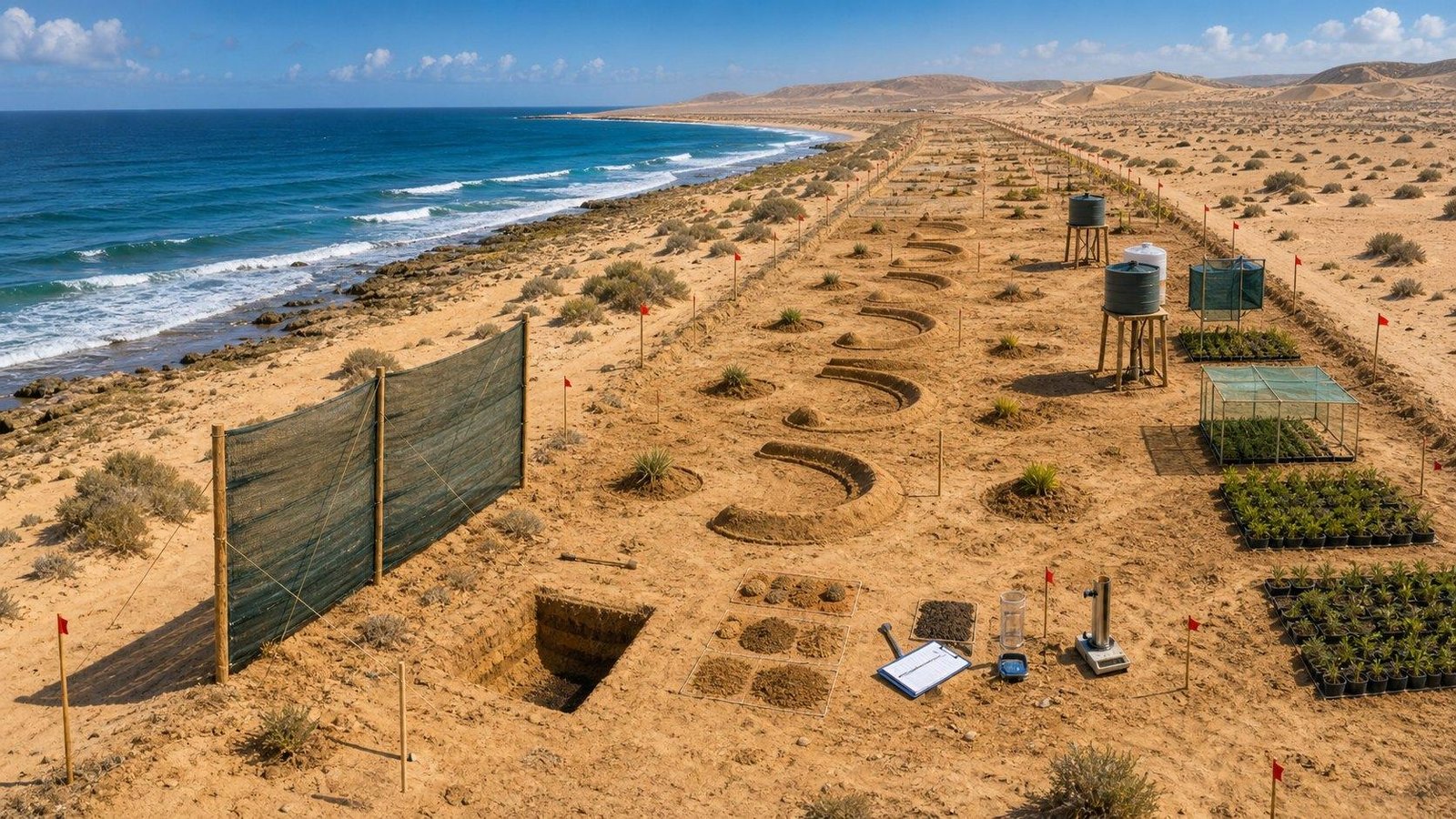
The pilot logic is transferred to 30 km only after checking the water, wind, soil and plantings.
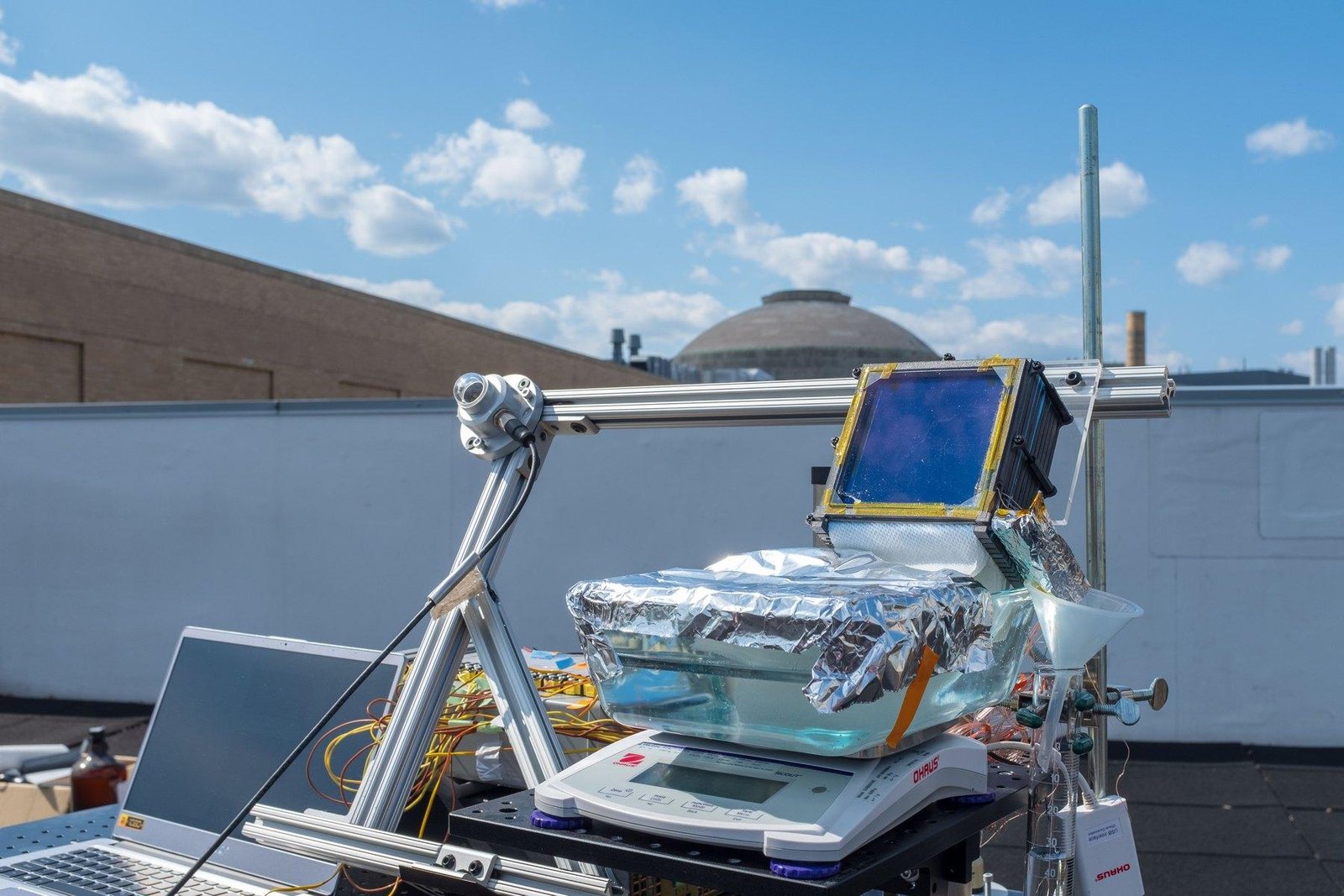
Desalination and water distribution are the central capital block of the model.
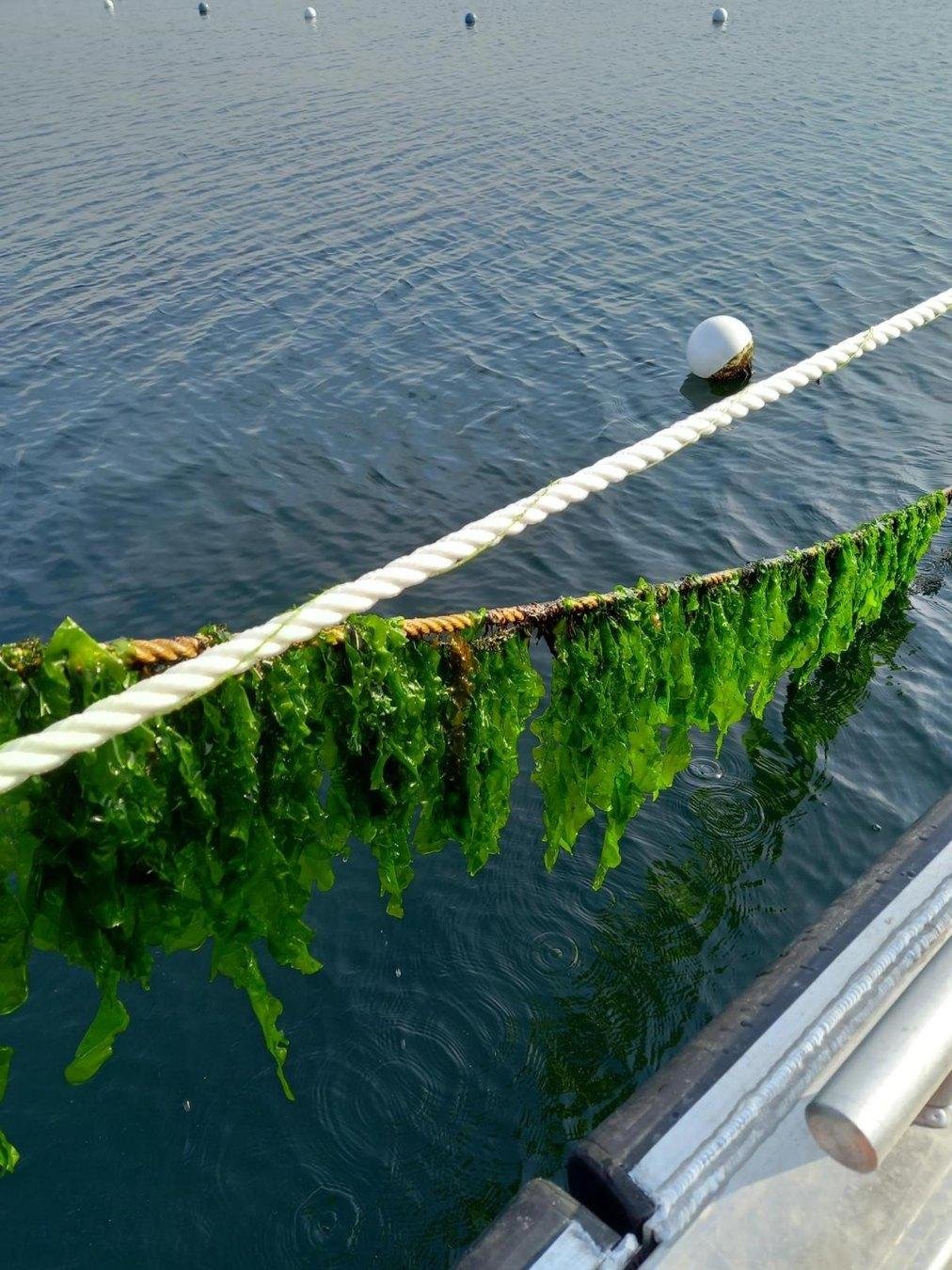
Algae farms add a production block to the ecological infrastructure.
OPEX: annual expenses
Operating expenses must cover a permanent crew, water, energy, maintenance, logistics, and consumables. In the base model, annual OPEX is approximately €550,000.
| OPEX Article | €/year |
|---|---|
| Staff | 250 000 |
| Water and energy | 100 000 |
| Service | 80 000 |
| Logistics | 70 000 |
| Consumables | 50 000 |
| Total OPEX | 550,000 €/year |
Income by year
Revenue grows gradually. In the first year, funds come primarily from grants and small-scale seedling sales; then, algae, agriculture, carbon payments, and food products are added.
| Year | Agricultural | Saplings | Seaweed | Carbon | Products | Grant | Total income |
|---|---|---|---|---|---|---|---|
| 1 | 0 | 50 000 | 0 | 0 | 0 | 200 000 | 250 000 € |
| 2 | 0 | 150 000 | 50 000 | 0 | 0 | 150 000 | 350 000 € |
| 3 | 200 000 | 200 000 | 100 000 | 100 000 | 0 | 0 | 600 000 € |
| 4 | 400 000 | 300 000 | 150 000 | 200 000 | 150 000 | 0 | 1 200 000 € |
| 5 | 600 000 | 300 000 | 200 000 | 300 000 | 300 000 | 0 | 1 700 000 € |
| 6+ | 800 000 | 200 000 | 250 000 | 400 000 | 500 000 | 0 | 2 150 000 € |
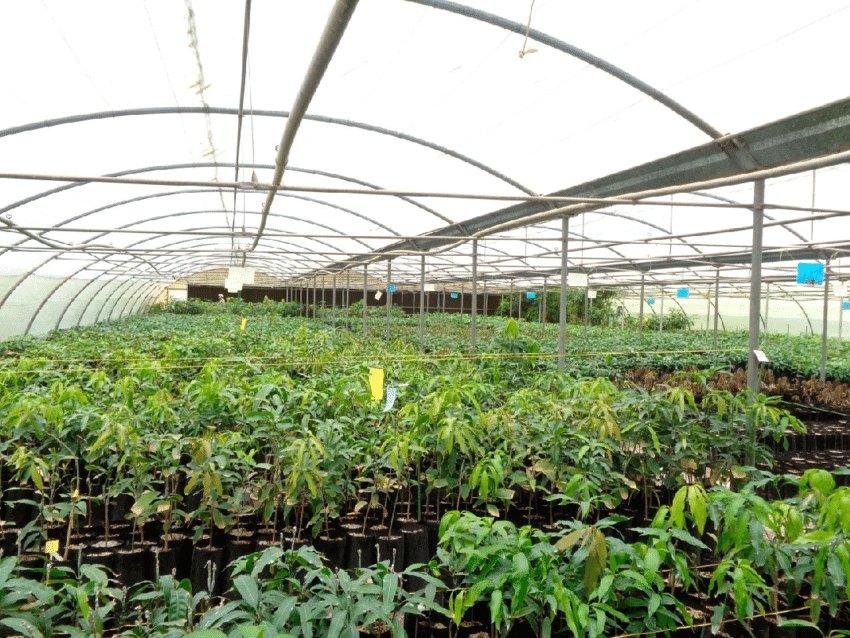
Saplings provide early income and at the same time provide material for expansion.
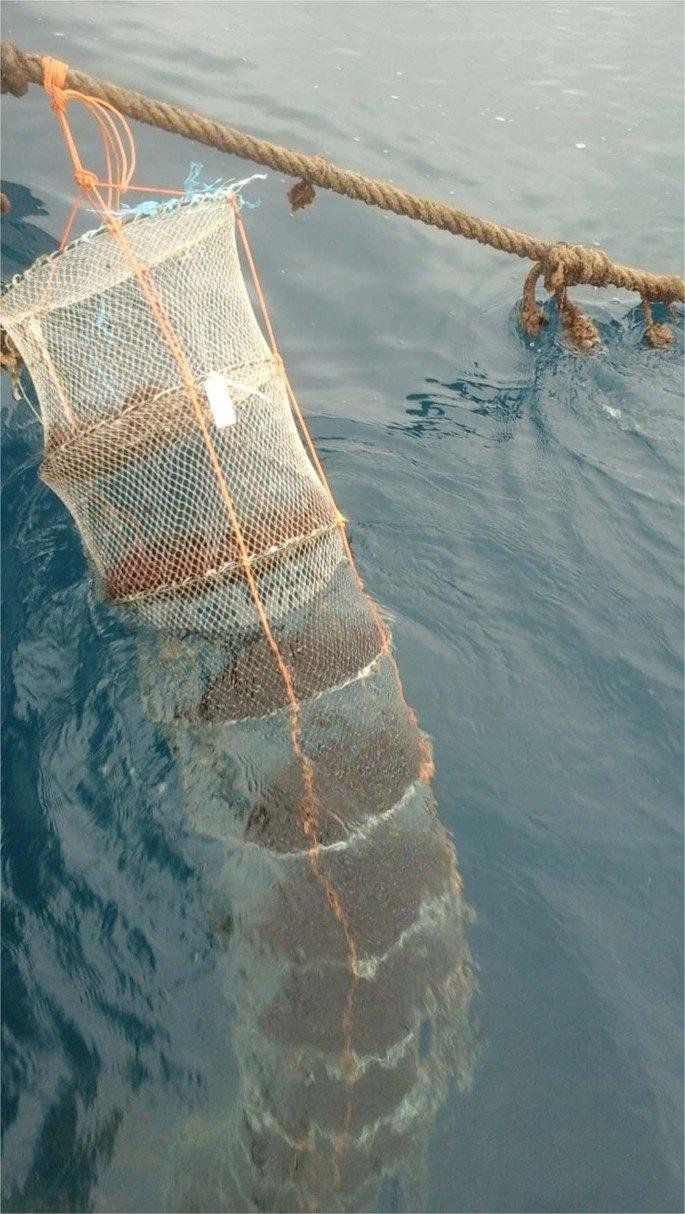
Algae start working earlier than mature trees and support P&L in the second phase.
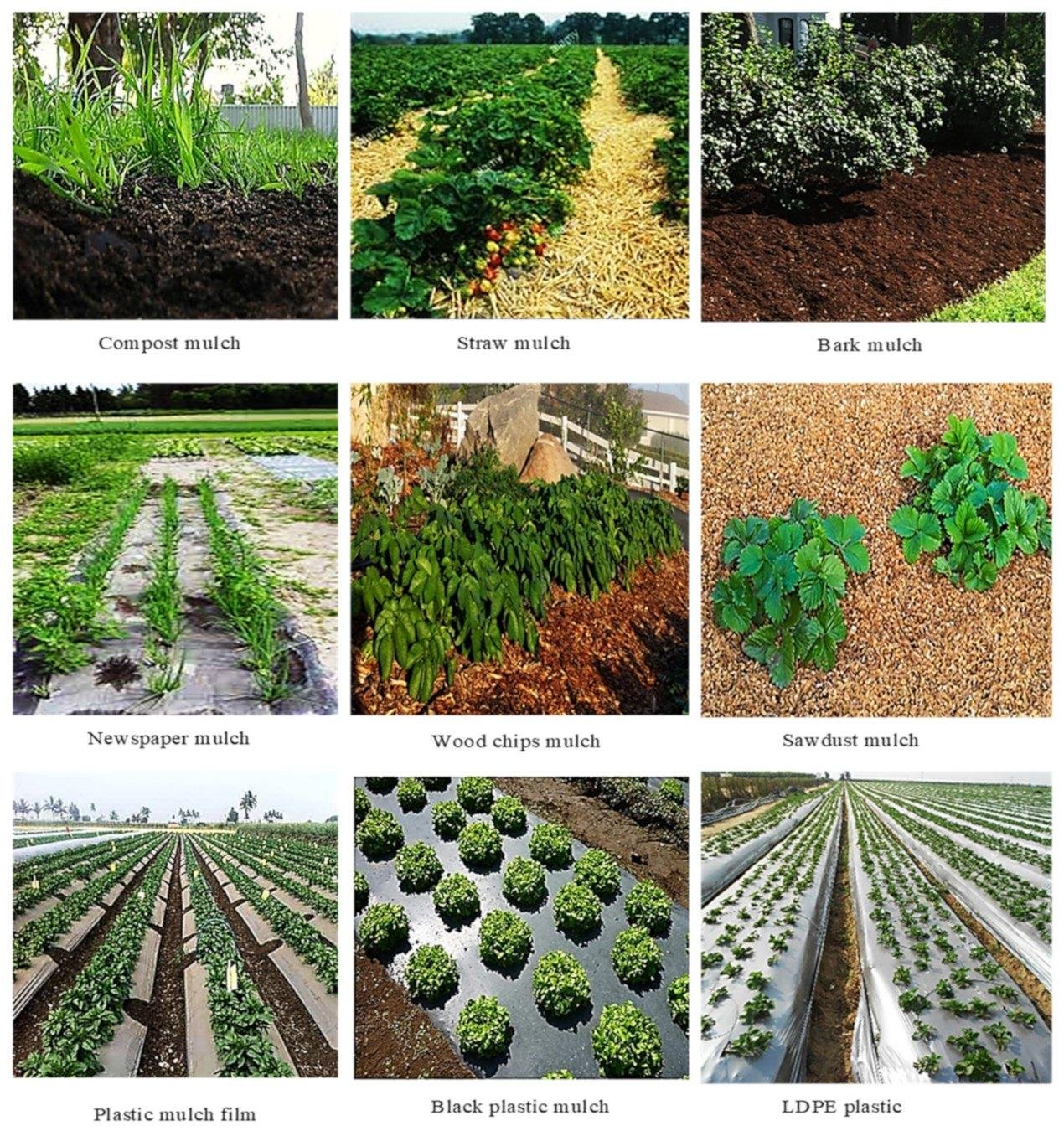
Soil restoration increases land value and unlocks carbon logic.
Net profit
During the first two years, the model remains negative because the system is still being built. The transition to positive results begins in the third year, and the main growth occurs after the inclusion of several revenue blocks.
| Year | Income | Consumption | Net profit |
|---|---|---|---|
| 1 | 250k | 550k | -300k |
| 2 | 350k | 550k | -200k |
| 3 | 600k | 550k | +50k |
| 4 | 1.2M | 600k | +600k |
| 5 | 1.7M | 650k | +1,05M |
| 6 | 2,15M | 700k | +1.45M |
Break-even benchmark: years 3-4. With an investment of approximately €3 million and a profit of approximately €1.4 million/year in the sixth year, the estimated payback is in the range of 4-5 years.
Strengths of the model
| Strong point | Why is this important? |
|---|---|
| Multiple sources of income | the model does not depend only on the harvest or one market |
| Scalability | each successful module can be repeated on the following kilometers |
| Sustainability | water, soil, biomass and nursery support each other |
| ESG and climate value | the project may be of interest to the government, investors and international programs |
| Infrastructure effect | sand reduction, road protection and land restoration have their own public value |
Weaknesses and how to improve P&L
| Risk | What to do |
|---|---|
| Water is the key risk | build a reserve, calculate the cost per liter, combine desalination, fog, economical irrigation and monitoring |
| Management | create a single operator, a work calendar, and transparent accounting of indicators |
| The first two years without profit | plan working capital and the grant portion in advance |
| Slow income from trees | Accelerate revenue through nurseries, algae, subsidies, and local services |
| High costs | use local materials, simple designs and manual labor where it is safe for quality |
Conclusion
The P&L shows that the project is long-term but economically viable if properly structured. The main challenge is to survive the first two years of launch, maintain water management, and quickly generate early revenues: seedlings, algae, grants, and environmental benefits.