Annual plan: 12 months
The first year of the pilot shouldn't be a mass tree planting. It's a year of engineering preparation: understanding wind and water, stopping sand, collecting moisture, cultivating the soil, growing the planting material, and only then expanding the living layer.
First year logic
First the environment, then the plants
If trees are planted directly in an open coastal desert, the system will lose water, soil, and some plants. Therefore, the first year is structured as a sequence: exploration → protection → microrelief → water → soil → nursery → planting → adjustment.
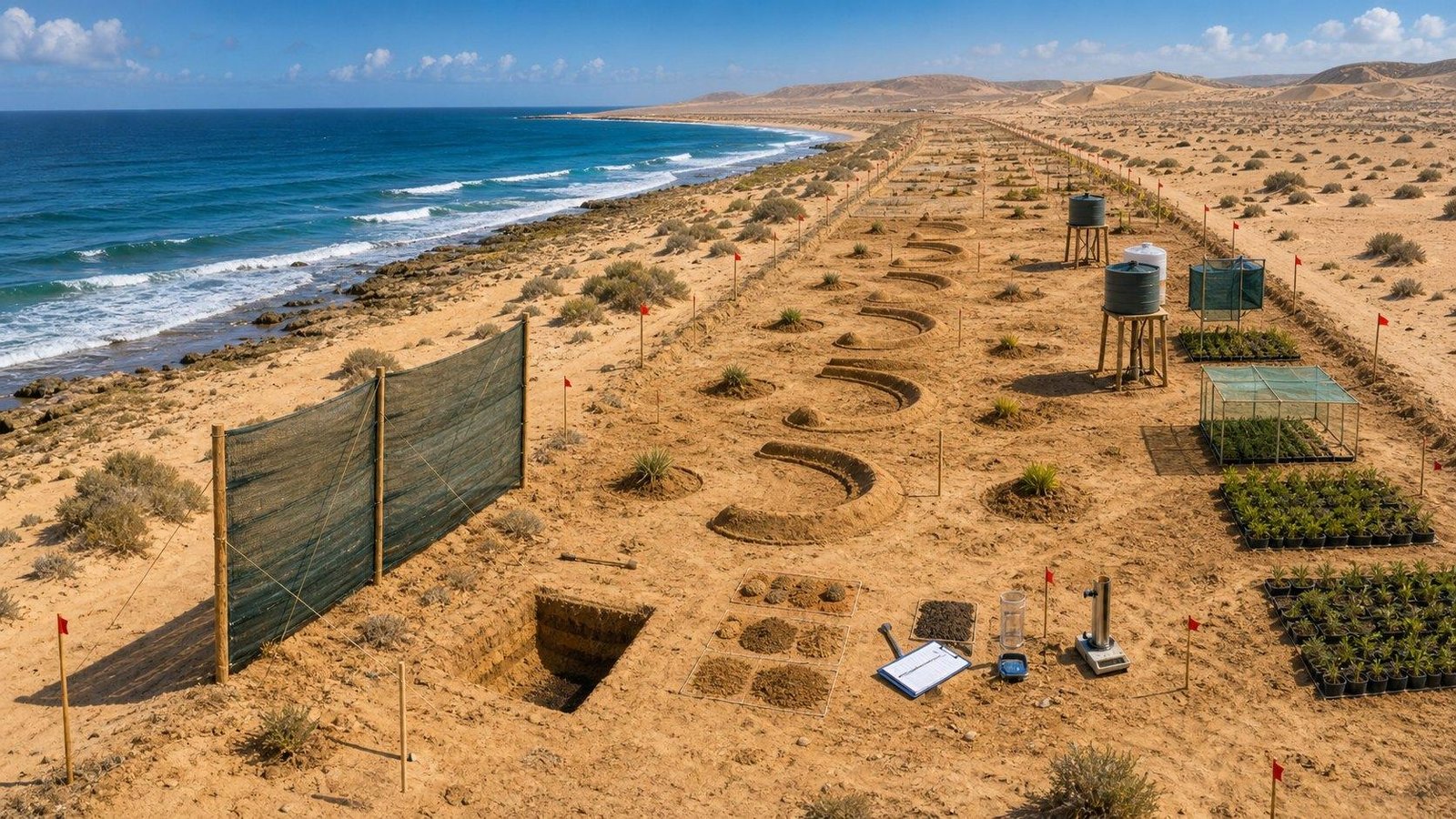
Months 1-2: coastal pilot, 1km marking, soil tests, water, fog and future landing zones.
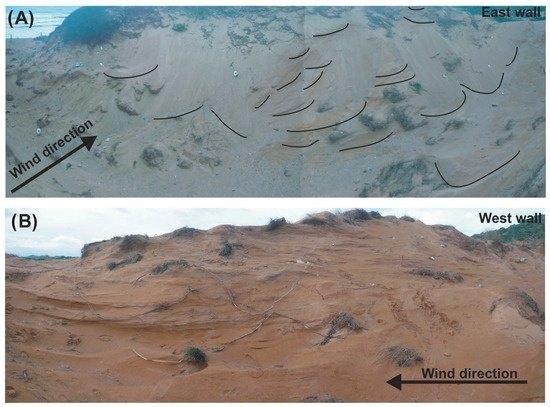
Months 1-2: Coastal dynamics and coastal data help to correctly position the pilot.
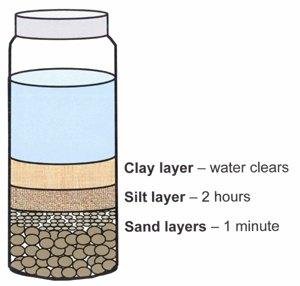
Months 1-2: A simple soil test shows the proportion of sand, silt, clay and organic matter.
Work calendar
| Period | The main task | What to do | Result |
|---|---|---|---|
| Months 1-2 | Reconnaissance and marking | Divide the pilot kilometre into zones, measure the wind, check the soil, clay, salinity and future water collection areas. | A site map and clear work logic appear. |
| Months 2-4 | Protection from wind and sand | Place the first windbreaks, nets, straw or plant barriers across the direction of sand transfer. | The wind weakens and the sand begins to linger. |
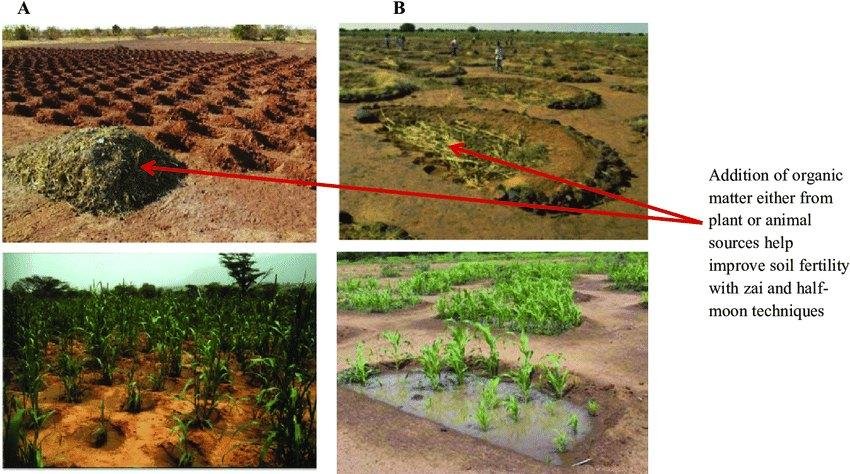
| Months 3-6 | Microrelief | Make half-moons, zai-pits, contour trenches, stone circles and low ramparts. | Rain, fog and irrigation water do not drain away immediately. |
| Months 4-7 | Water system | Start up tanks, drip lines, mist net test and small solar desalination system. | There is basic water for soil, seedlings and starter plants. |
| Months 5-9 | Soil and organic matter | Add compost, seaweed, dry grass, mulch, biocrust and microbiological additives. | The sand begins to act as future soil. |
| Months 6-10 | Greenhouses and seedlings | Set up semi-buried greenhouses, germination, growing and hardening zones. | A constant flow of adapted planting material appears. |
| Months 7-12 | Planting by levels | First grasses, then shrubs, then the most resistant trees in protected microzones. | The first living nuclei of the corridor are formed. |
| Months 10-12 | System adjustment | Strengthen weak spots, add mulch, redistribute water, replant, and refine the second year plan. | The pilot moves from an experiment to a controlled model. |
Protection, water and soil
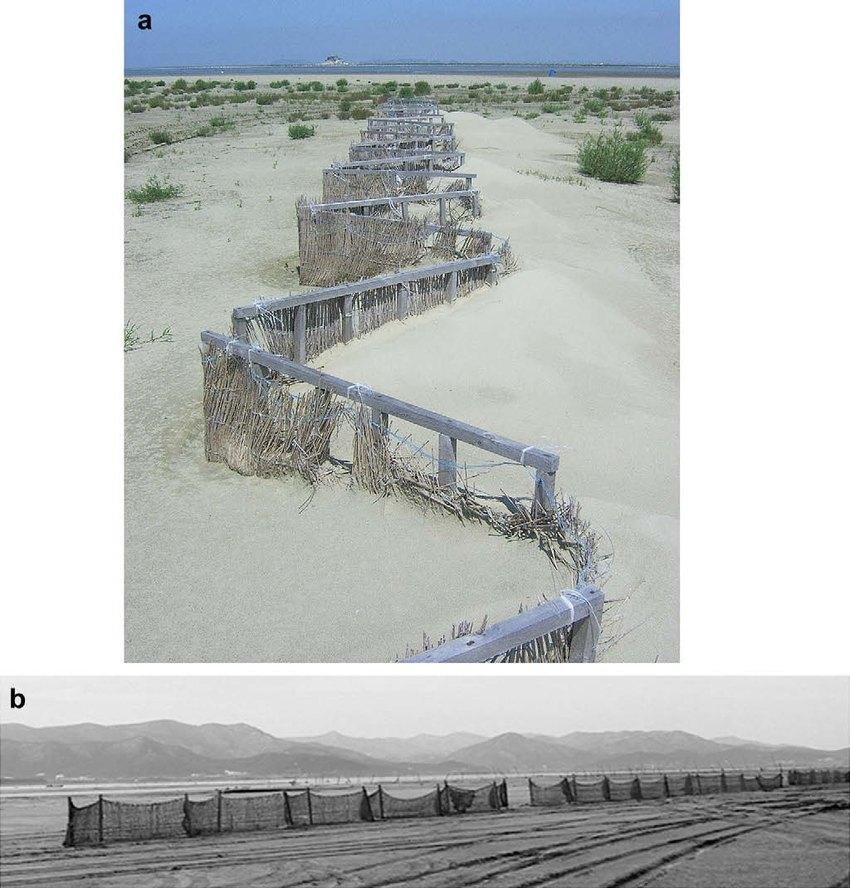
Months 2-4: Windbreaks and low barriers reduce wind speed and sand transport.
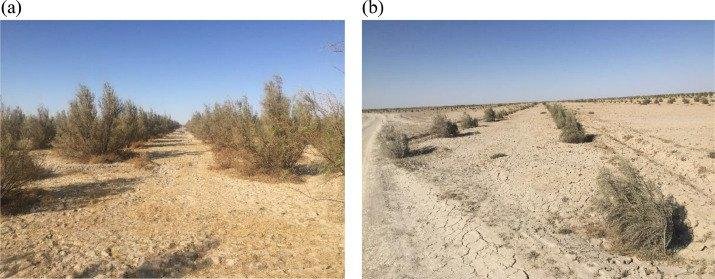
Months 2-4: protective strips act as the first contour of the future green corridor.
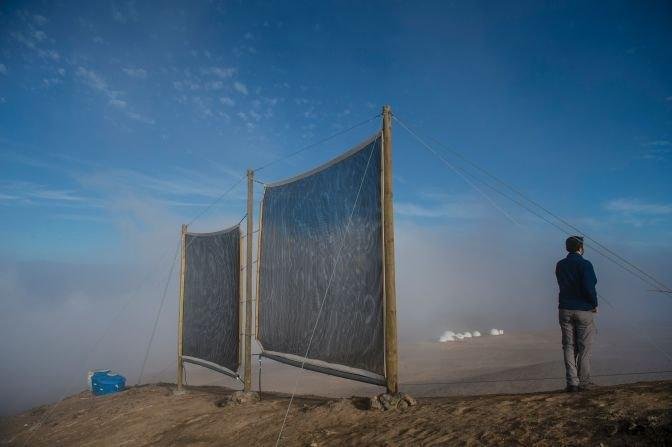
Months 4-7: Foggers test how much moisture can be recovered from ocean fog.
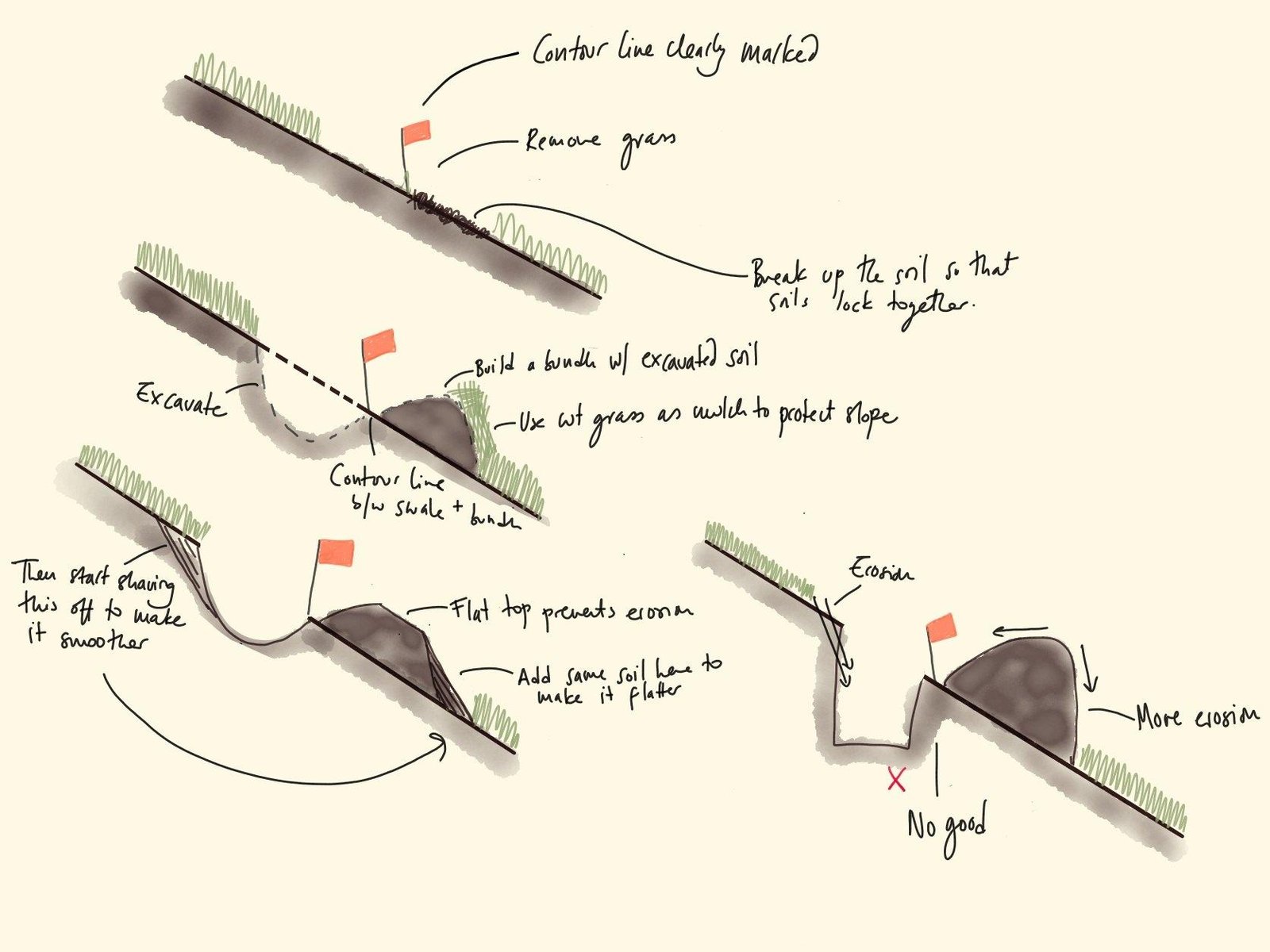
Months 3-6: Contour lines and levees slow runoff and reduce erosion.
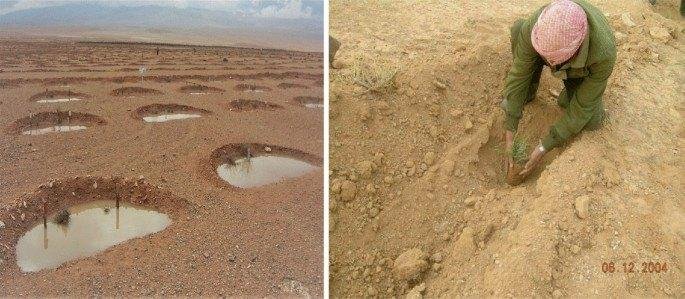
Months 3-6: Catchment elements link the microrelief, soil and plants.
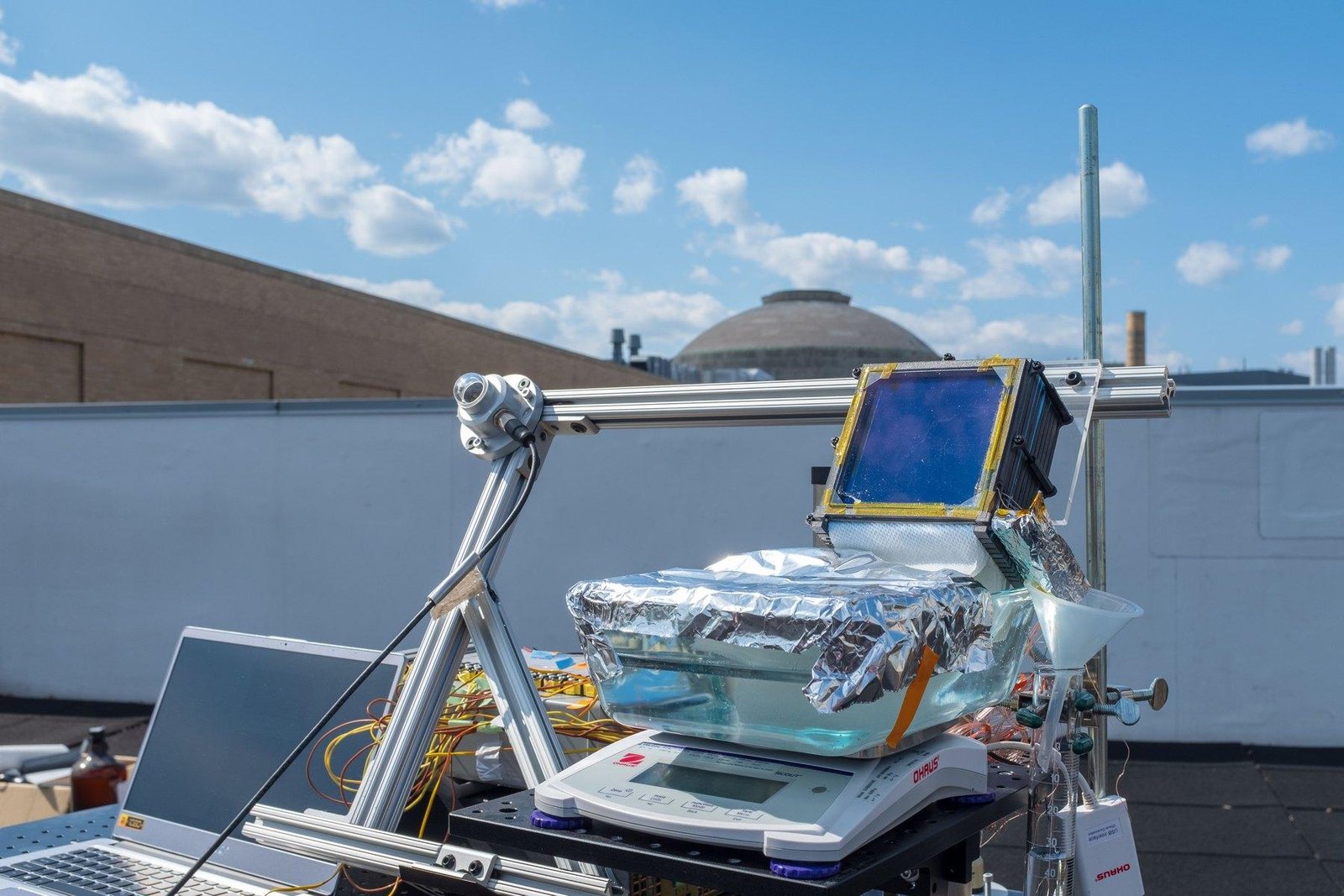
Months 4-7: Small-scale solar desalination provides the technological basis for sustainable water supply.
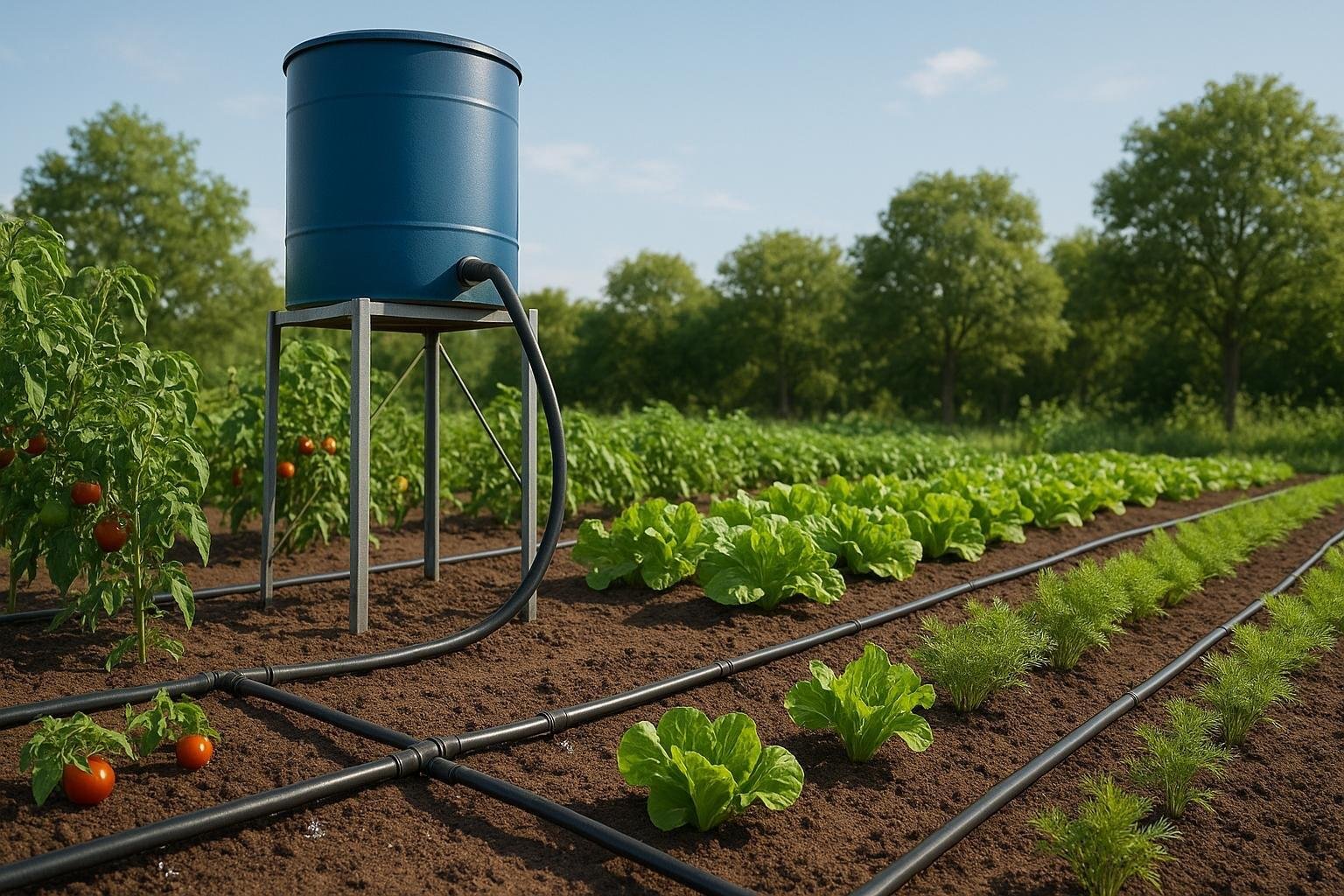
Months 4-7: Solar energy reduces the water system's dependence on external infrastructure.
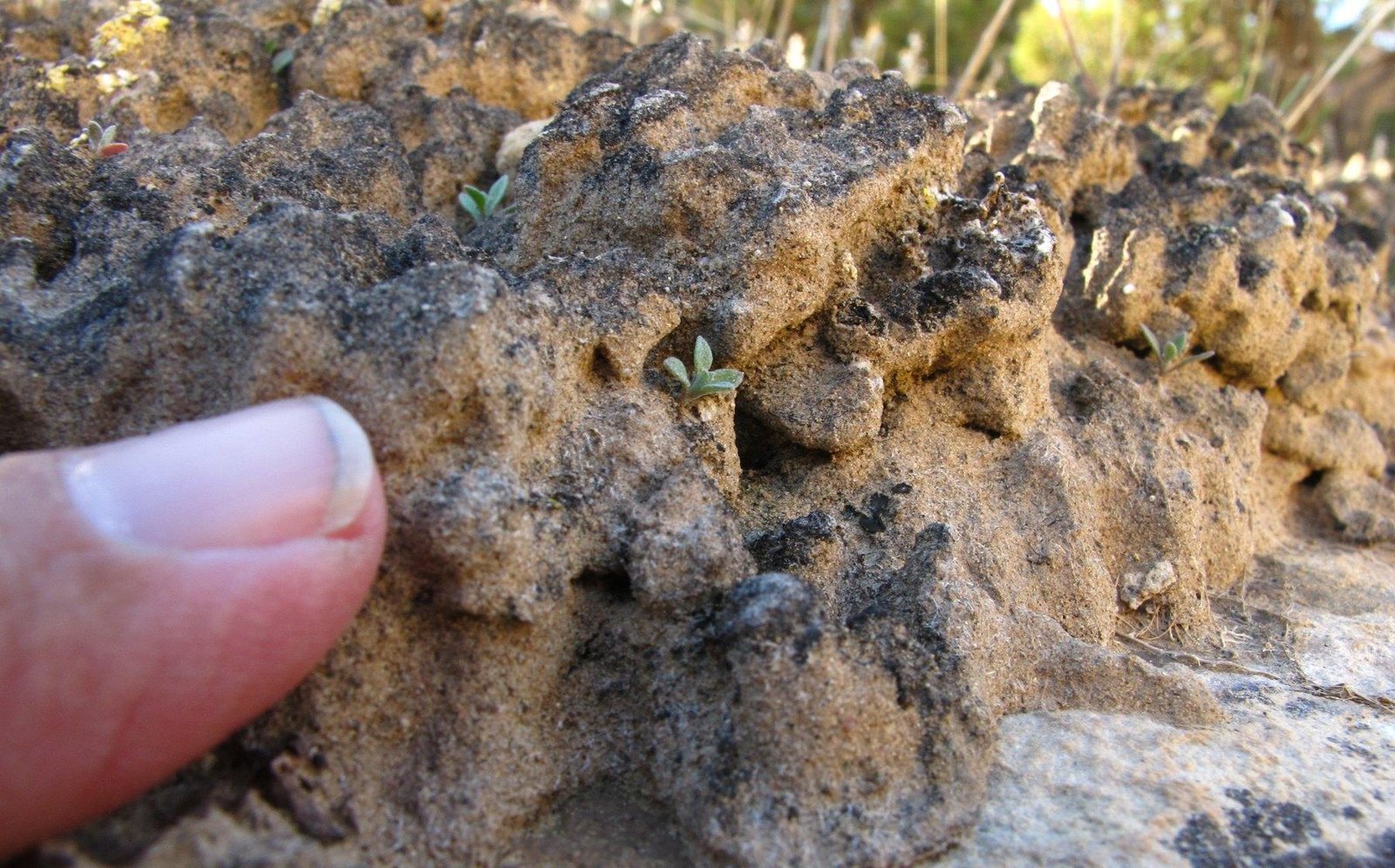
Months 5-9: Biocrust and organic matter transform the sand into a living surface capable of retaining moisture.
Nursery and planting material
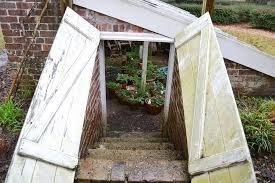
Months 6-10: A semi-buried greenhouse reduces overheating and protects seedlings.
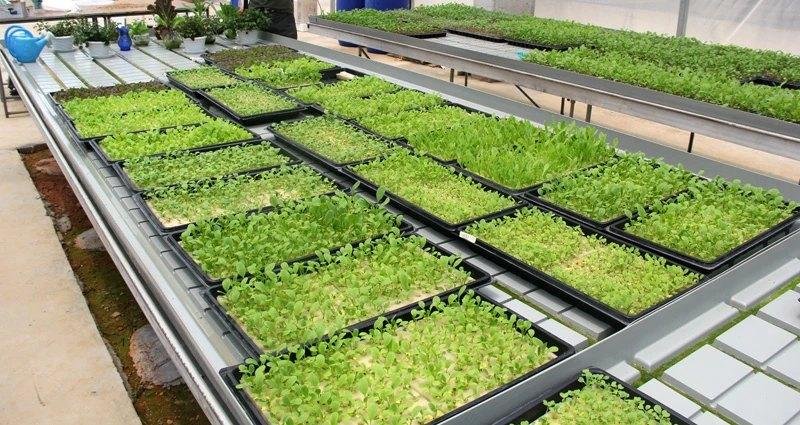
Months 6-10: Seedling trays allow you to grow many hardy plants in small batches.
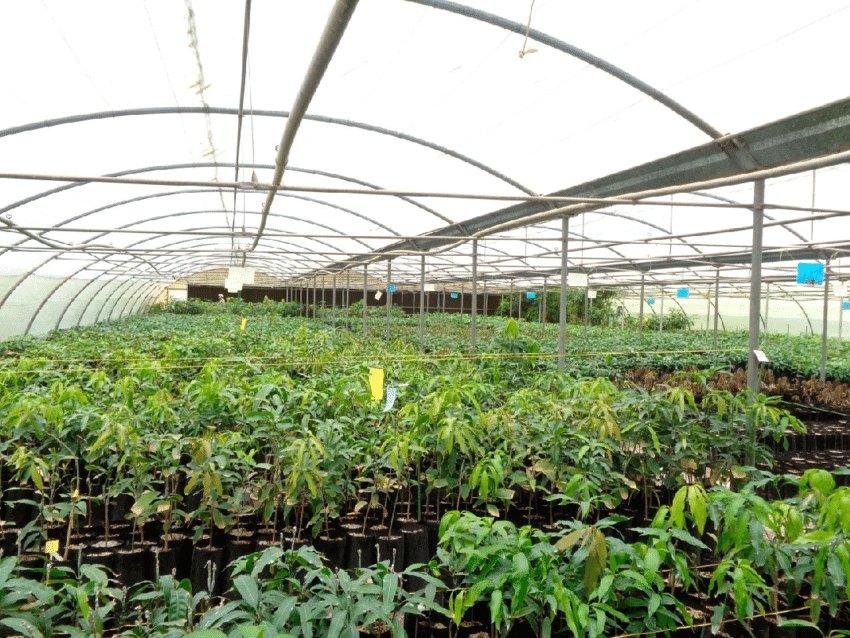
Months 7-12: The shade nursery helps harden off plants before planting in the field.
Rules that cannot be broken
| Rule | Why is it important? |
|---|---|
| Don't start with trees | Without wind protection, water and soil, even the right species will lose their vigor. |
| Do not make the area flat | Microrelief is needed to collect water, settle organic matter, and protect roots. |
| Don't rely on watering alone | Water quickly leaves the sand without mulch, biocrust and organic matter. |
| Do not mix all zones | The ocean edge, sand barrier, soil layer and agricultural zone require different logic. |
| Measure the results every month | A pilot is needed not only for landing, but also to obtain a controlled scaling model. |
First year summary
After 12 months, a successful pilot should have not just individual plants, but a working foundation: reduced wind, water retention, the first patches of living soil, protected greenhouses, clear planting zones, and a plan for expansion for next season.