Maximum Berry Table: Coastal Sahara and Irrigation
DREVO berry crops for protected areas: resistant varieties, irrigated crops, and experimental microclimate options.
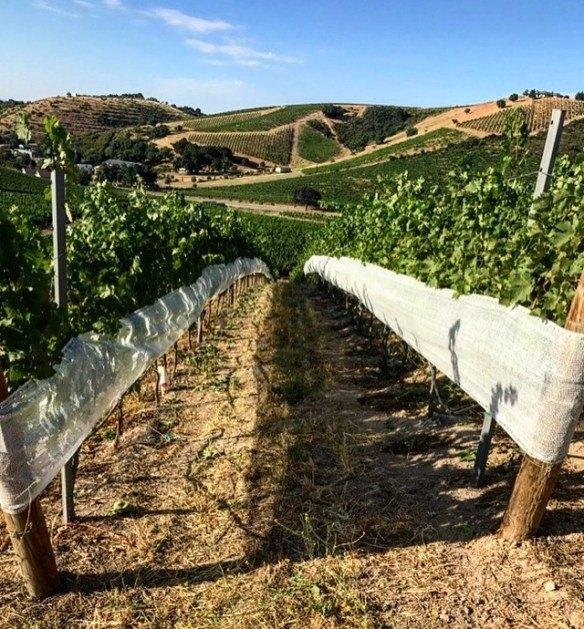
Berries are only possible within the system
Berry crops are more sensitive than trees and shrubs. They require shade, stable moisture, mulch, drip irrigation, and protection from salt. They quickly die in open sand.
Therefore, in the DREVO project, berries are not a starting layer, but a bonus to a developed system: trees create shade, shrubs protect the soil, grasses retain moisture, and only then do berry crops appear.
Article images
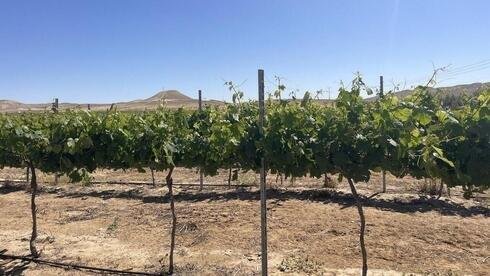
Grapes are the most obvious berry candidate for a protected system.
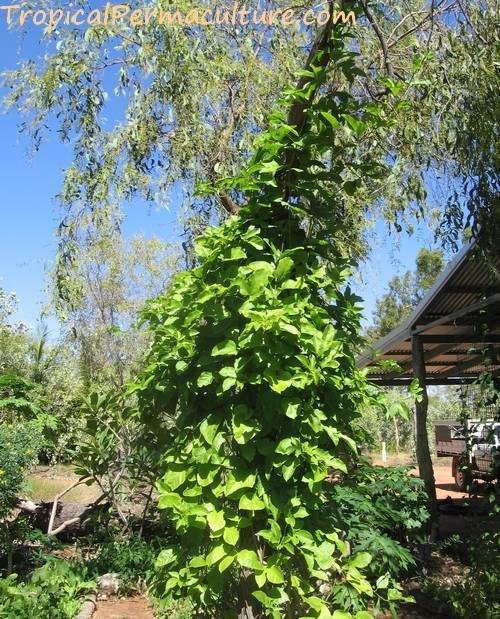
Passion fruit and related vines can be grown in a protected microclimate.
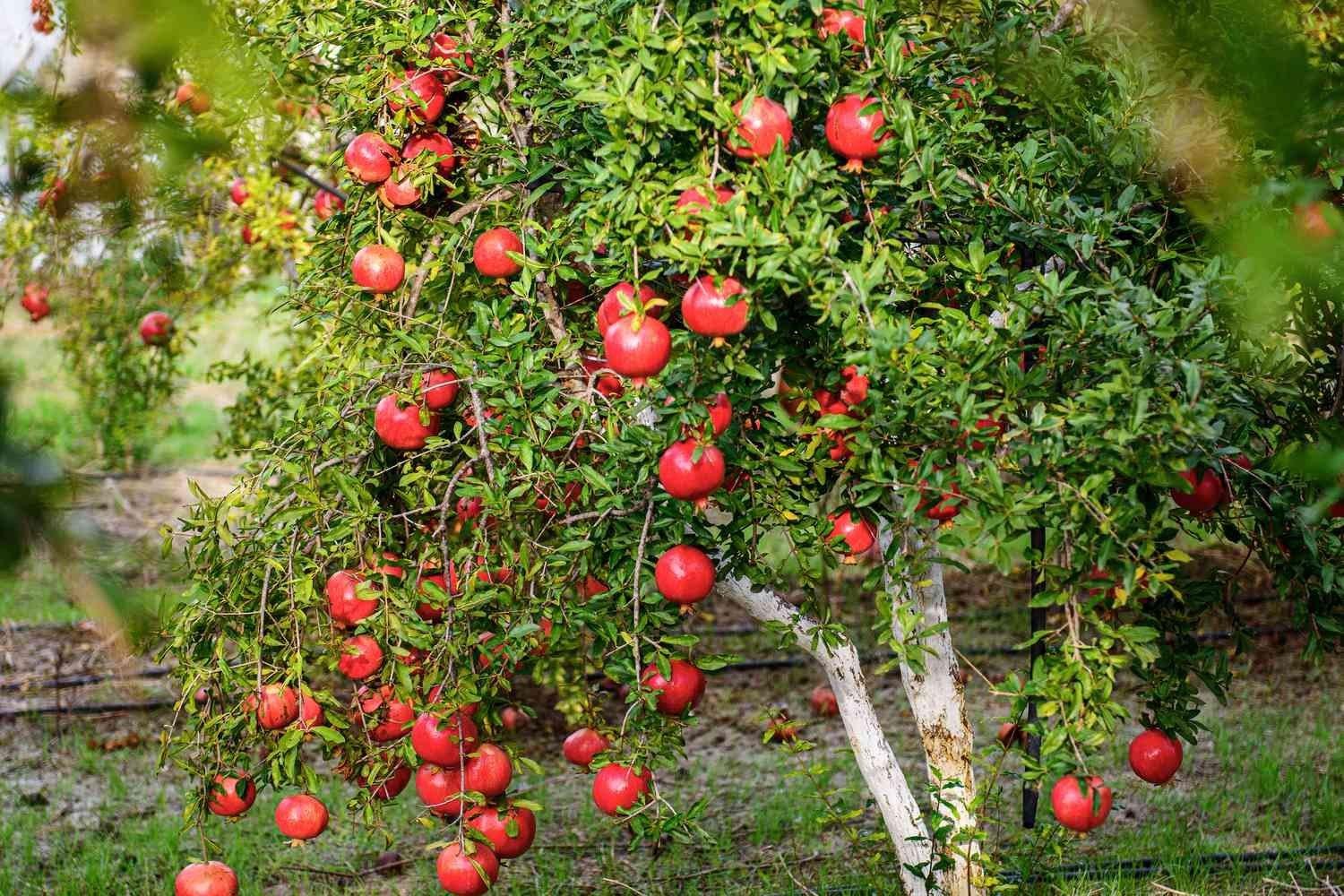
In the original, pomegranate is marked as a berry fruit and a stable productive species.
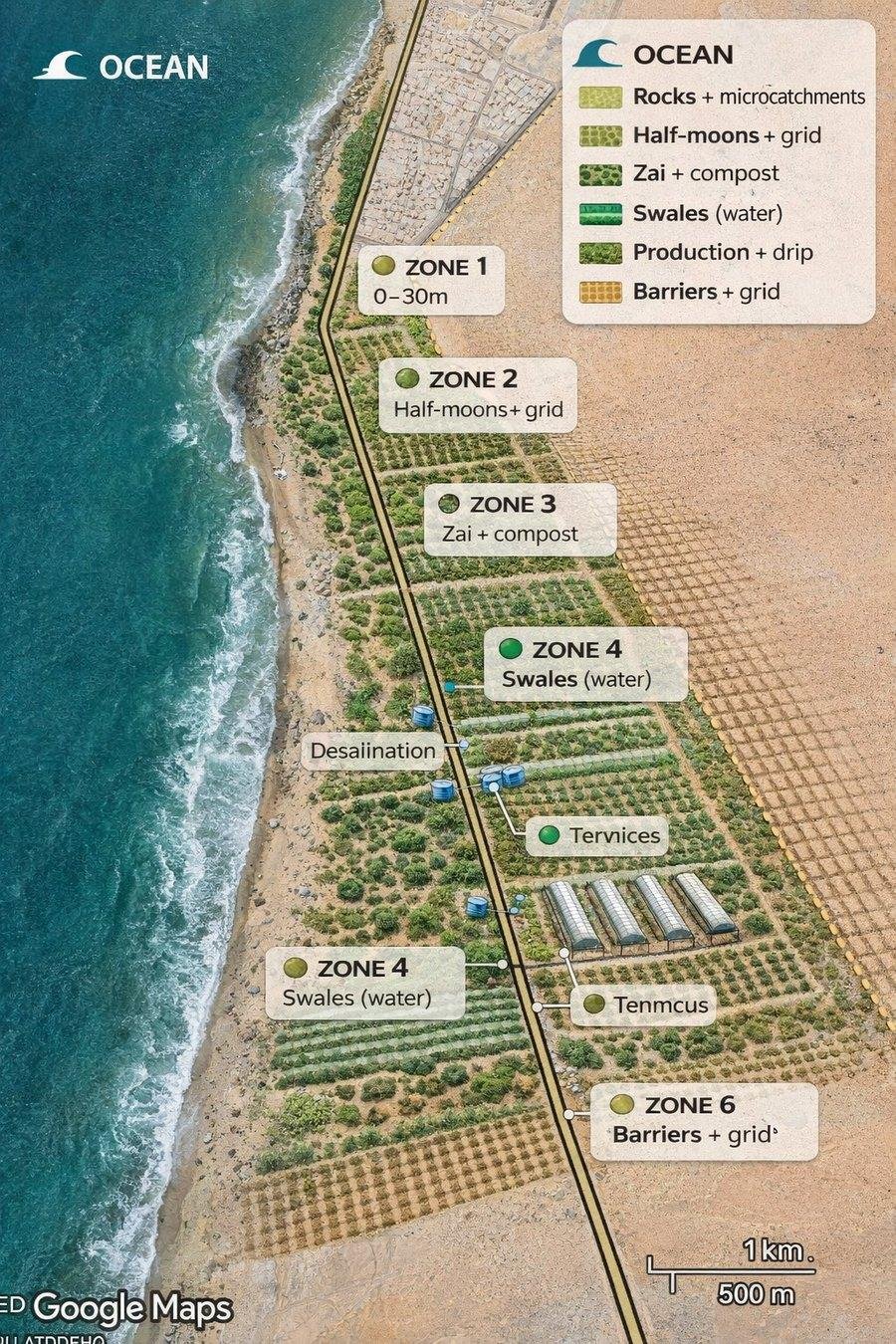
The original diagram shows that berry crops are placed only in production and protected areas.
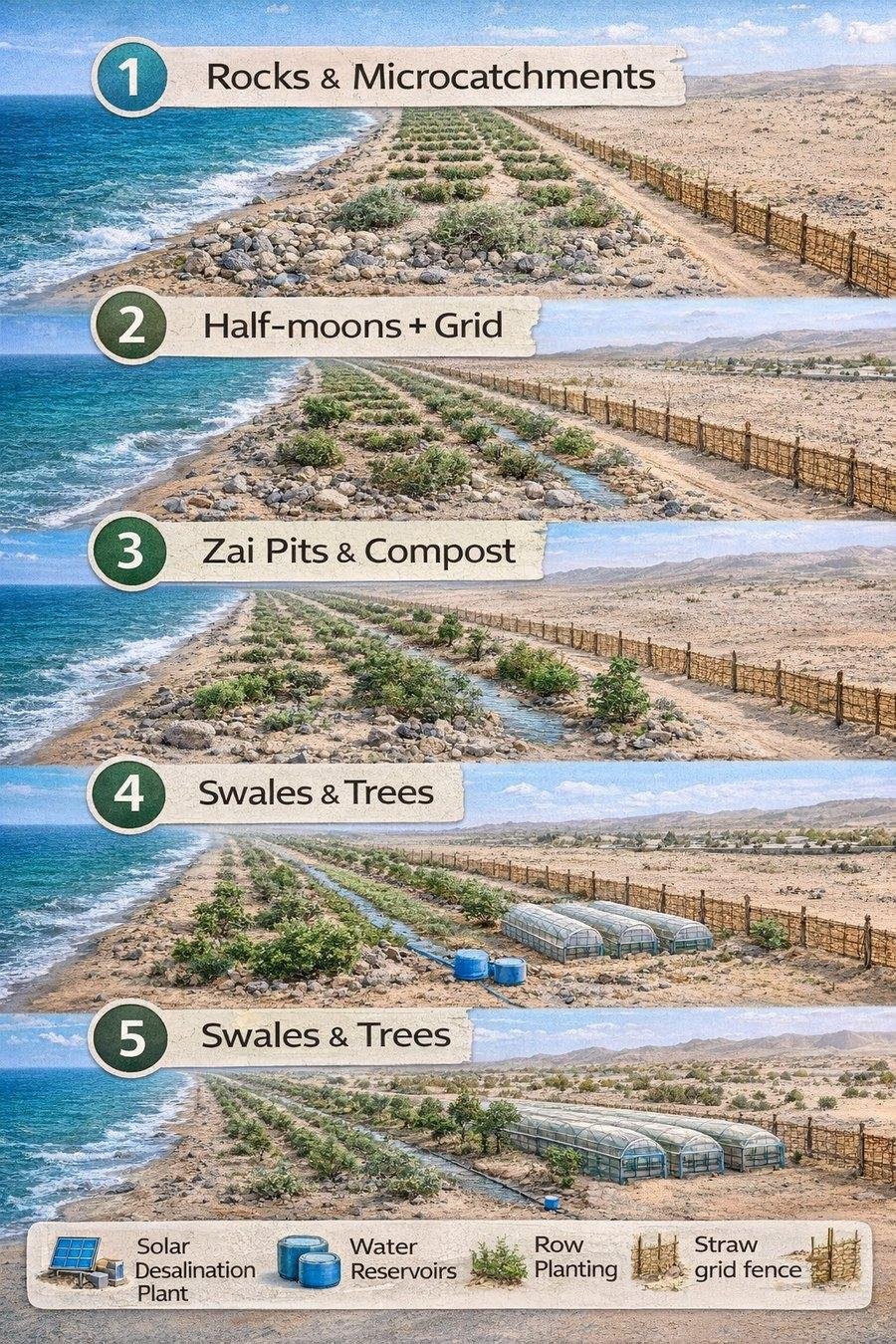
Micro-traps, compost, planting strips and water ditches create conditions for a berry layer.
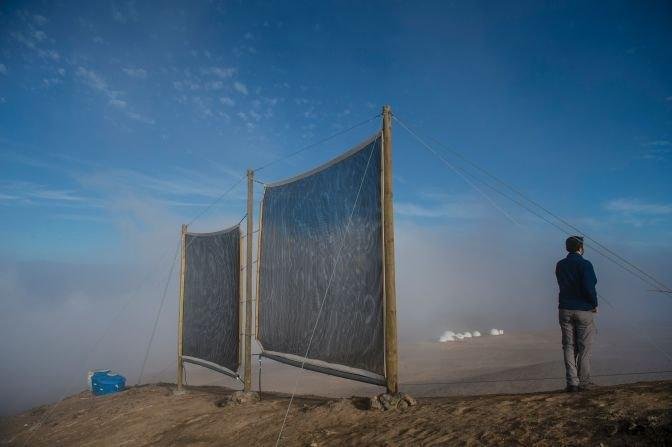
Mist catchers provide additional water context for protected areas.
Level 1 - Reliable
| View | Latin name | Water | Salt | Shadow | Comment |
|---|---|---|---|---|---|
| Goji | Lycia barbara | low | average | yes | very stable |
| Desert goji | Lycium shawii | very low | high | yes | ideal for dry conditions |
| Prickly pear | Opuntia ficus-indica | very low | high | yes | strategic fruit resource |
| Capers | Spiny caper | very low | high | yes | super-resistant |
| Physalis | Physalis peruviana | average | low | yes | growing quickly |
Level 2 - works during irrigation
| View | Latin name | Water | Salt | Shadow | Comment |
|---|---|---|---|---|---|
| Grape | Wine grapevine | average | low | yes | the best option |
| Mulberry | Mulberry spp. | low | low | yes | stable harvest |
| Pomegranate | Pomegranate | low | average | yes | fruit-berry |
| Passion fruit | Passionflower | average | low | yes | liana |
| Feijoa | Acca sellowiana | average | average | yes | good option |
Level 3 is more difficult
| View | Latin name | Water | Salt | Shadow | Comment |
|---|---|---|---|---|---|
| Blackberry | Rubus fruticosus | average | low | yes | better in the shade |
| Raspberry | Rubus idaeus | average | low | yes | more difficult |
| Strawberry | Fragaria spp. | average | low | yes | requires care |
| Currant | Ribes spp. | average | low | yes | only microclimate |
Level 4 - Exotic
| View | Latin name | Water | Salt | Shadow | Comment |
|---|---|---|---|---|---|
| Dragon fruit | Hylocereus spp. | low-medium | average | yes | excellent experimental look |
| Blueberry | Vaccinium spp. | high | low | yes | acidic soil is needed |
| Cranberry | Vaccinium macrocarpon | high | low | yes | difficult |
| Tamarillo | Solanum beet | average | low | yes | requires protection |
Practical scheme
The key sequence is: shade → bushes → grass → berries → drip irrigation.
A strong combination for a test plot: Cynodon + Aeluropus + Medicago + Opuntia + Vitis + Fragaria. It provides forage, nutrition, and resistance.
Conclusion: herbs are the foundation, berries are the system’s bonus.