The right compost bin for the DREVO project
A compost pit in a coastal desert isn't just a place for organic waste. It's an underground moisture accumulator, a source of humus, and a catalyst for the development of living soil.

Design logic
Why do you need a compost pit?
For DREVO, such a pit functions as a micro-factory for the soil: it retains water, promotes bacteria and fungi, nourishes the roots, and gradually transforms the sand into a living environment.
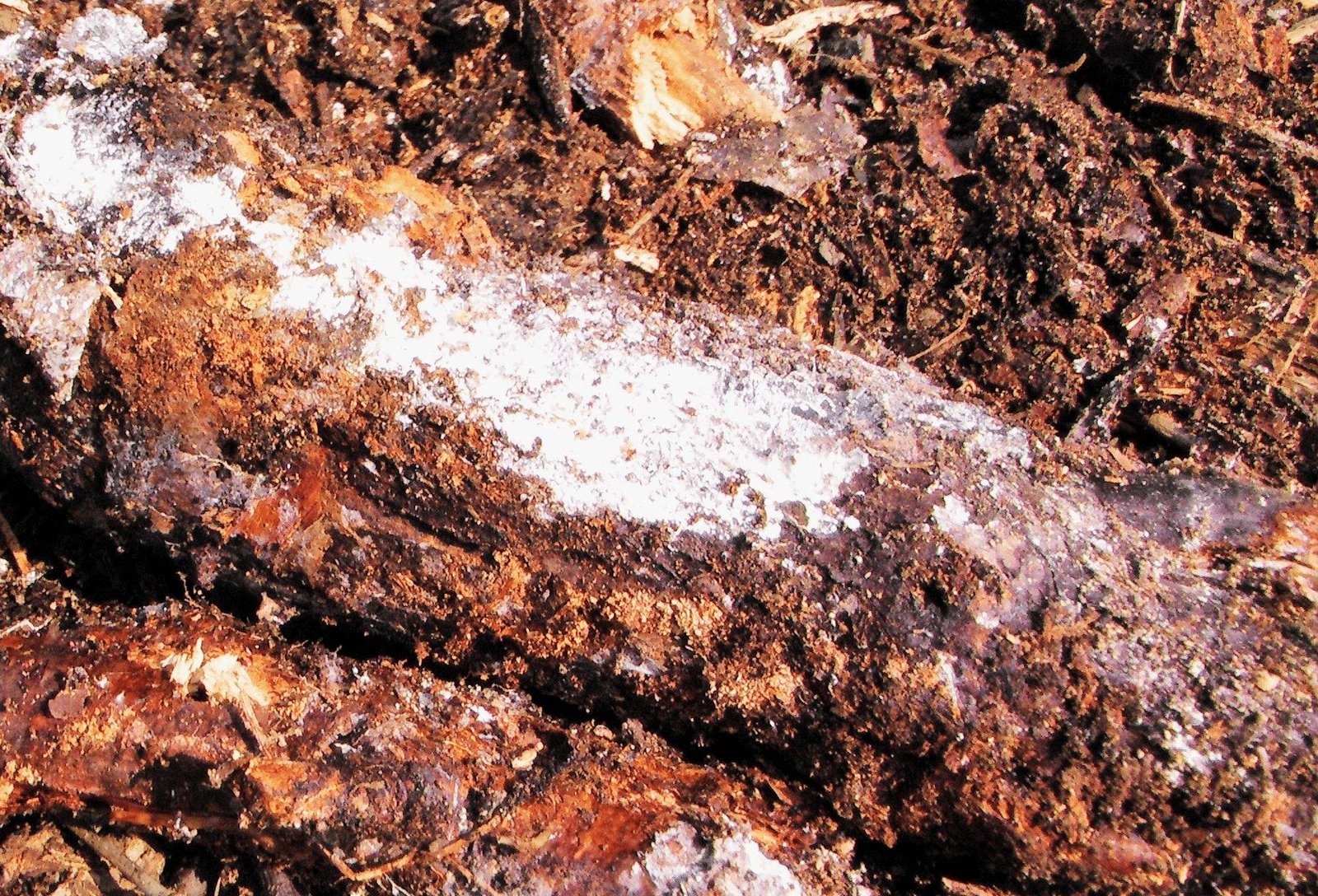
Decomposition of organic matter: fungal and bacterial processes within the wet layer.
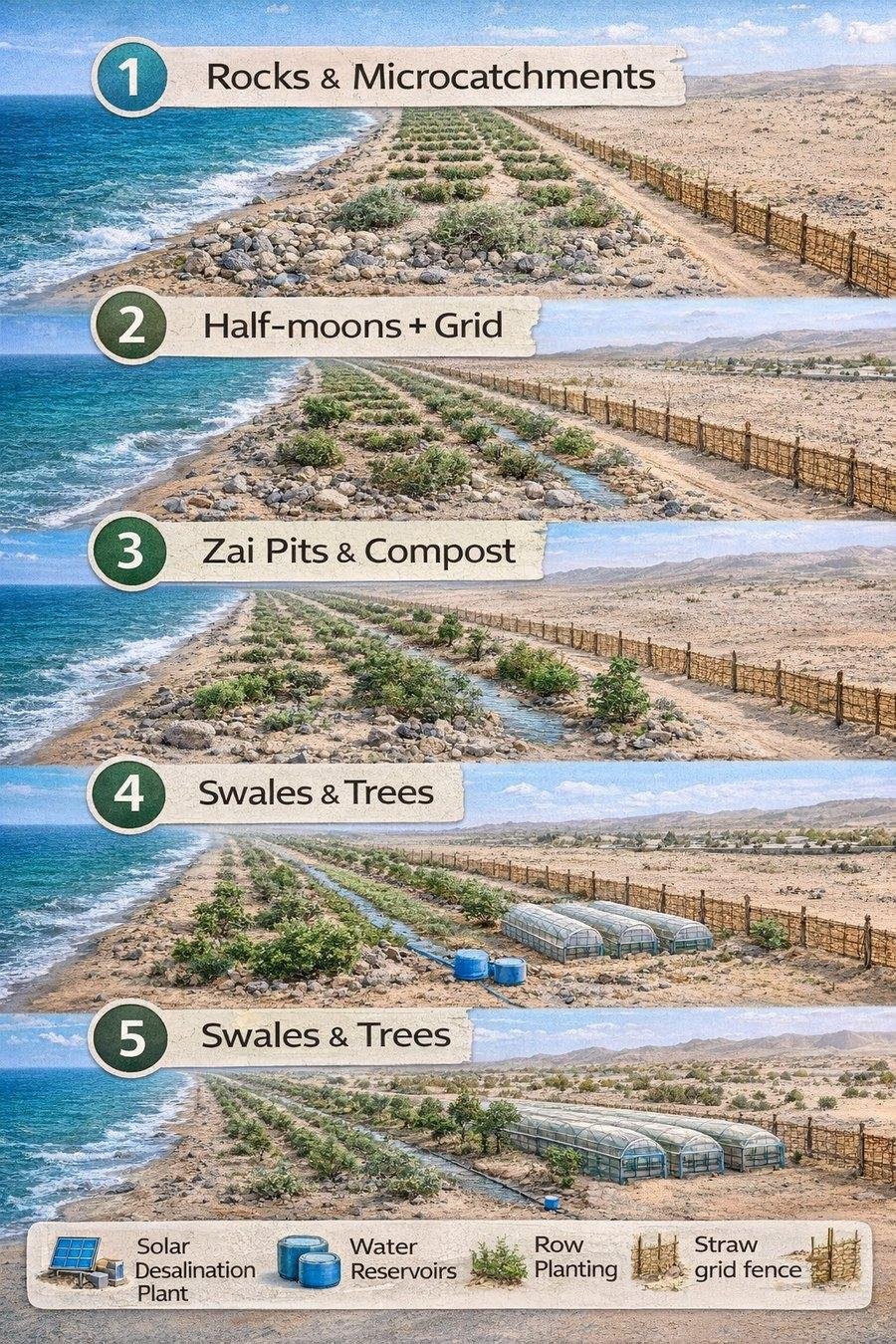
Zai pits & compost zone: the place where the compost pit becomes part of the water-soil system.
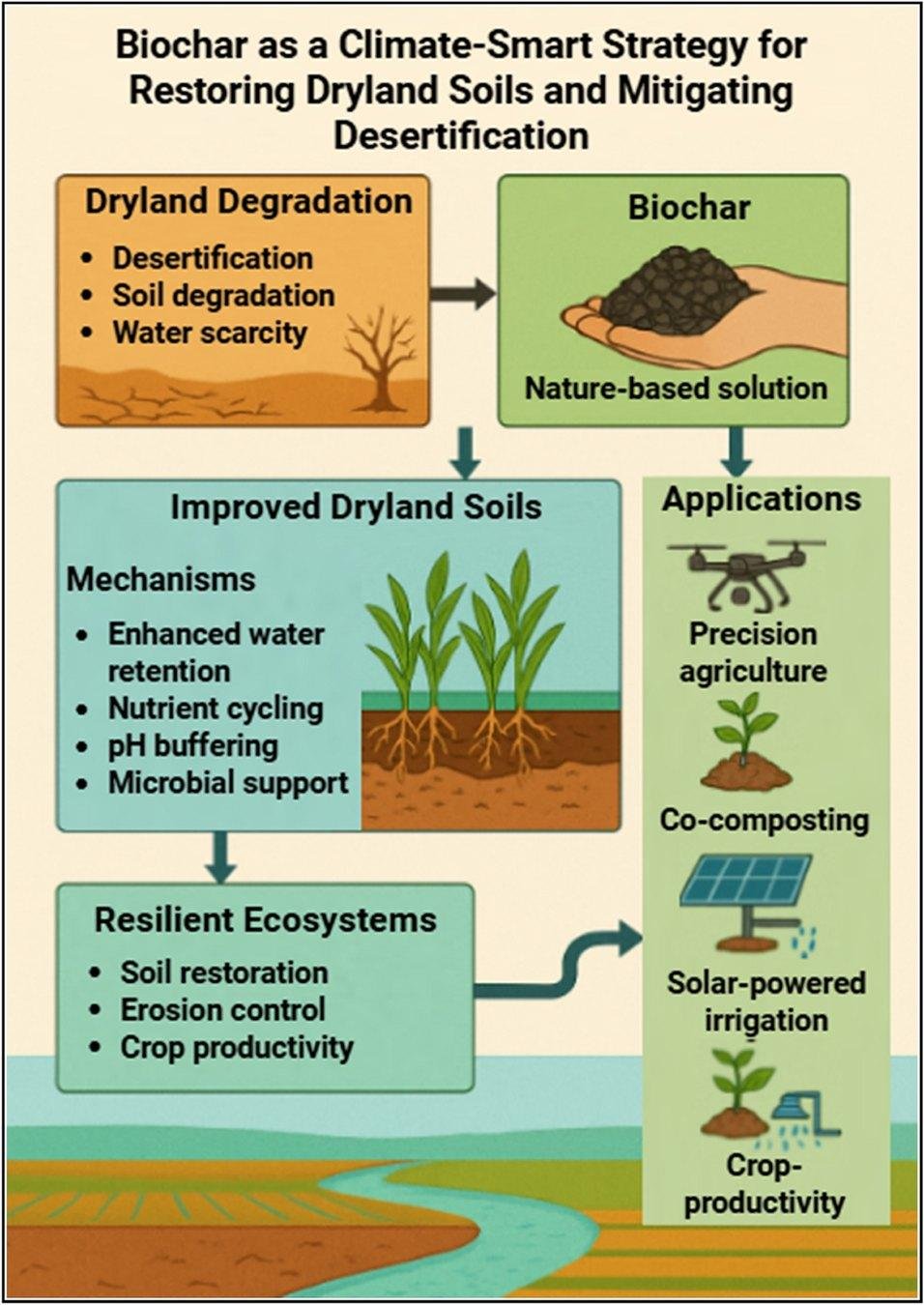
Biochar and co-composting as soil enhancement in dry regions.
Basic dimensions
| Depth | 50–80 cm |
|---|---|
| Width | 50–80 cm |
| Length | 1–5 m; long trenches can be made if necessary |
| Form | A trench is better than a round hole: this way the system supports more roots and is easier to scale along planting rows. |
Layers from bottom to top
The main purpose of the layers is to combine air, moisture, carbon, nitrogen, and microorganisms. In a dry zone, it's especially important not to overheat the pit and turn it into a dry heap.
| Layer | Materials | Role |
|---|---|---|
| 1. Rough drainage | branches, wood chips, dry bushes | retains moisture and leaves air inside the pit |
| 2. Carbon layer | dry grass, leaves, straw | creates the basis of compost and stabilizes the process |
| 3. Nitrogen layer | fresh grass, manure, kitchen waste | feeds bacteria and accelerates decomposition |
| 4. Strengthening | seaweed, ash, biochar | speeds up the process, adds minerals and improves water retention |
| 5. Thin layer of soil | 2–5 cm of local or prepared soil | populates the pit with microorganisms |
| 6. Upper protection | mulch, straw, leaves | protects the surface from sun and wind |
Water is a critical factor
After filling, the hole must be watered well.
Further, humidity is maintained regularly, but without waterlogging.
The correct condition is not a wet pit, but a “wet sponge”.
If the organic matter dries out, the microbiological process almost stops.
Where to place
The compost trench should be located near the future roots, not separate from the plantings. Therefore, it's best to connect it to shrubs, trees, and partial shade.
Do not place in open wind.
Do not place in direct sunlight.
Place next to bushes and between rows of trees.
Partial shade is preferred, where there is less evaporation and more stable humidity.
How the process works
During the first few weeks, the active warming and decomposition phase occurs. After the humidity and temperature stabilize, the pit becomes a stable feeding zone for the roots.
Deadlines
2-4 weeks – active process.
2-3 months - good compost.
About 6 months - more complete humus.
It is better to add worms 2-3 weeks after launching, when the hot phase has already passed.
Location in the project
In the pilot system, compost pits can be spaced 30–50 meters apart in the intensive version or 50–100 meters apart in the low-cost version. When scaled up, they become nodes for soil formation along the green corridor.
Compost + water = system. The pit retains water, plants develop nearby, roots are drawn to the moist area, and the sandy area gradually becomes a living oasis.
Main mistakes
A hole that is too shallow will dry out quickly and not hold its temperature.
No water: the decomposition process stops.
No sun protection: the surface overheats.
Dry material only: lacks nitrogen and microbiological activity.
Placement separate from plantings: the roots do not use the created moist zone.
Practical conclusion
The right compost bin for DREVO is an underground composting system with moisture retention.
water accumulator;
soil generator;
a vital point for microorganisms and roots;
a small but important element of a scalable green corridor.