Piles vs. Pits: A Practical Comparison
In traditional gardening, a compost heap is often more convenient. In the coastal desert, the logic changes: the main problem isn't organic matter, but moisture loss, wind, and overheating.
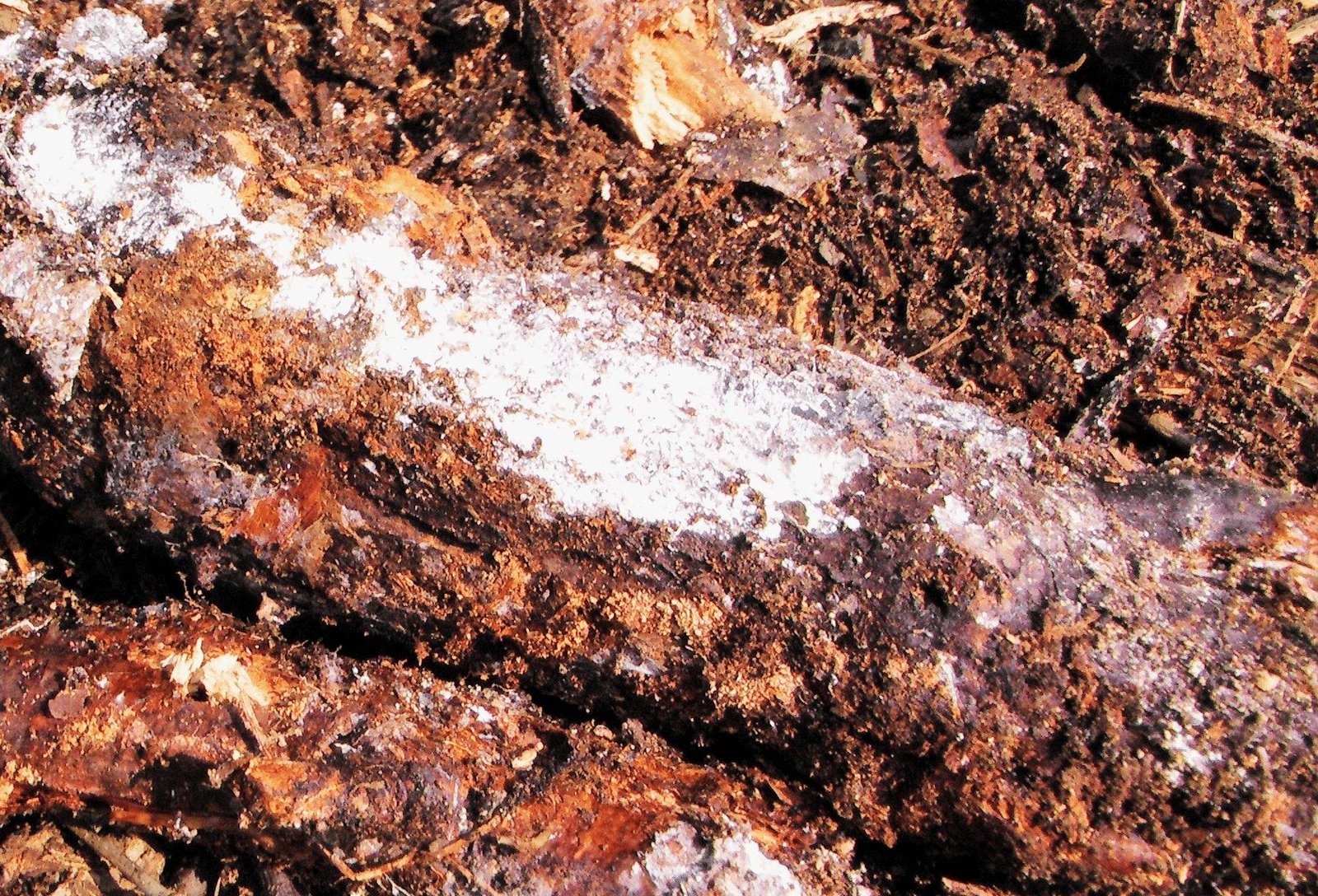
Real comparison
Why is the question important?
For DREVO, composting should not only process organic matter, but also retain water, support microbiology, and help roots establish themselves in the sandy environment.
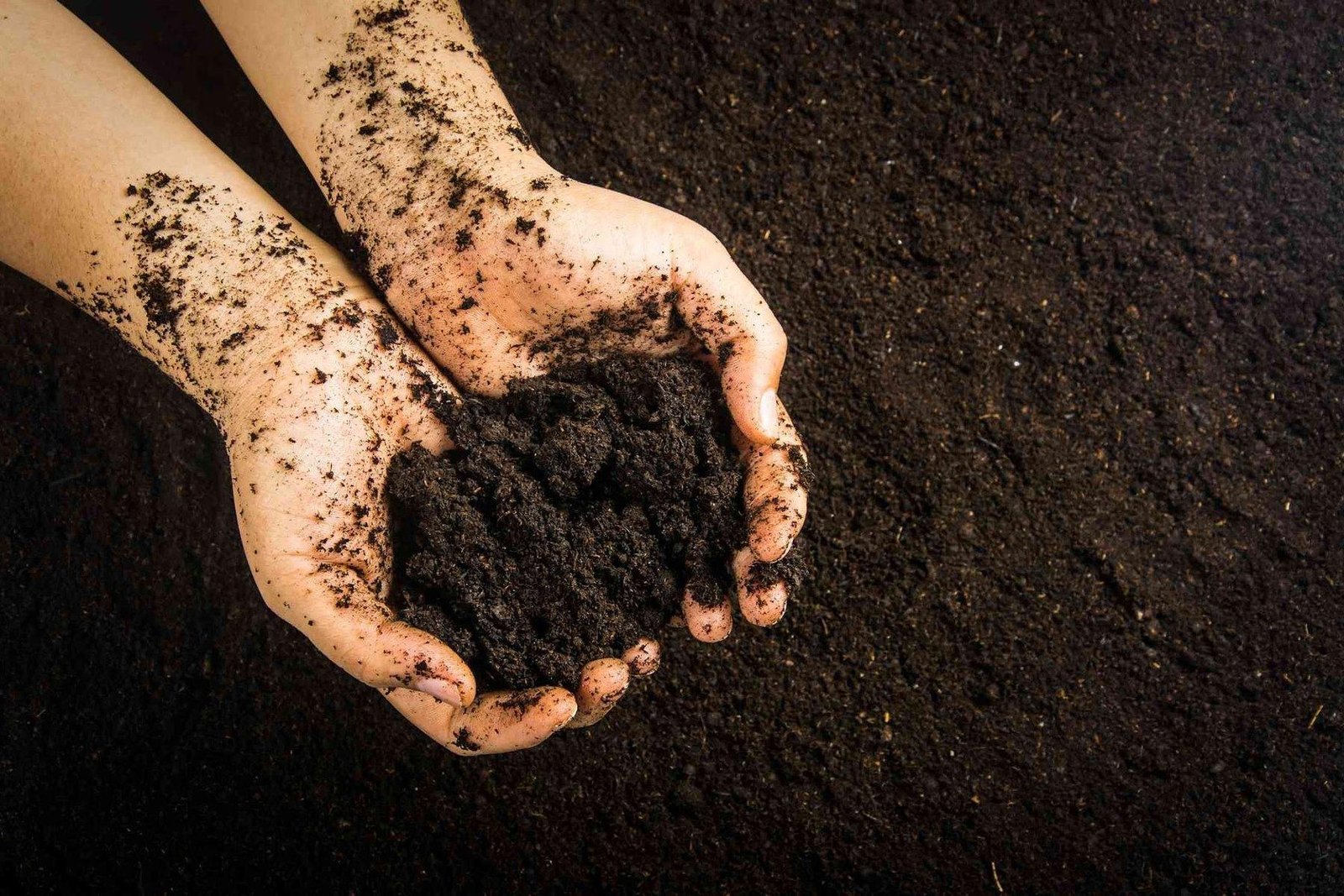
Ready humus as a result of stable decomposition of organic matter.
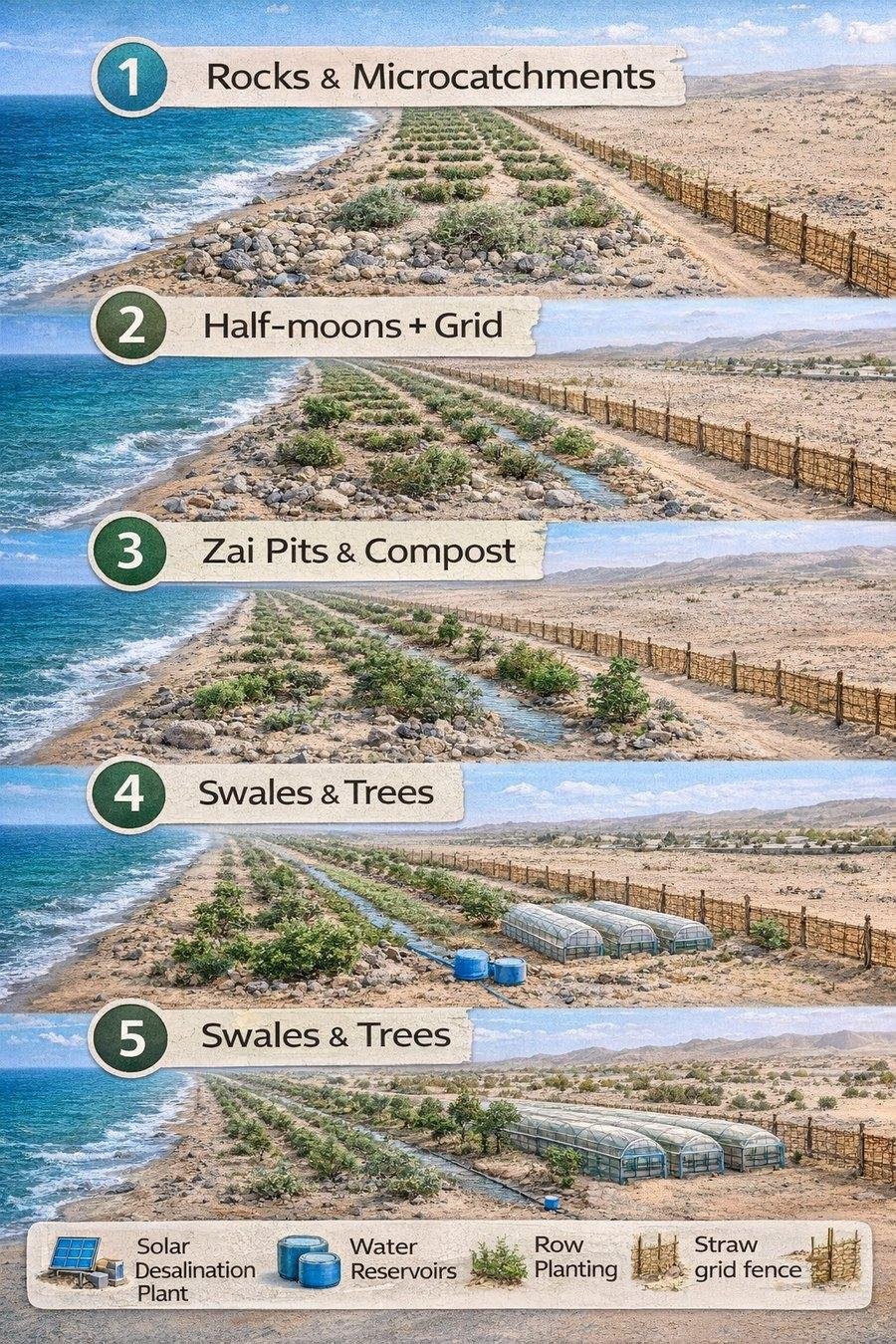
The zai pits & compost diagram shows why deep-burying organics works better in dry areas.
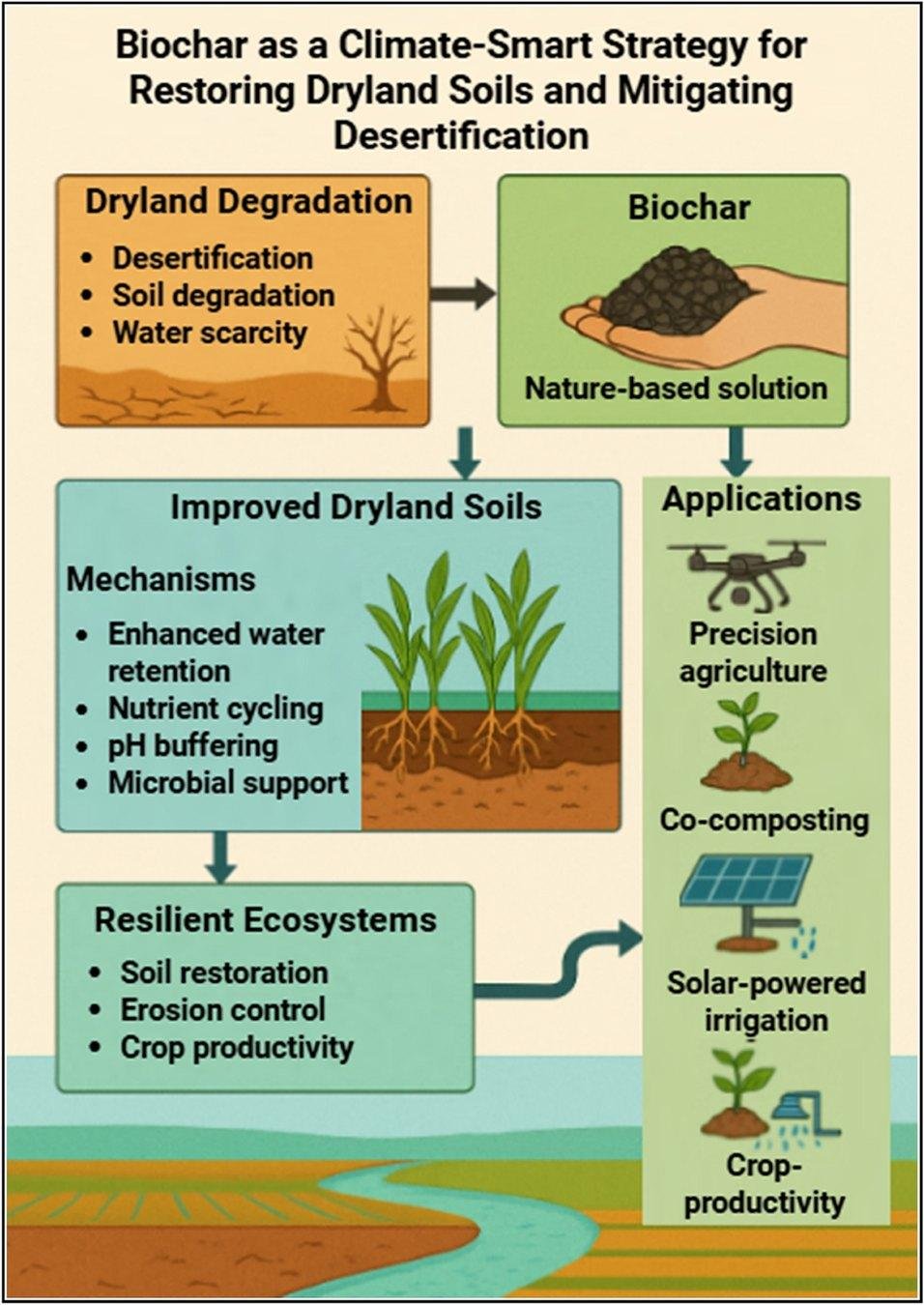
Biochar and co-composting enhance moisture retention and restore dry soils.
Comparison table
| Criterion | Compost heap | Compost pit |
|---|---|---|
| Humidity | quickly lost | held within the volume |
| Temperature | quickly overheats and dries out | more stable due to the soil around it |
| Process speed | faster with good watering and shade | slower but more reliable in dry climates |
| Wind | destroys, dries, and disperses light organic matter | almost does not destroy the process |
| Salt and dry dust | have a stronger effect on the surface | have less impact because the process is more in-depth |
| CONTROL | easier to stir and observe | harder to control, but easier to maintain humidity |
| Desert suitability | limited | basic working format |
The main problem with open heaps
In the coastal desert, a compost heap quickly loses moisture. Wind erodes the structure, the sun overheats the surface, and salt dust impairs conditions for microorganisms.
evaporation occurs faster than decomposition;
the top layer dries out first;
light organic matter is carried by the wind;
Without shade and regular water the process becomes unstable.
Why are pits better for DREVO?
A deep pit protects the compost from wind and sun. The surrounding soil acts as a natural barrier, reducing evaporation, stabilizing the temperature, and maintaining a humid microclimate.
the pit retains moisture longer;
organic matter has less contact with hot dry air;
plant roots can go to the wet zone;
the process becomes part of soil formation, not a separate waste pile.
Where piles are still useful
Heaps don't need to be completely eliminated. They can be used in well-maintained areas with regular water, shade, wind protection, and easy access to organic matter.
nurseries and greenhouse areas;
places with irrigation and canopy;
temporary processing of fresh organic matter;
areas where compost needs to be frequently mixed and monitored.
The best strategy is a hybrid
Closer to the ocean and in sandy fronts, pits are the preferred method. In more sheltered inland areas, small piles can be used as a secondary tool.
Ideal format for the project
The best option is not a separate round hole, but a compost trench along the planting lines.
| Length | 3–10 m |
|---|---|
| Depth | 40–80 cm |
| Width | 40–60 cm |
| Function | water retention, plant nutrition and anti-sand barrier |
What to add to the holes
manure or other nitrogenous organic matter;
seaweeds with access to the ocean;
wood, chips and dry plant residues;
biochar for water retention and stable structure;
a thin layer of local soil for colonization by microorganisms.
Practical conclusion
In desert logic, a heap is a temporary tool, and a pit is a system.
For DREVO, the strong wording is: an underground composting system for moisture retention and soil restoration.