Unified table: fungi, bacteria and compost by zones
Microorganisms and composting units create soil where plants cannot yet work on their own: from the salt front to internal restoration zones.

Article by DREVO
Soil is created by microorganisms
The project involves six zones, compost heaps and pits, and real communities of fungi and bacteria. Plants provide visible results, but the system's stability is built by microbiology, organic decomposition, nitrogen, humus, and mycorrhizal connections with the roots.
The main logic of the article: organic matter + water + microorganisms → humus → roots → sustainable vegetation.
Article images
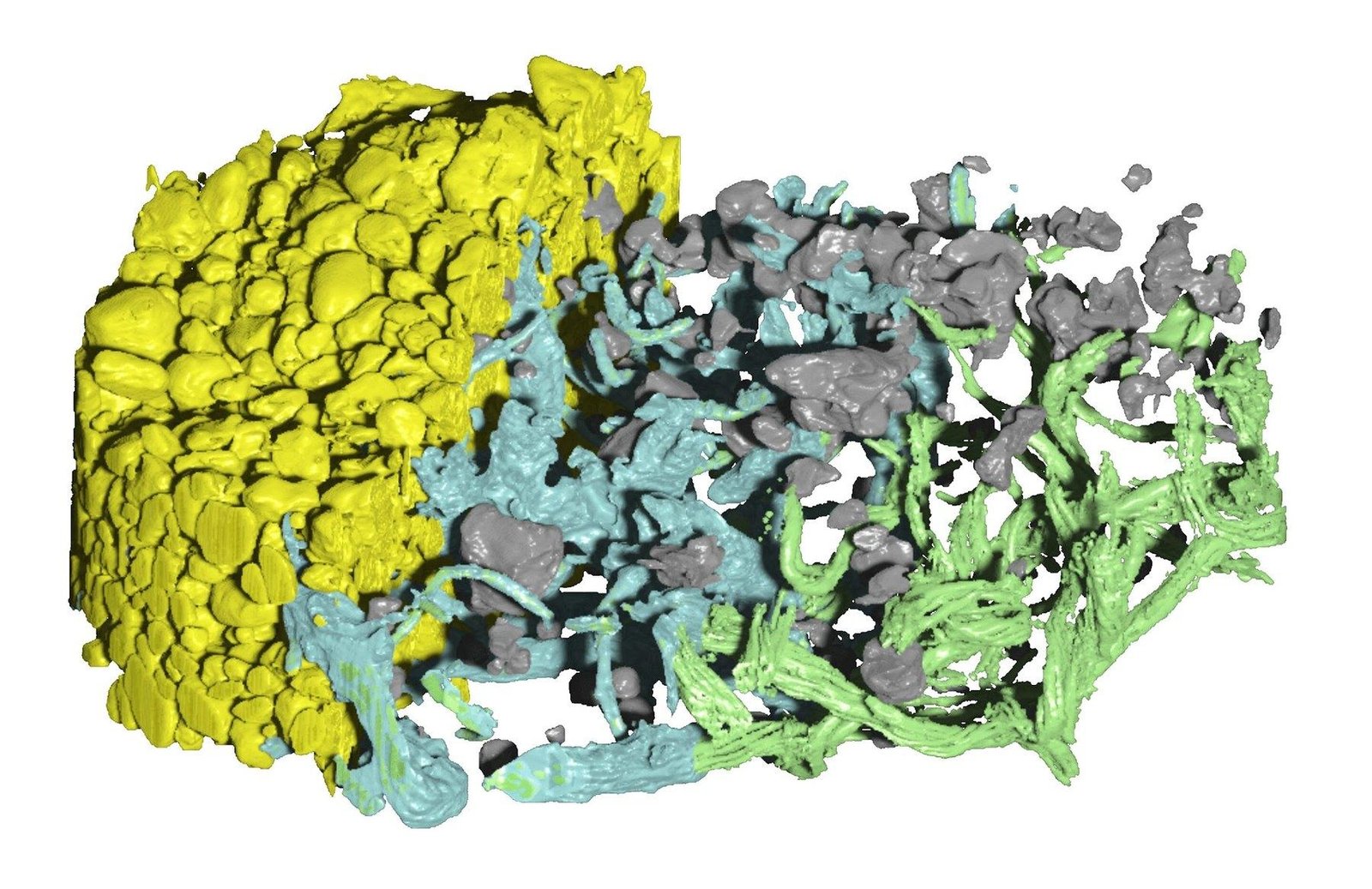
Soil microstructure and biological relationships
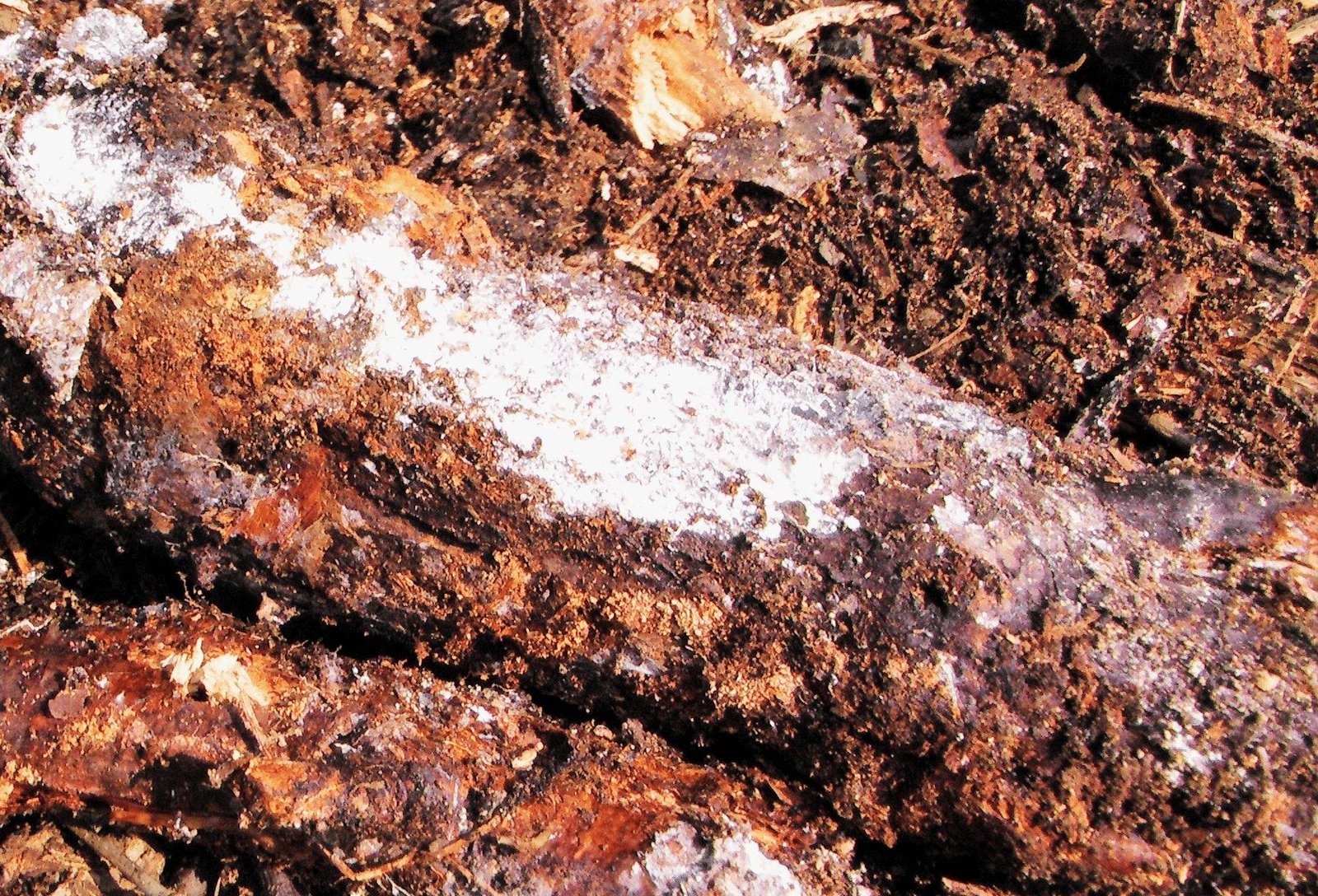
Fungal decomposition of organic matter in compost material
Zones 1-2: 0-100 m
Salt and extreme conditions allow only the most resilient groups to survive. Here, microbiology fosters life and helps stabilize the sand.
| Type | View | Latin name | Role |
|---|---|---|---|
| Bacteria | Microcoleus | Microcoleus vaginatus | glues sand together |
| Bacteria | Nostoc | Nostoc spp. | nitrogen |
| Bacteria | Halomonas | Halomonas spp. | salt |
| Bacteria | Bacillus | Bacillus subtilis | stability |
| Mushrooms | lichen | (symbiosis) | protection |
| Mushrooms | Aspergillus | Aspergillus spp. | decomposition |
Zone 3: 100-300 m
The formation of living soil begins: humus, nitrogen-fixing bacteria, protective fungi and the first stable connections with the roots appear.
| Type | View | Latin name | Role |
|---|---|---|---|
| Bacteria | Actinomycetes | Streptomyces spp. | humus |
| Bacteria | Azotobacter | Azotobacter spp. | nitrogen |
| Bacteria | Rhizobium | Rhizobium spp. | symbiosis |
| Mushrooms | Trichoderma | Trichoderma spp. | protection |
| Mushrooms | Penicillium | Penicillium spp. | decomposition |
| Mushrooms | Mycorrhiza | (different types) | roots |
Zones 4-5: 300 m - 2 km
This is a fully functioning ecosystem. Compost, mycorrhiza, and fermentation begin to support plant growth and organic matter recycling.
| Type | View | Latin name | Role |
|---|---|---|---|
| Bacteria | Bacillus | Bacillus spp. | plant growth |
| Bacteria | Pseudomonas | Pseudomonas spp. | protection |
| Bacteria | Lactobacillus | Lactobacillus spp. | fermentation |
| Mushrooms | Mycorrhiza | (AMF) | plant nutrition |
| Mushrooms | oyster | Pleurotus spp. | processing |
| Mushrooms | Agaricus | Agaricus spp. | compost |
Zone 6: 2-5 km
The goal here is to combat sand and restore soil. Microorganisms help build soil from scratch and support root systems.
| Type | View | Latin name | Role |
|---|---|---|---|
| Bacteria | Bacillus | Bacillus spp. | survival |
| Bacteria | Azospirillum | Azospirillum spp. | roots |
| Bacteria | Streptomyces | Streptomyces spp. | humus |
| Mushrooms | Trichoderma | Trichoderma spp. | protection |
| Mushrooms | Mycorrhiza | (AMF) | roots |
| Mushrooms | oyster | Pleurotus spp. | organics |
Compost heaps and pits
| Compost heaps Faster, more oxygen, more active bacteria. Best for zones 3-5. | Compost pits They retain moisture better, work slower, and are useful for zones 4-6. | Compost formula Dry matter + green mass + water + microorganisms. | Network of nodes Composting units every 50-100 m accelerate soil formation and reduce costs. |
|---|
Suitable materials for this project include acacia branches, dry grass, seaweed, manure, and kitchen organic waste.
Conclusion
Soil doesn't just appear on its own. It's created by microorganisms, fungi, bacteria, and managed organic matter. In DREVO's design logic, fungi and bacteria are the primary contributors to successful restoration, while plants anchor the already established living system.