Seaweed cultivation
Algae cultivation could become one of the most powerful elements of the DREVO project: the ocean provides biomass, the coast organizes collection and processing, and the land receives organic matter for compost, mulch, trenches, and the restoration of degraded soil.
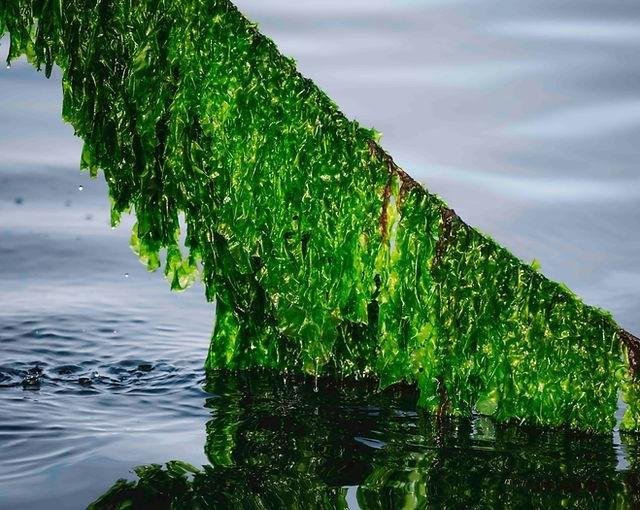
The ocean as a source of organic matter
The essence of the model
The project's chain is simple: water → algae → harvest → compost → soil → plants. Ulva provides quick nitrogen, Gracilaria stabilizes the structure, and Sargassum adds minerals. Together, this trio transforms ocean biomass into a resource for soil restoration.
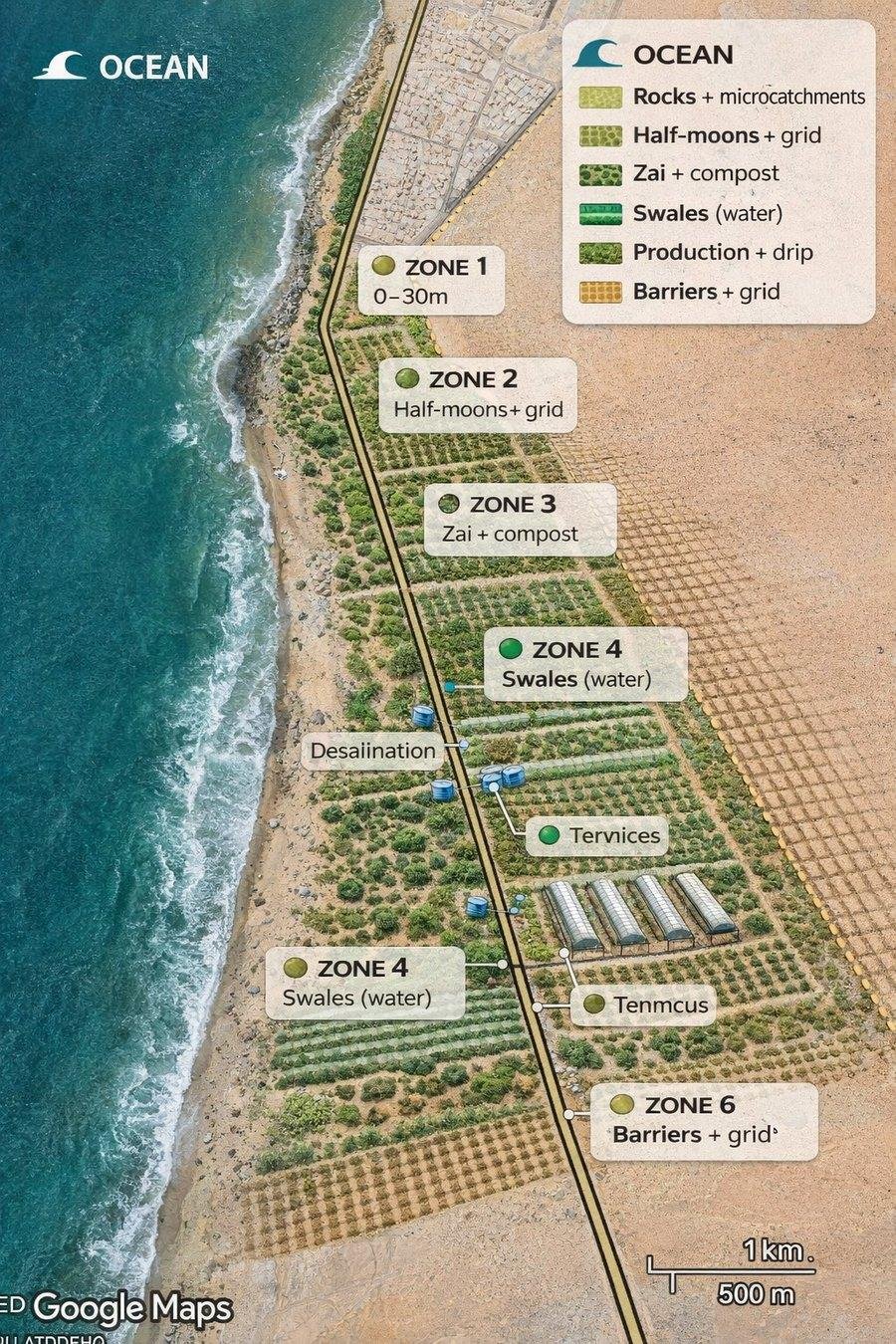
Scheme of integration of algae into coastal green corridor and project zones.
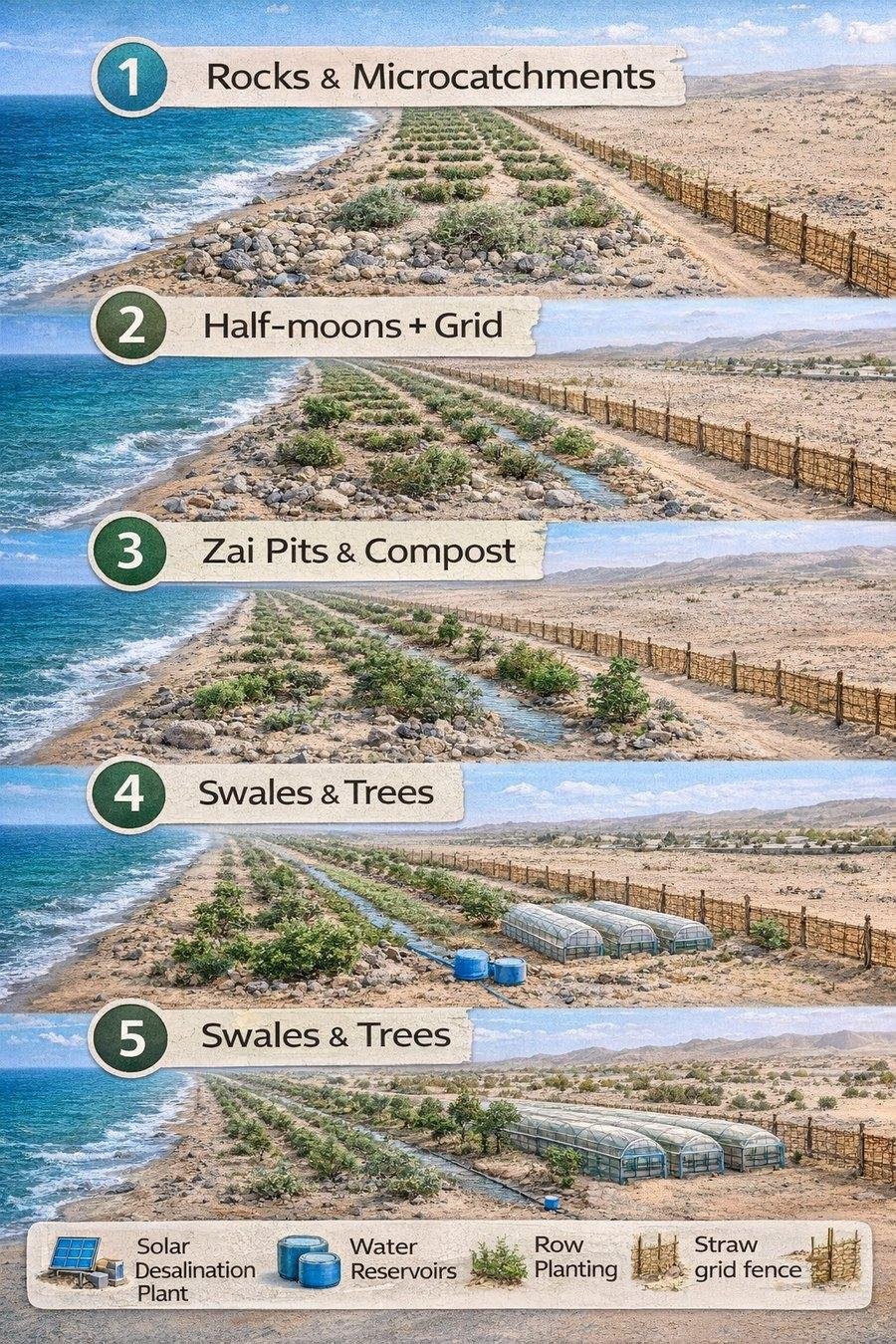
The zonal diagram shows where organic matter, water and microrelief reinforce each other.
The core of the system
| View | Latin name | Role |
|---|---|---|
| Ulva | Ulva spp. | fast nitrogen and green mass |
| Gracilaria | Gracilaria spp. | compost structure and moisture retention |
| Sargassum | Sargassum spp. | minerals and potassium |
The ideal starting trio: Ulva as a motor, Gracilaria as a stabilizer, Sargassum as food.
Growing models
| Model | Conditions | Project role |
|---|---|---|
| Coastal lagoon | shallow water 0.5-1.5 m, weak current, natural growth | the easiest and cheapest start |
| Rope lines | algae are attached to ropes and grow in the water | scalable marine farm |
| Pools and canals | controlled environment near the project | the best option for pilot and training |
Collection and processing
Harvesting should be regular: Ulva can be harvested every 7-14 days, while denser varieties can be harvested every 2-4 weeks. The key is not just harvesting the mass, but quickly converting it into a usable form.
Compost: seaweed is mixed with dry grass and manure.
Direct burial: the mass goes into trenches and under trees.
Mulch: Dried seaweed covers the surface and retains moisture.
Liquid fertilizer: fermentation in water for 1-2 weeks.
Integration by zones
| Zone | Use of algae |
|---|---|
| 1-2 | minimal: high salt and direct exposure to the ocean |
| 3 | soil run-off through compost pits and trenches |
| 4 | active use in soil and mulch |
| 5 | agriculture, liquid fertilizers, regular organic matter |
| 6 | restoration of sands and protection of the internal barrier |
Logistics
Logistics determine whether an algae system will become a viable infrastructure. It requires collection points on the shore, temporary storage areas, washing or mixing to control salt levels, and delivery to composting pits.
collection on the shore and in shallow areas
temporary storage near the processing area
mixing with dry grass, manure and wood fraction
delivery to trenches, compost pits and nurseries
Scale and risks
One ton of fresh seaweed yields approximately 200-300 kg of dry organic matter and can improve approximately 50-100 m² of soil. The main risks are salt, seasonality, contamination of the collection site, and logistics costs. These are addressed by source control, washing, mixing, and on-site processing.
Practical conclusion
Seaweed cultivation is a system for producing organic fertilizer and mulch to restore degraded coastal soils. It reduces dependence on commercial fertilizers, is scalable, and directly connects the ocean to a green corridor.